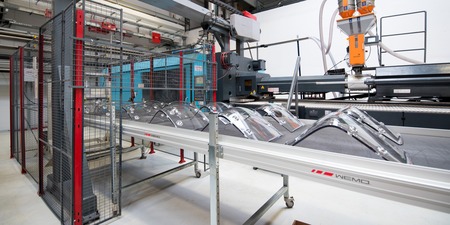
Plastic furniture has become increasingly popular due to its light weight, durability, affordability, and resistance to moisture and corrosion. The manufacturing of plastic furniture involves a combination of material science, design precision, and advanced moulding technologies. Below is a step-by-step overview of the process:
1. Material Selection
The first step in manufacturing plastic furniture is selecting the appropriate polymer material. Common plastics used include:
Polypropylene (PP): Lightweight, strong, and resistant to impact and chemicals.
Polyethylene (PE): Offers excellent flexibility and toughness.
Acrylonitrile Butadiene Styrene (ABS): Known for rigidity and surface finish.
Additives such as stabilizers, colorants, UV inhibitors, and flame retardants are mixed to enhance performance and aesthetics.
2. Material Preparation
The chosen plastic granules or pellets are dried to remove moisture and ensure consistent quality.
Drying is critical because moisture can cause bubbles or defects in the final product.
Color pigments and other additives are blended using high-speed mixers to achieve uniform distribution.
3. Mould Design and Fabrication
The mould is the heart of the production process.
CAD (Computer-Aided Design): Used to create detailed designs of furniture components.
CAM (Computer-Aided Manufacturing): Converts the design into a physical mould using CNC machining or EDM (Electrical Discharge Machining).
Moulds are typically made of hardened steel or aluminium for durability and precision.
4. Moulding Process
Depending on the type of furniture, different moulding methods may be used:
a. Injection Moulding
Plastic granules are melted in a heated barrel.
The molten plastic is injected under high pressure into the mould cavity.
It is then cooled and solidified to form the desired shape.
Used for: Chairs, tables, stools, and other solid furniture parts.
b. Blow Moulding
Air pressure is used to inflate melted plastic inside a mould.
Creates hollow structures with uniform wall thickness.
Used for: Hollow furniture components like armrests or back supports.
c. Rotational Moulding
The mould is filled with powdered resin and rotated in an oven.
The resin melts and coats the inside evenly.
Used for: Large, hollow furniture items such as benches or garden pieces.
5. Cooling and Ejection
Once the moulded part solidifies, it is cooled using water channels or air circulation systems.
After cooling, ejector pins or hydraulic systems remove the furniture component from the mould carefully to avoid deformation.
6. Trimming and Finishing
Any excess material, flash, or sharp edges are trimmed off.
The surface is then polished or textured as per the design requirements.
Finishing processes may include:
Sanding and buffing for smoothness
Painting or coating for enhanced appearance
Embossing or engraving for aesthetic designs
7. Assembly
For multi-part furniture (like tables with detachable legs or adjustable chairs), components are assembled using:
Snap-fit joints
Screws or bolts
Ultrasonic welding for seamless joining
This step ensures stability and ergonomic accuracy.
8. Quality Inspection
Each furniture piece undergoes a series of quality checks to ensure it meets standards for:
Dimensional accuracy
Load-bearing capacity
Surface finish and color consistency
Durability and UV resistance
Defective pieces are either recycled or reprocessed.
9. Packaging and Distribution
The finished furniture is cleaned, labelled, and packed to prevent scratches or damage during transit.
Lightweight and stackable designs reduce shipping costs and storage space.
10. Recycling and Sustainability
Many manufacturers now emphasize eco-friendly practices:
Using recycled plastic in production
Implementing closed-loop systems for reprocessing waste
Designing furniture that can be easily disassembled and recycled
Conclusion
The manufacturing of plastic furniture is a systematic and efficient process that blends material science, design precision, and modern moulding technology. The result is furniture that is not only affordable and stylish but also durable and sustainable — meeting the growing demand for modern, low-maintenance living solutions.