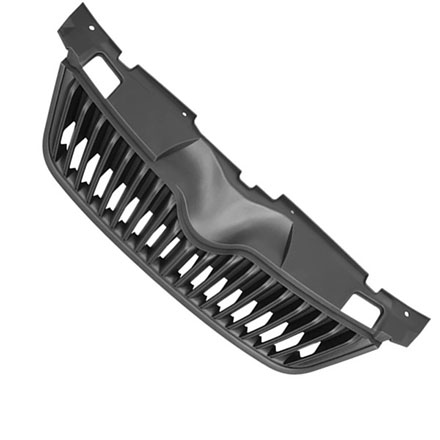
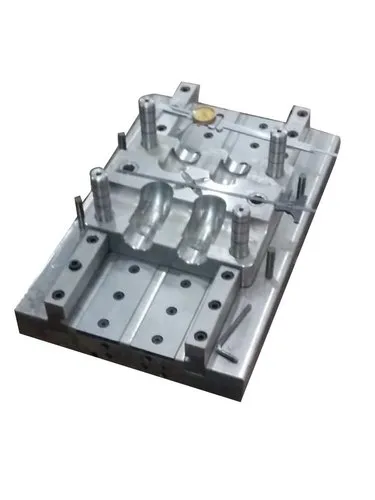
Exterior automotive components such as bumpers, grilles, and mirrors play a critical role in defining a vehicle’s appearance, aerodynamics, and safety. The moulds used to manufacture these parts must meet high standards of precision, durability, and surface finish to ensure both aesthetic appeal and structural integrity.
1. Importance of Exterior Part Moulds
Moulds for exterior parts are designed to produce large, complex, and visually appealing components that can withstand environmental stresses such as UV radiation, temperature changes, and minor impacts. These moulds ensure:
Dimensional accuracy for perfect alignment with the vehicle body.
Smooth surface finish suitable for painting or coating.
High strength and durability to handle repeated production cycles.
2. Materials Used in Moulds
The moulds are typically made from high-grade tool steels such as P20, H13, or 1.2316, chosen for their:
Excellent wear resistance and thermal stability.
Ability to support mirror-polished surfaces for high-gloss parts.
Suitability for large mould sizes used in bumper and grille manufacturing.
3. Moulding Techniques
Injection Moulding:
The most common process for producing bumpers, grilles, and mirror housings. It allows precise control over wall thickness, intricate detailing, and integration of mounting points or clips.Gas-Assisted Injection Moulding:
Used for large, thick-walled parts like bumpers to reduce weight and warpage while maintaining structural strength.2K (Two-Shot) Moulding:
Applied in mirror housings or decorative grille components to combine two materials—often for aesthetic and functional purposes.
4. Design Considerations
When designing moulds for exterior parts, engineers focus on:
Flow balance and gate positioning to ensure uniform material distribution.
Efficient cooling channels for reduced cycle times and consistent part quality.
Ejector system design to prevent deformation or surface marks on large parts.
Texturing and polishing to achieve desired visual and tactile finishes.
5. Quality and Surface Requirements
Exterior parts demand high visual standards. The mould surface often undergoes chrome plating, EDM texturing, or laser engraving to match OEM surface specifications. Strict dimensional inspection and surface testing are performed to maintain quality consistency.
6. Applications
Bumpers: Large moulds capable of producing impact-resistant and paint-ready surfaces.
Grilles: High-precision moulds with fine detailing and chrome-plated finishes.
Mirrors: Compact moulds for mirror housings, often integrating two-material combinations for aesthetics and strength.
7. Trends in Exterior Part Moulding
Use of lightweight materials such as PP, ABS, and PC blends to improve fuel efficiency.
Adoption of robotic demoulding systems for handling large components.
Integration of AI and IoT technologies for predictive maintenance and real-time quality control.