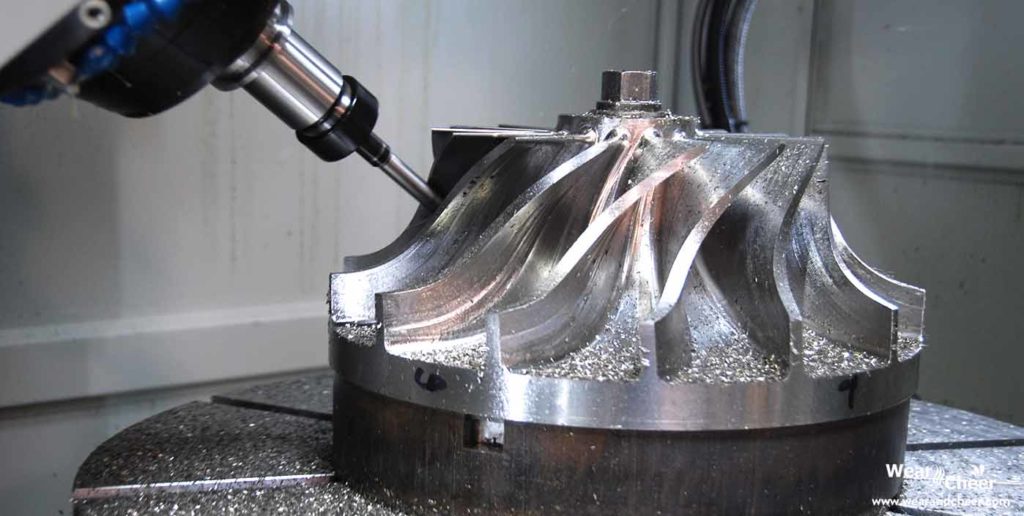
CNC (Computer Numerical Control) machining plays a vital role in the production of high-precision automotive moulds. It ensures accuracy, consistency, and speed in manufacturing complex mould components used for car parts such as dashboards, bumpers, grilles, panels, and lighting housings.
1. Importance of CNC Machining
CNC machining allows automotive mould makers to achieve the tight tolerances and intricate geometries required in modern vehicle components. The computer-controlled process eliminates manual errors, resulting in better dimensional accuracy and surface finish. This precision is essential for ensuring perfect fitting of moulded parts and maintaining product quality.
2. Materials Used
Automotive moulds are often made from hardened tool steels, aluminum alloys, and copper-beryllium, which require precise machining techniques. CNC machining can handle these tough materials efficiently while maintaining fine detail and structural strength.
3. Key Processes in CNC Machining
Milling: Used to shape large mould surfaces and create detailed contours.
Turning: Produces symmetrical features like holes, grooves, and circular mould inserts.
EDM (Electrical Discharge Machining): Complements CNC milling by machining hard-to-reach areas or intricate cavities.
Drilling and Tapping: For creating precise holes for cooling channels, ejector pins, and assembly fittings.
4. Advantages of CNC Machining in Mould Production
High Precision and Repeatability: Ensures consistent quality across multiple moulds.
Reduced Lead Time: Automated programming and faster cutting speeds shorten mould production cycles.
Complex Geometry Capability: Easily creates detailed and contoured designs.
Improved Surface Finish: Enhances the appearance and performance of automotive parts.
Integration with CAD/CAM: Allows seamless transition from design to manufacturing, minimizing errors.
5. Applications in the Automotive Sector
CNC-machined moulds are used to produce a wide range of automotive components, including:
Interior parts (dashboards, door panels, consoles)
Exterior parts (bumpers, fenders, grilles)
Lighting components (headlamp and taillight housings)
Functional parts (air ducts, battery covers, trims)
6. Future Trends
Advancements in 5-axis CNC machining, high-speed cutting, and hybrid additive-subtractive manufacturing are further improving the precision and efficiency of automotive mould production. Integration with AI and IoT-based monitoring systems also ensures better process control and predictive maintenance.