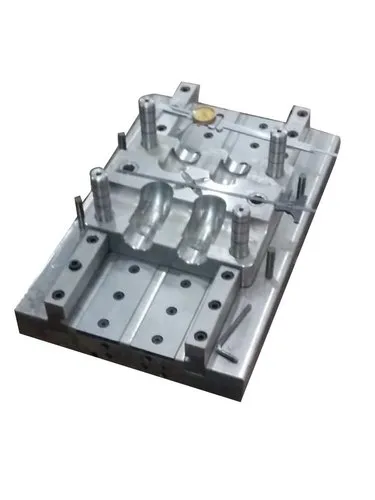
An injection mould is a specially designed tool used to manufacture products by injecting molten or softened material into a mould cavity under pressure. Once the material cools, solidifies, or cures, the mould is opened and the finished product is removed.
Injection moulding is widely used for mass production because it can produce large numbers of identical products with consistent dimensions, detailed shapes, and good surface finishes.
How Does an Injection Mould Work?
The basic injection moulding process involves:
- Material Preparation – The required material is prepared and fed into the injection machine.
- Heating – The material is heated until it reaches the required molten or flowable state.
- Injection – The material is forced into the mould cavity under pressure.
- Filling – The material flows through the mould’s channels and completely fills the cavity.
- Cooling or Curing – The material cools and solidifies inside the mould.
- Mould Opening – The mould halves separate after the product has sufficiently hardened.
- Ejection – Ejector pins or another mechanism remove the finished product.
- Finishing – Any excess material, such as runners or flash, may be trimmed.
Main Parts of an Injection Mould
A typical injection mould contains several important components:
- Mould Cavity – Forms the external shape of the product.
- Core – Creates internal features, holes, or shapes.
- Sprue – The main passage through which material enters the mould.
- Runner – Channels material from the sprue to the mould cavity.
- Gate – Controls the entry of material into the cavity.
- Cooling Channels – Help control mould temperature and speed up solidification.
- Ejector Pins – Push the finished product out of the mould.
- Guide Pins and Bushes – Ensure accurate alignment of the mould halves.
Types of Injection Moulds
1. Single-Cavity Mould
Produces one product per injection cycle. It is useful for prototypes and smaller production requirements.
2. Multi-Cavity Mould
Contains several cavities and can produce multiple identical products during one cycle.
3. Two-Plate Mould
A commonly used and relatively simple mould design consisting of two main mould plates.
4. Three-Plate Mould
Uses an additional plate to provide greater flexibility in gate and runner arrangements.
5. Hot Runner Mould
Keeps the material in the runner system hot, which can reduce runner waste and improve production efficiency.
6. Cold Runner Mould
The material in the runner system cools and is removed along with the moulded product.
Advantages of Injection Moulds
- Suitable for high-volume production
- Produces consistent and repeatable products
- Can create complex shapes and fine details
- Provides good dimensional accuracy
- Offers a wide range of surface finishes
- Production cycles can be highly automated
- Reduces labour requirements in large-scale manufacturing
Applications
Injection moulds are widely used to manufacture plastic containers, packaging products, household items, toys, automotive components, electrical parts, industrial components, and decorative products.
Specialized injection moulding processes may also be used for certain candle-making and craft-related components, depending on the material and production equipment.
Injection Mould vs. Compression Mould
The main difference is how the material enters the mould:
- Injection Mould: Material is heated or softened and injected into the mould cavity under pressure.
- Compression Mould: Material is placed directly into the mould cavity and compressed using pressure, often with heat.
Conclusion
An injection mould is an essential manufacturing tool for producing accurate, consistent, and high-quality products at scale. Proper mould design, material selection, temperature control, injection pressure, cooling, and ejection are all important for achieving efficient production and reliable finished products.