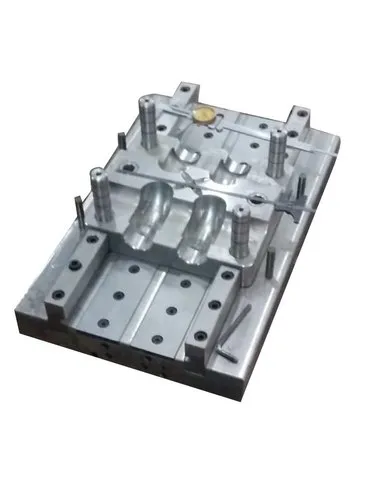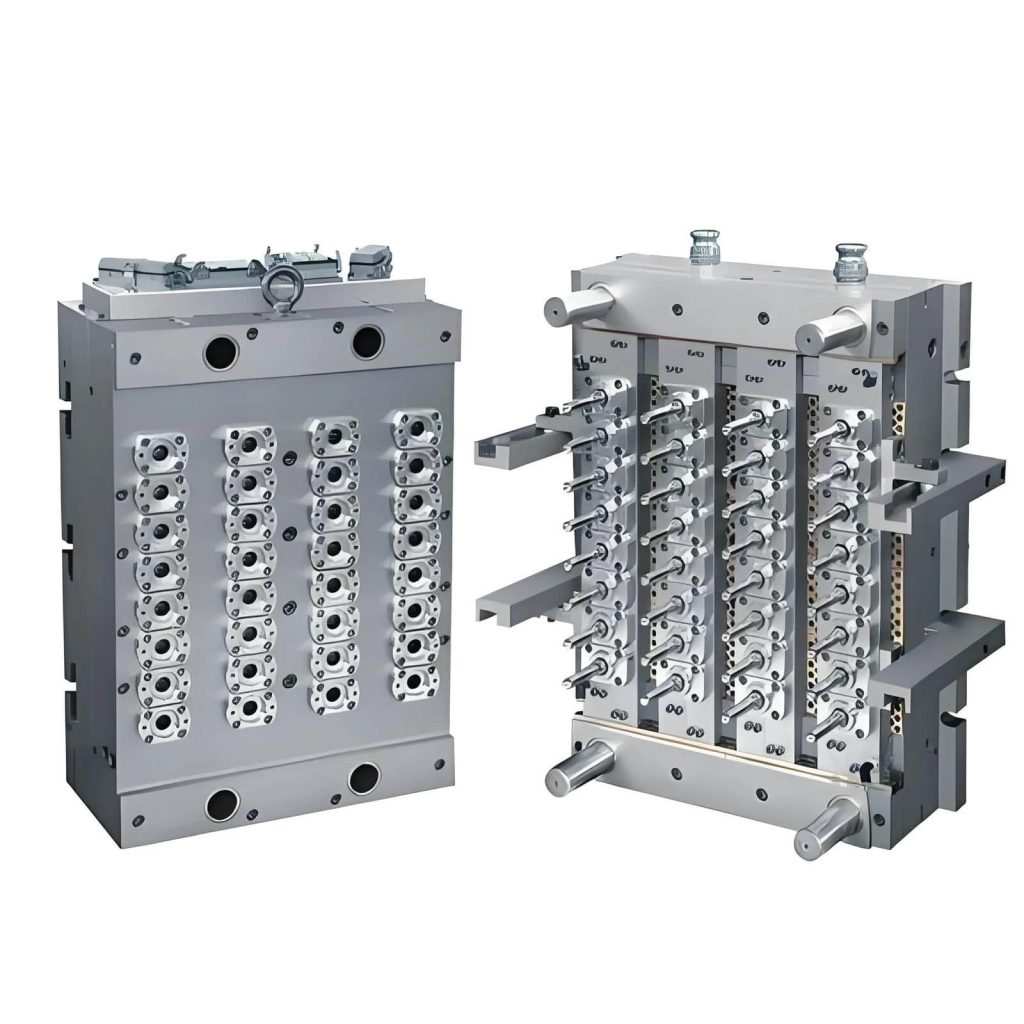
A single-cavity injection mould is a mould designed to produce one plastic part in each injection cycle. It is one of the simplest injection mould configurations and is commonly used for prototypes, small production runs, large components, and products that require frequent design changes.
How Does a Single-Cavity Injection Mould Work?
The basic injection moulding cycle includes:
1. Mould Closing
The mould closes, bringing the core and cavity together to create the moulding space.
2. Plastic Injection
Molten plastic is injected through the sprue, runner, and gate into the single cavity.
3. Filling and Packing
The cavity is filled with molten plastic, followed by holding or packing pressure to help compensate for material shrinkage.
4. Cooling
Cooling channels remove heat from the mould while the plastic solidifies.
5. Mould Opening
After sufficient cooling, the mould opens.
6. Ejection
Ejector pins or another ejection mechanism remove the finished component.
The mould then closes again for the next cycle.
Main Components
A single-cavity injection mould typically includes:
- Core – Forms the internal features of the part.
- Cavity – Forms the external shape.
- Sprue – Main channel carrying molten plastic from the machine nozzle.
- Runner – Carries material from the sprue toward the gate.
- Gate – Entry point through which plastic enters the cavity.
- Cooling Channels – Control mould temperature and help solidify the part.
- Ejector Pins – Push the finished part out of the mould.
- Guide Pins and Bushes – Maintain alignment between mould halves.
- Vents – Allow trapped air and gases to escape.
Advantages
Simple Construction
A single cavity generally makes the mould easier to design, manufacture, and maintain.
Lower Tooling Investment
For suitable applications, a single-cavity mould can require less initial tooling investment than a comparable multi-cavity mould.
Easy Process Setup
Only one cavity needs to be filled, so there is no need to balance flow between multiple cavities.
Useful for Prototypes
It is practical for testing new product designs before investing in higher-output tooling.
Suitable for Large Components
Large products may be better suited to a single-cavity arrangement because of mould size and machine capacity.
Easy Design Modification
Design changes can be relatively straightforward during product development, depending on the mould construction.
Limitations
- Only one part is produced per cycle.
- Production output is lower than with multi-cavity moulds.
- It may be less economical for very high-volume production.
- Machine time per finished part can be higher when compared with a suitable multi-cavity mould.
Single-Cavity vs. Multi-Cavity
| Feature | Single-Cavity Mould | Multi-Cavity Mould |
|---|---|---|
| Parts per cycle | 1 | 2 or more |
| Production output | Lower | Higher |
| Mould design | Generally simpler | Generally more complex |
| Flow balancing | Not required between multiple cavities | Important |
| Initial tooling cost | Generally lower | Generally higher |
| Maintenance | Generally simpler | More involved |
| Typical use | Prototypes, low-volume and large parts | Medium- to high-volume production |
When Is a Single-Cavity Mould Suitable?
A single-cavity mould may be appropriate when:
- Production quantities are relatively low
- A product is still being developed
- The component is large
- Frequent design changes are expected
- Simple process control is desired
- Initial tooling cost needs to be controlled
In Short
A single-cavity injection mould produces one plastic component per injection cycle. Its relatively simple construction and straightforward process control make it useful for prototyping, low-volume production, large components, and product development.