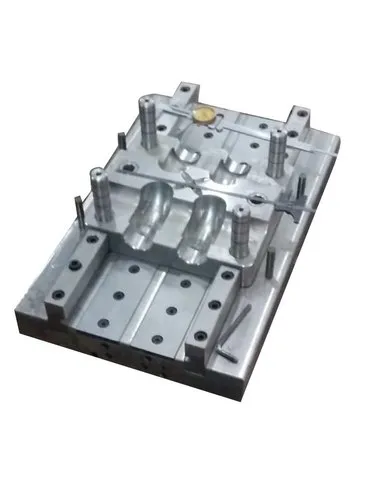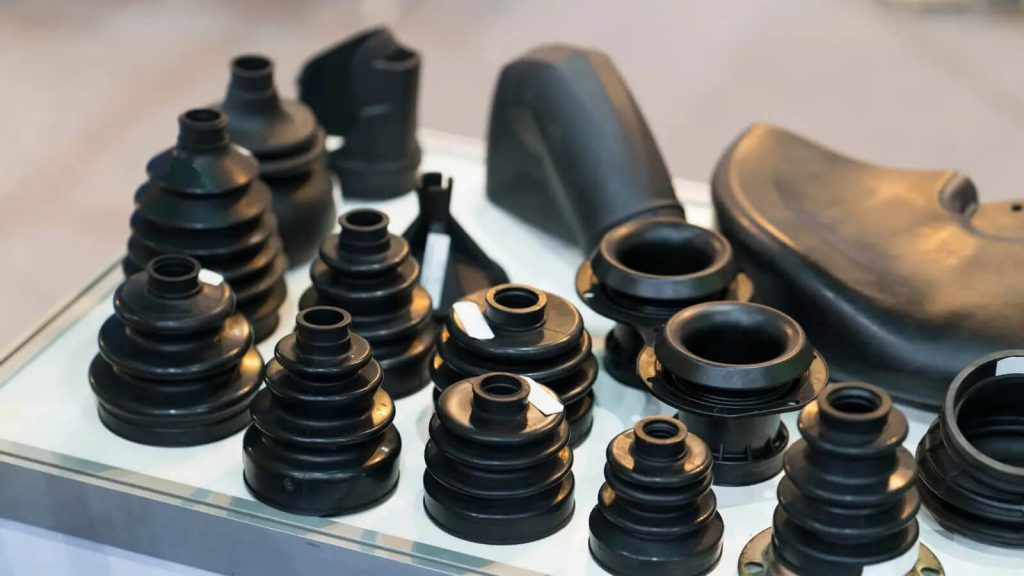
Thermoplastic compression moulding is a manufacturing process in which a thermoplastic material is heated until it becomes soft or molten and then shaped inside a mould using pressure. Unlike thermosetting materials, thermoplastics can generally be reheated and reshaped.
The process is useful for producing certain plastic components, composite parts, sheets, and specialized products where compression provides advantages over conventional injection moulding.
How Thermoplastic Compression Moulding Works
1. Material Preparation
A measured quantity of thermoplastic material is prepared. It may be supplied as a sheet, pellet, preform, or composite charge.
2. Mould Preparation
The mould is cleaned and heated to the required processing temperature.
3. Material Placement
The thermoplastic charge is positioned inside the mould cavity.
4. Heating
The material is heated until it reaches a suitable softening or processing temperature.
5. Compression
The mould closes and pressure is applied. The softened thermoplastic flows and spreads to fill the mould cavity.
6. Cooling Under Pressure
The material is cooled while pressure is maintained so that the component retains its required shape and dimensions.
7. Mould Opening and Part Removal
After sufficient cooling, the mould opens and the finished component is removed.
Common Thermoplastic Materials
Materials that can be used in specialized compression moulding applications include:
- Polypropylene (PP)
- Polyethylene (PE)
- Polyamide (PA)
- Polycarbonate (PC)
- ABS
- PET
- Various thermoplastic composite materials
The appropriate material depends on the product and processing requirements.
Thermoplastic Composites
Compression moulding is particularly useful for some fiber-reinforced thermoplastic composites.
Reinforcing materials may include:
- Glass fiber
- Carbon fiber
- Natural fibers
- Aramid fibers
These reinforcements can improve the strength, stiffness, and dimensional stability of the finished product.
Advantages
1. Good Material Utilization
The process can provide efficient use of pre-measured material charges.
2. Suitable for Large Components
Compression moulding can be used for relatively large and broad components.
3. Good Surface Finish
A properly designed mould can provide a consistent surface finish.
4. Suitable for Composite Materials
Thermoplastic composites can be processed using compression techniques.
5. Reprocessable Material
Unlike thermosets, many thermoplastics can be reheated and reshaped.
6. Lower Internal Stress in Some Applications
The process conditions can be selected to help achieve desirable dimensional and mechanical characteristics.
Limitations
- Cycle time can include significant heating and cooling stages.
- Mould temperature and pressure must be carefully controlled.
- Not every thermoplastic is suitable for every compression moulding setup.
- Complex geometries may be more challenging than with injection moulding.
- Specialized heating and cooling systems may be required.
Thermoplastic vs. Thermoset Compression Moulding
| Feature | Thermoplastic | Thermoset |
|---|---|---|
| Material behavior | Softens when heated | Cures permanently when heated |
| Reheating | Can generally be reheated | Cannot normally be remelted |
| Cooling | Solidifies during cooling | Curing creates permanent shape |
| Common materials | PP, PE, PA, PC | Phenolic, melamine, epoxy |
| Recycling | Many types can be reprocessed | Generally more difficult |
| Applications | Plastic and composite components | Electrical, automotive, industrial parts |
Applications
Thermoplastic compression moulding can be used for:
- Automotive components
- Composite panels
- Electrical components
- Large plastic parts
- Consumer products
- Industrial components
- Lightweight structural components
Important Process Parameters
The main parameters to control include:
- Material temperature
- Mould temperature
- Compression pressure
- Heating time
- Cooling time
- Material quantity
- Mould closing speed
- Cooling conditions
In Short
Thermoplastic compression moulding uses heat and pressure to shape thermoplastic materials inside a mould. The material is softened by heating, compressed into the desired shape, and cooled under controlled conditions. It is particularly useful for large components and thermoplastic composite products where controlled compression can provide the required shape and performance.