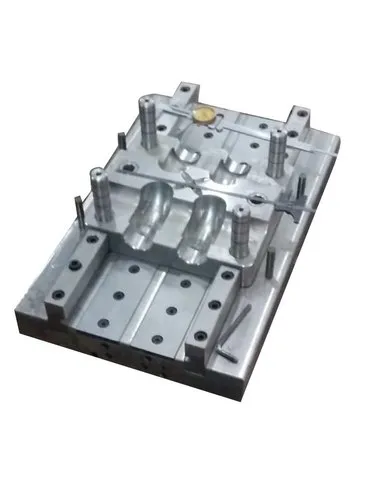
Flash-type compression moulds are a conventional type of compression moulding tool designed to manufacture plastic, rubber, and thermoset components by applying heat and pressure to a measured quantity of material inside a mould cavity. In this moulding process, a controlled amount of excess material is allowed to flow out through the clearance between the mould halves, forming a thin layer of excess material known as flash.
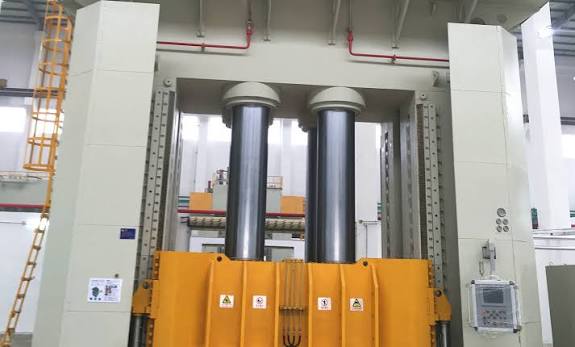
During operation, the moulding material is placed into the heated cavity, and the mould is closed using a hydraulic or mechanical press. As pressure is applied, the material softens, flows, and fills the cavity. Any excess material escapes through the parting line, helping the material fill the mould completely. The component is then cured or solidified under controlled temperature and pressure before the mould is opened and the finished part is removed. The excess flash is subsequently trimmed during post-processing.
Flash-type compression moulds are widely used for manufacturing rubber seals, gaskets, electrical insulation components, automotive parts, industrial components, handles, and thermoset plastic products.
Key Advantages
- Simple and robust mould construction
- Relatively low initial tooling and manufacturing costs
- Suitable for a wide range of thermoset plastics and rubber materials
- Effective filling of mould cavities through applied compression pressure
- Suitable for manufacturing large and relatively complex components
- Allows excess material to escape through the parting line
- Easy mould operation and maintenance
- Suitable for low- to medium-volume production applications
Key Design Considerations
- Parting Line Design: Ensure appropriate parting-line clearance to allow controlled flash formation while maintaining component accuracy.
- Cavity Design: Develop accurate cavity geometry to achieve the required component dimensions and surface finish.
- Flash Control: Optimize the mould clearance to manage excess material flow and minimize excessive flash.
- Material Charge: Determine the correct quantity and distribution of moulding material to ensure complete cavity filling.
- Heating System: Maintain uniform mould temperature to support consistent material flow and curing.
- Pressure Distribution: Ensure sufficient and uniform compression pressure throughout the mould cavity.
- Venting: Provide suitable venting to allow trapped air and gases to escape during mould closure.
- Trimming Requirements: Consider flash thickness and trimming accessibility to simplify post-moulding operations.
Flash-type compression moulds are particularly useful for applications where simple tooling, material flexibility, and reliable cavity filling are important. However, the process typically produces excess flash that requires additional trimming, which can increase material waste and post-processing time.
A properly designed flash-type compression mould provides reliable mould filling, consistent component quality, straightforward operation, and economical tooling, making it a practical solution for a wide range of rubber and thermoset moulding applications.