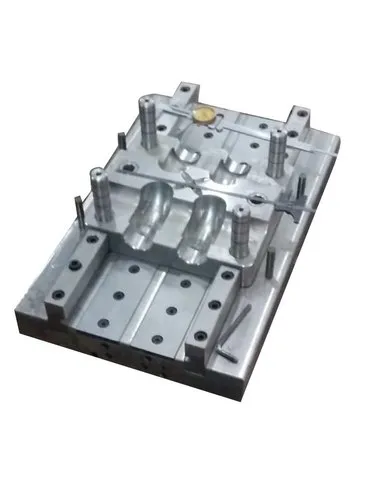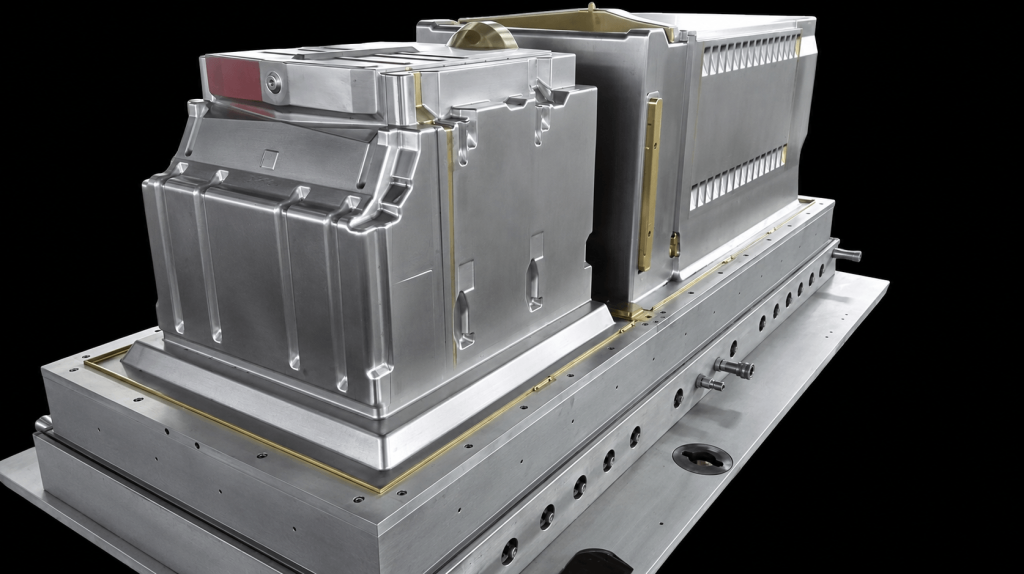
Undercuts in thermoforming moulds are features that prevent a formed plastic component from being removed directly from a conventional mould along the normal direction of mould opening. They may occur as recesses, projections, hooks, grooves, or other geometrical features that lock the formed part onto the mould.
Undercuts can provide useful functional features in thermoformed products, but they require careful mould design because the formed plastic sheet can grip the mould during demoulding. If not properly addressed, undercuts may cause part deformation, tearing, surface damage, or difficult mould release.
Common Methods for Handling Undercuts
- Collapsible Cores: Use cores that can contract or collapse before the component is removed, allowing the undercut to clear the mould.
- Sliding Inserts: Incorporate movable inserts that retract from the undercut area before demoulding.
- Split Moulds: Use multiple mould sections that separate in different directions to release complex geometries.
- Flexible or Compliant Mould Features: Suitable mould materials or flexible sections can sometimes accommodate limited undercuts.
- Air-Assisted Release: Compressed air can be used in suitable mould designs to help separate the formed component from the mould surface.
- Redesigning the Component: Where possible, modify the geometry to reduce or eliminate unnecessary undercuts and simplify mould construction.
Key Design Considerations
- Undercut Depth: Evaluate the size and severity of the undercut and determine whether the material can release without excessive deformation.
- Material Flexibility: Consider the forming material’s flexibility, elongation, shrinkage, and temperature-dependent behavior.
- Draft Angles: Incorporate sufficient draft wherever possible to facilitate release.
- Mould Opening Direction: Design the undercut and release mechanism around the direction in which the mould separates.
- Part Thickness: Ensure that material thinning around the undercut does not compromise component strength.
- Cooling: Control cooling so that the part has sufficient strength and flexibility during demoulding.
- Release Mechanism: Provide adequate clearance and movement for slides, collapsible cores, or other mechanisms.
- Mould Maintenance: Moving components require appropriate access, lubrication where applicable, and wear-resistant construction.
Advantages of Incorporating Undercuts
- Allows more complex component geometries
- Enables integral locking and snap-fit features
- Reduces the need for separate assembly components
- Provides additional functional features
- Can improve product appearance and usability
- Supports more advanced thermoformed product designs
Potential Challenges
Undercuts generally increase mould complexity, manufacturing cost, maintenance requirements, and cycle time. They can also make trimming and demoulding more difficult. For this reason, unnecessary undercuts should be avoided during product design whenever possible.
A properly engineered thermoforming mould can accommodate required undercuts through collapsible cores, sliding mechanisms, split moulds, or other specialized release solutions. Careful consideration of material behavior, draft, cooling, and demoulding direction ensures that complex thermoformed components can be produced reliably without damaging the part.
Overall, effective undercut design provides greater geometric freedom while maintaining reliable demoulding, component quality, and production efficiency.