1. Introduction
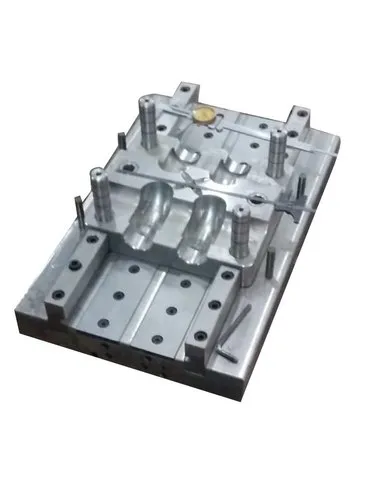
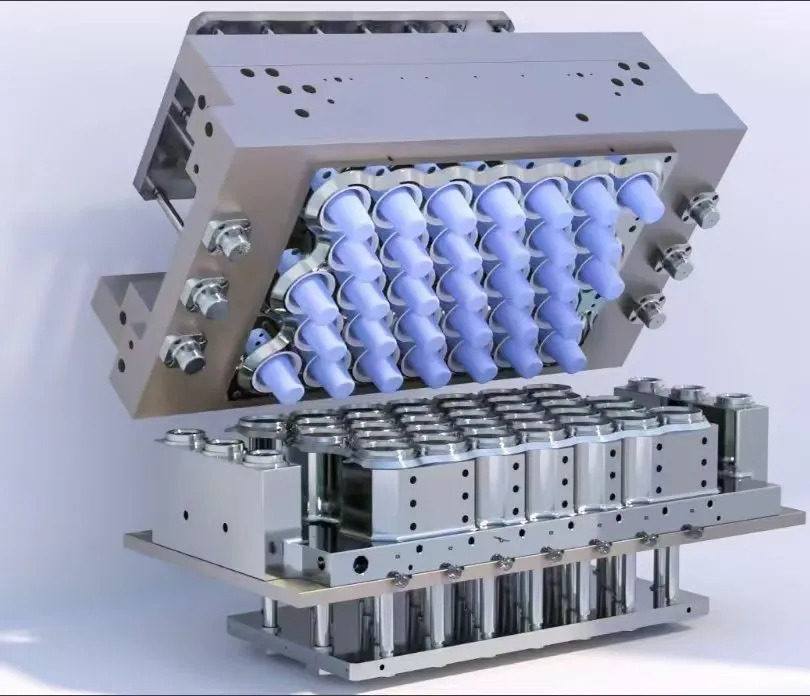
Cooling systems for thermoforming moulds are essential for removing heat from heated plastic sheets after they have been shaped into the required form. The cooling process allows the plastic to become rigid, maintain its shape, achieve the required dimensions, and be removed from the mould without deformation.
In thermoforming, a thermoplastic sheet is heated until it becomes soft and flexible. The sheet is then formed over or into a mould using vacuum, compressed air, or mechanical force. After forming, heat must be removed from the plastic and mould so that the product becomes sufficiently stable for demoulding.
An efficient cooling system improves product quality, reduces cycle time, minimises defects, and increases production efficiency.
2. Functions of a Cooling System
The main functions of a thermoforming mould cooling system are:
- Heat removal: Removes excess heat from the mould and formed plastic.
- Shape retention: Helps the plastic maintain the shape of the mould.
- Dimensional accuracy: Reduces warping, shrinkage variations, and distortion.
- Cycle-time reduction: Speeds up cooling so that products can be removed sooner.
- Surface quality: Helps prevent uneven surface finish and local deformation.
- Temperature control: Maintains consistent mould temperatures during production.
- Productivity improvement: Supports stable, repeatable production cycles.
Cooling is especially important when producing thick plastic sheets, deep-drawn components, and parts with complex geometries.
3. Working Principle of Thermoforming Mould Cooling
The cooling process generally follows five stages.
- Heating: The thermoplastic sheet is heated until it reaches the appropriate forming temperature.
- Forming: The softened sheet is shaped against the mould using vacuum, compressed air, or mechanical force.
- Heat transfer: Heat moves from the hot plastic into the mould and is transferred to the cooling medium.
- Solidification: The plastic cools and becomes sufficiently rigid to retain its shape.
- Demoulding: The formed product is removed from the mould for trimming, inspection, or further processing.
The cooling time depends on the plastic material, sheet thickness, mould temperature, cooling-medium temperature, and efficiency of heat transfer.
4. Types of Cooling Systems Used in Thermoforming Moulds
4.1 Water Cooling System
A water cooling system uses circulating water to remove heat from the mould. Cooling channels are incorporated into the mould body, allowing water to absorb heat and carry it away.
Main components:
- Cooling channels inside the mould
- Water inlet and outlet connections
- Circulation pump
- Water reservoir
- Control valves
- Hoses and pipes
- Temperature and pressure sensors
- Heat exchanger or chiller, if required
Working principle:
Cool water enters the mould through the inlet and flows through internal channels. As it circulates, it absorbs heat from the mould. The warmer water exits through the outlet and returns to a cooling unit or reservoir before being circulated again.
Advantages:
- High heat-removal capacity
- Relatively uniform cooling when channels are well designed
- Reduced cooling time
- Suitable for continuous industrial production
- Good temperature control
Disadvantages:
- Risk of leakage
- Possible corrosion or scale formation
- Cooling channels may become blocked
- Requires regular maintenance and water-quality control
Applications: Plastic packaging trays, automotive components, appliance liners, containers, and other products manufactured at high production rates.
4.2 Air Cooling System
An air cooling system uses natural or forced airflow to remove heat from the mould or formed plastic.
Main components:
- Air compressor or blower
- Air supply pipes
- Air nozzles
- Control valves
- Filters
- Air distribution manifolds
Working principle:
Air is directed toward the mould or the formed plastic surface. Heat transfers from the hot surface to the moving air and is carried away from the forming area.
Advantages:
- Simple system design
- No liquid leakage risk
- Relatively easy maintenance
- Useful for cooling exposed surfaces
- Can assist with product release and post-forming cooling
Disadvantages:
- Generally less effective than water cooling for large heat loads
- Cooling performance depends on airflow and nozzle positioning
- May cause uneven cooling if air distribution is poor
- Compressed air can have high operating costs
Applications: Thin plastic sheets, auxiliary cooling operations, and applications where liquid cooling is unsuitable.
4.3 Chilled-Water Cooling System
A chilled-water system uses an industrial chiller to maintain the cooling water at a controlled temperature.
Main components:
- Industrial chiller
- Circulation pump
- Water reservoir or buffer tank
- Cooling channels
- Temperature controller
- Flow meter
- Pipes and valves
Working principle:
The chiller removes heat from the circulating water. The cooled water flows through the mould channels, absorbs heat, and returns to the chiller for recooling.
Advantages:
- Precise temperature control
- Consistent cooling performance
- Suitable for high-speed production
- Better control when ambient temperatures fluctuate
- Can improve dimensional consistency
Disadvantages:
- Higher initial investment
- Electricity consumption
- Requires regular servicing
- Condensation may occur if the mould surface becomes colder than the surrounding air’s dew point
Applications: High-volume thermoforming, temperature-sensitive materials, and production lines requiring consistent cycle times.
4.4 Natural Convection Cooling
Natural convection cooling relies on the movement of surrounding air without using fans or blowers.
Heat moves from the hot mould into the surrounding air. As the air warms, it rises and is replaced by cooler air.
Advantages:
- Low installation cost
- Simple construction
- Minimal maintenance
- No additional fan or pump required
Disadvantages:
- Slow heat removal
- Limited temperature control
- Longer production cycles
- Less suitable for high-volume manufacturing
Natural convection is typically used in simple, low-production applications where rapid cooling is not essential.
4.5 Combined Water and Air Cooling
Combined cooling systems use water to remove most of the heat from the mould and air to cool exposed surfaces or areas that are difficult to cool through internal channels.
Advantages:
- Effective heat removal
- Greater flexibility
- Potential reduction in cycle time
- Improved cooling of complex mould geometries
Disadvantages:
- More complex system design
- Higher equipment and maintenance requirements
- Requires careful coordination of water flow and airflow
These systems are useful for large components, deep cavities, complex moulds, and demanding production cycles.
5. Comparison of Cooling Systems
| Cooling system | Cooling efficiency | Cost | Temperature control | Typical application |
|---|---|---|---|---|
| Water cooling | High | Moderate | Good | General industrial production |
| Air cooling | Low to moderate | Low to moderate | Moderate | Surface and auxiliary cooling |
| Chilled water | High | High | Very good | High-speed production |
| Natural convection | Low | Very low | Limited | Low-volume production |
| Combined water and air | High | Moderate to high | Good | Complex moulds |
The actual performance of each system depends on the mould material, cooling-channel design, plastic thickness, heat load, and operating conditions.
6. Design of Cooling Channels in Thermoforming Moulds
Cooling-channel design is one of the most important aspects of mould cooling. Proper channel placement allows heat to be removed efficiently while maintaining mould strength and uniform temperature.
6.1 Channel Position
Cooling channels should be located close enough to the mould surface to transfer heat efficiently without weakening the mould.
If channels are too far from the surface, cooling may be slow. If they are too close, the mould may develop weak sections or uneven surface temperatures.
6.2 Channel Diameter
The diameter of the cooling channels influences water flow, pressure drop, and heat transfer.
- Small channels may restrict flow and become blocked more easily.
- Large channels may require more space and can affect mould strength.
- The correct diameter depends on the required flow rate, mould size, and cooling load.
6.3 Channel Spacing
Uniform spacing helps maintain a consistent mould temperature. Poor spacing can produce hot and cold regions, resulting in uneven shrinkage, warping, or inconsistent surface quality.
6.4 Cooling of Deep Cavities
Deep cavities and complex geometries can be difficult to cool because heat may need to travel farther to reach a cooling channel.
Cooling should be designed to address the cavity base, sidewalls, corners, and other regions where heat may accumulate.
6.5 Sealing and Connections
Cooling circuits must be sealed properly to prevent water leakage. Connections, plugs, seals, and fittings should withstand the expected pressure and operating temperature.
6.6 Separate Cooling Circuits
Large or complex moulds may require separate cooling circuits for different regions. This helps control flow and temperature where sections have different cooling requirements.
7. Factors Affecting Cooling Performance
7.1 Mould Material
The thermal conductivity of the mould material influences how quickly heat moves from the forming surface to the cooling channels.
- Aluminium: High thermal conductivity and fast heat transfer; commonly used for thermoforming moulds.
- Steel: Generally lower thermal conductivity than aluminium but often offers greater strength and wear resistance.
- Copper alloys: High thermal conductivity, although suitability depends on strength, wear resistance, and cost.
7.2 Plastic Material
Different thermoplastics have different thermal properties, forming temperatures, shrinkage behaviour, and cooling requirements.
Common thermoforming materials include PET, HIPS, ABS, PP, and PVC. Cooling parameters should be selected according to the specific material being processed.
7.3 Sheet Thickness
Thicker plastic sheets generally require longer cooling times because heat takes longer to move from the interior of the material to the mould surface.
Thin sheets may cool more quickly but can still deform if removed before they have enough dimensional stability.
7.4 Cooling-Water Temperature
Lower water temperatures can increase the temperature difference between the mould and the cooling medium, improving heat transfer.
However, excessively cold water can cause condensation or uneven cooling. The water temperature should be selected according to the plastic material and the required process conditions.
7.5 Water Flow Rate
Water flow rate affects the amount of heat that can be carried away from the mould. Insufficient flow may cause poor cooling, while excessive flow may increase pumping costs without providing a proportional improvement.
7.6 Cooling Time
Cooling time must be sufficient for the product to retain its shape during demoulding. Removing a part too early may cause warping, stretching, or dimensional instability.
The objective is to use the shortest cooling time that consistently produces acceptable parts.
8. Common Cooling Problems and Their Solutions
| Problem | Possible cause | Recommended solution |
|---|---|---|
| Long cooling time | Low flow rate or inadequate cooling capacity | Check flow, channel design, and chiller performance |
| Warping | Uneven cooling or premature demoulding | Improve temperature uniformity and verify release conditions |
| Uneven surface finish | Local hot spots or inconsistent mould contact | Review channel placement and forming conditions |
| Blocked channels | Scale, debris, or corrosion products | Clean channels and improve water treatment |
| Water leakage | Damaged seals or loose fittings | Inspect and replace defective components |
| Condensation | Mould surface below the surrounding air’s dew point | Adjust coolant temperature or control humidity |
| Inconsistent dimensions | Variable mould temperature or cooling time | Monitor temperature and standardise the process |
| Poor cooling in deep sections | Insufficient local heat removal | Redesign the cooling circuit or add targeted cooling |
9. Maintenance of Cooling Systems
Regular maintenance is essential for reliable operation and consistent product quality.
Daily maintenance
- Check cooling-water inlet and outlet temperatures.
- Inspect pipes and fittings for leaks.
- Confirm that pumps, fans, and chillers operate normally.
- Monitor unusual changes in cycle time.
- Check for abnormal noise or vibration.
Periodic maintenance
- Clean filters and strainers.
- Inspect valves, hoses, seals, and connections.
- Check water quality and corrosion indicators.
- Remove scale and deposits using methods compatible with the mould material.
- Verify temperature sensors, flow meters, and pressure gauges.
- Inspect cooling channels if performance decreases.
Suitable water treatment is particularly important in closed-loop cooling systems because it helps reduce corrosion, scale formation, and biological growth.
10. Calculation of Cooling Load
The approximate sensible heat removed from a plastic part can be calculated using:
Q=mcpΔT
Where:
- Q = heat removed, in joules (J)
- m = mass of the plastic, in kilograms (kg)
- cp = specific heat capacity of the plastic, in J/(kg·K)
- ΔT = temperature reduction, in °C or K
For a water-cooling circuit, the rate of heat removed by the water can be estimated using:
Q˙=m˙wcp,w(Tout−Tin)
Where:
- Q˙ = heat-transfer rate, in watts (W)
- m˙w = water mass-flow rate, in kg/s
- cp,w = specific heat capacity of water
- Tout = water outlet temperature
- Tin = water inlet temperature
These calculations provide an initial estimate. Final system sizing should also account for mould heat capacity, heat-transfer resistance, cycle duration, thermal transitions in the plastic, and the chiller’s operating conditions.
11. Best Practices for Efficient Cooling
- Design cooling channels to follow the mould geometry as closely as practical.
- Maintain a uniform temperature across the mould surface.
- Use an appropriately sized pump, chiller, and cooling circuit.
- Monitor inlet and outlet temperatures to identify performance changes.
- Allow the plastic to reach adequate dimensional stability before demoulding.
- Avoid excessively low coolant temperatures unless required by the process.
- Keep cooling channels clean and maintain suitable water quality.
- Optimise cooling parameters for each plastic material and sheet thickness.
- Investigate persistent hot spots using temperature sensors or thermal imaging.
- Optimise cooling time together with forming temperature, pressure, and mould conditions.
12. Conclusion
Cooling systems are a critical part of thermoforming mould design. They affect production cycle time, dimensional accuracy, surface finish, product stability, and manufacturing efficiency.
Water cooling and chilled-water systems are generally suitable for demanding industrial production, while air cooling and natural convection are useful for simpler applications or supplementary cooling.
The most appropriate cooling system depends on the mould geometry, tooling material, plastic type, sheet thickness, production rate, and required quality. A well-designed cooling circuit, combined with correct operating conditions and regular maintenance, ensures reliable and efficient thermoforming production.