Author name: admin

CAD/CAM Software Used in Die Design

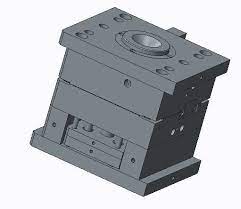
Die design is a crucial aspect of manufacturing processes such as metal stamping, plastic molding, and die casting. It involves creating tools (dies) that shape or cut materials into desired forms. The use of CAD (Computer-Aided Design) and CAM (Computer-Aided Manufacturing) software has revolutionized die design by increasing accuracy, efficiency, and flexibility in the design […]

CAD/CAM Software Used in Die Design Read More »

Heat Treatment of Injection Dies

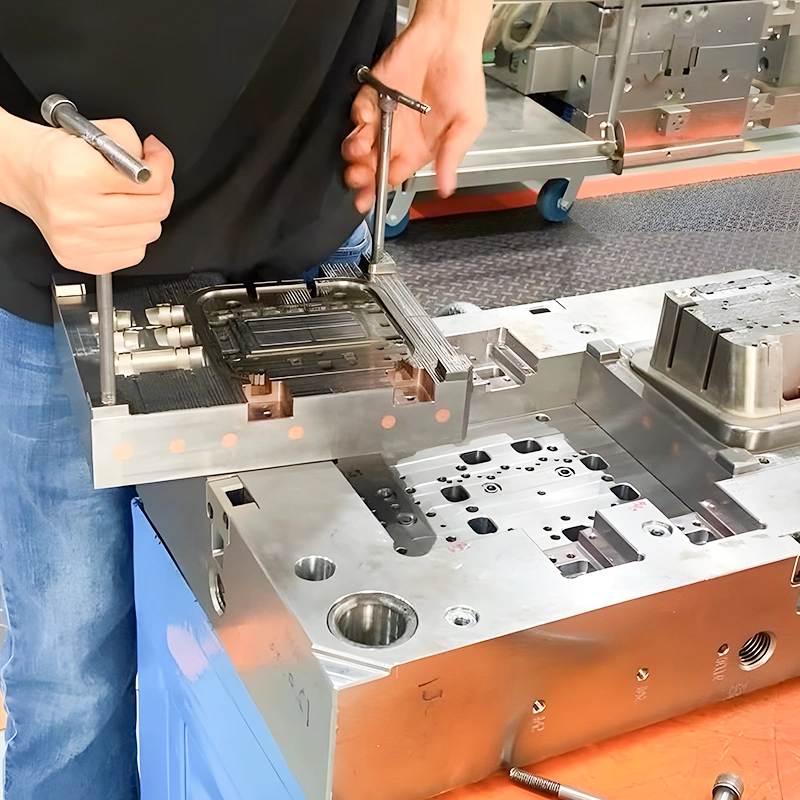
1. Introduction Injection dies are critical components used in the plastic injection molding process to shape molten plastic into final products. These dies are typically made from high-grade tool steels and are expected to withstand high pressure, temperature, and repetitive mechanical stress. To enhance their performance, durability, and wear resistance, heat treatment processes are employed.

Heat Treatment of Injection Dies Read More »

CNC machining for die manufacturing

CNC (Computer Numerical Control) machining has revolutionized the process of die manufacturing, enabling high precision, repeatability, and efficiency in producing complex die components. Dies are critical tools used in manufacturing processes such as stamping, forging, injection molding, and extrusion. As the demand for high-quality, intricate, and durable dies grows, CNC machining has become the backbone

CNC machining for die manufacturing Read More »

Quality Control in Die and Mould Manufacturing

Die and mould manufacturing is a precision-driven process fundamental to various industries, including automotive, aerospace, consumer goods, and electronics. These components are used to shape and form materials into specific geometries through casting, forging, stamping, or injection molding. Due to their critical role in production, maintaining high quality in die and mould manufacturing is essential.

Quality Control in Die and Mould Manufacturing Read More »

Optimizing parting lines and ejection in houseware moulds

Injection moulding is a critical process in the manufacturing of houseware products such as containers, kitchen utensils, storage boxes, and other consumer goods. Two of the most important design considerations in mould development are the parting line and the ejection system. Optimization of these features directly influences part quality, production efficiency, mould longevity, and cost-effectiveness.

Optimizing parting lines and ejection in houseware moulds Read More »

Die Design for Complex Geometries

Die design plays a critical role in manufacturing processes like stamping, forging, extrusion, and injection molding. As product demands evolve toward intricate and highly precise components, die design for complex geometries has become increasingly important. This involves creating tooling capable of producing parts with tight tolerances, intricate contours, undercuts, thin walls, and multi-dimensional features. 1.

Die Design for Complex Geometries Read More »

Die design for collapsible cores in houseware moulds

1. Introduction Houseware products such as containers, bottles, storage boxes, and kitchen tools often feature undercuts, internal threads, or complex geometries that cannot be easily demoulded using standard straight-pull core mechanisms. To address this, collapsible cores are employed in die design. These are specially designed mechanisms that collapse inward or retract, allowing easy ejection of

Die design for collapsible cores in houseware moulds Read More »

Surface Treatment and Coating for Dies

Dies are critical components in various manufacturing processes such as forging, extrusion, and die casting. These tools are constantly subjected to extreme mechanical, thermal, and chemical stresses, leading to wear, fatigue, and failure over time. Surface treatment and coating technologies are employed to enhance the performance, lifespan, and reliability of dies by improving their surface

Surface Treatment and Coating for Dies Read More »

Scroll to Top