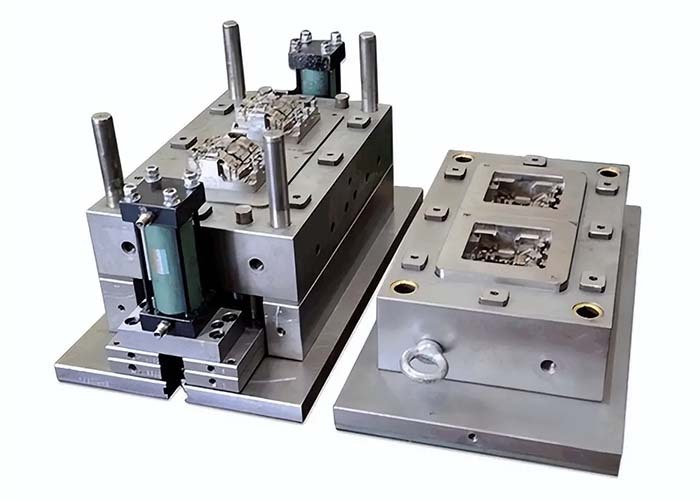
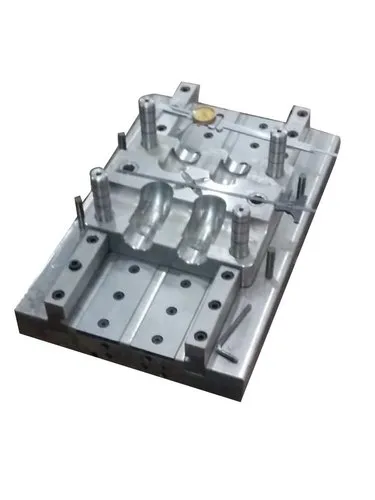
Dies and moulds are essential tools used in manufacturing for shaping, cutting, and forming materials into specific designs and products. They are typically used in processes such as metalworking, plastic molding, die casting, and forging. The classification of dies and moulds is based on various factors such as the type of operation, number of cavities, construction, and materials processed.
1. Classification Based on Application
A. Dies
Dies are primarily used for shaping or cutting materials, especially in sheet metal operations.
Cutting Dies: Used to cut material.
Blanking Dies
Piercing Dies
Trimming Dies
Parting Dies
Notching Dies
Forming Dies: Used to change the shape without cutting.
Bending Dies
Drawing Dies
Forming Dies
Embossing Dies
Combination Dies: Perform both cutting and forming in a single stroke.
Compound Dies: Perform multiple cutting operations in one stroke at a single station.
Progressive Dies: Have multiple stations where different operations are performed simultaneously as the strip moves through.
Transfer Dies: The workpiece is moved from one station to another using mechanical transfer systems.
B. Moulds
Moulds are mainly used in the production of plastic, rubber, glass, and die-cast components.
Injection Moulds: Used in plastic injection molding processes to produce complex shapes.
Compression Moulds: Used for thermosetting plastics where material is placed into the mould and compressed to form shape.
Blow Moulds: Used to form hollow plastic products like bottles.
Extrusion Moulds (Dies): Used in extrusion processes to produce items with a fixed cross-sectional profile.
Transfer Moulds: Similar to compression moulds, but material is pre-heated and transferred into the mould cavity.
Rotational Moulds: Used to form hollow parts by rotating the mould around multiple axes while heating.
Die Casting Moulds: Used to shape molten metal (usually non-ferrous) under high pressure.
2. Classification Based on Number of Cavities
Single-Cavity Dies/Moulds: Produce one part per cycle.
Multi-Cavity Dies/Moulds: Produce multiple identical parts in a single cycle.
Family Moulds: Contain cavities for different parts that are assembled together.
3. Classification Based on Construction
Solid Dies/Moulds: Made from a single block of material.
Split Dies/Moulds: Made in sections to allow removal of complex-shaped parts.
Built-up Dies/Moulds: Assembled from multiple parts, useful for ease of repair or modifications.
4. Classification Based on Mould Opening
Two-Plate Moulds: Simple construction with one parting line.
Three-Plate Moulds: Additional plate for gate system, providing better control and part quality.
Hot Runner Moulds: Use heated channels to keep plastic molten until it reaches the cavity, reducing waste.
Cold Runner Moulds: Traditional moulds where the runner cools along with the part and must be trimmed.
5. Classification Based on Production Volume
Prototype Dies/Moulds: For short runs and initial design testing.
Production Dies/Moulds: For high-volume production, made of durable materials like hardened steel.
Conclusion
The classification of dies and moulds helps manufacturers choose the appropriate tooling for specific production needs. Understanding their types, based on application, design, construction, and capacity, is crucial for efficient and cost-effective manufacturing processes. Each type has its own advantages and is selected based on the material being processed, the complexity of the design, and the volume of production required.