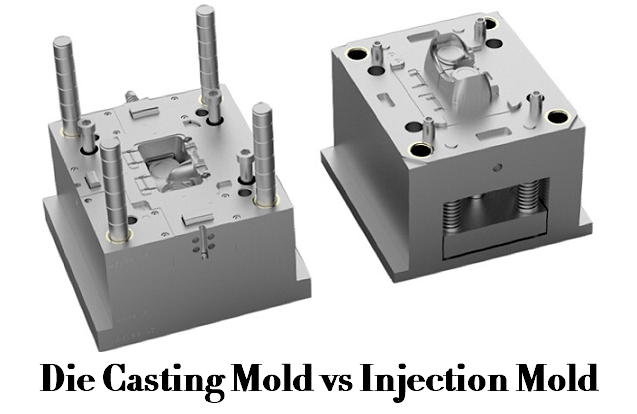
| Definition | A die is a specialized tool used to cut, shape, or form material (usually metal) using a press. | A mould is a hollow container used to shape molten or pliable material (like plastic or metal) into a desired form. |
| Materials Processed | Typically used for metals (sheet metal, wire, etc.) | Used for plastics, rubber, glass, and molten metals |
| Process Type | Usually used in cold forming or cutting operations like stamping, forging, drawing, and extrusion | Used in casting or moulding processes like injection moulding, blow moulding, or die casting |
| Working Principle | Works by applying high pressure to deform or cut material | Works by pouring or injecting liquid or pliable material into a cavity |
| Application Examples | Coin making, metal stamping, thread rolling, wire drawing | Plastic bottle manufacturing, metal casting, rubber parts |
| Cavity Presence | May or may not have a cavity (depends on the operation) | Always has a cavity shaped like the final product |
| Tool Type | More often a cutting or shaping tool | Primarily a forming tool |
| Manufacturing Tolerance | Usually higher precision for metal components | May allow for slightly less tolerance (depends on material) |
| Cost | Generally lower for simple dies; high for complex metal forming dies | Can be more expensive, especially for large or multi-cavity moulds |
| Common Industries | Automotive, aerospace, electronics (metal parts) | Packaging, consumer goods, medical devices (plastic/rubber parts) |