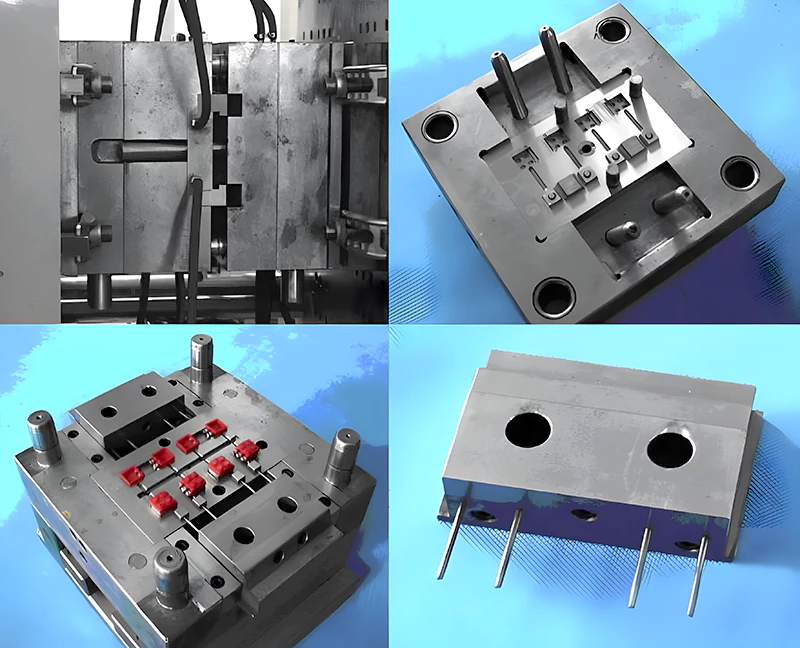
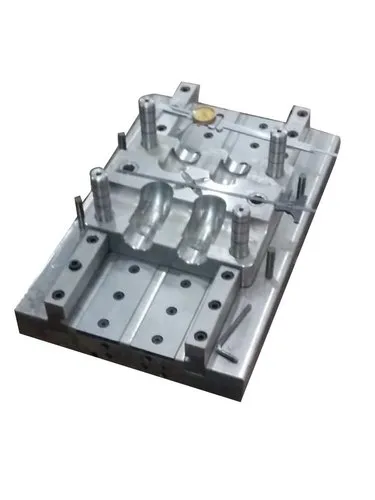
Injection moulds are specialized tools used to shape plastic materials into desired forms by injecting molten material into a cavity. The type of mould used significantly affects the quality, efficiency, and complexity of the final product. Below are the main types of injection moulds categorized based on design, functionality, and application.
1. Two-Plate Mould
Description:
This is the most commonly used mould type. It consists of two main halves – the cavity side (stationary) and the core side (moving). The parting line divides the mould into two plates.
Features:
Simple design and easy to maintain
Part is ejected when the two plates separate
Suitable for basic parts without undercuts
Applications:
Consumer products, toys, containers, etc.
2. Three-Plate Mould
Description:
Includes an additional plate between the cavity and core that allows for better gating locations, especially center gating.
Features:
Allows more complex part designs
Runner system is separated from the part
Slightly more expensive and complex than two-plate moulds
Applications:
Parts requiring automatic degating or multiple cavities with central gating.
3. Hot Runner Mould
Description:
Uses heated components to keep the plastic in a molten state within the runner system.
Features:
No runner waste (runner-less system)
Reduces material waste and cycle time
More expensive and requires maintenance of heating elements
Applications:
High-volume production of precision parts.
4. Cold Runner Mould
Description:
Traditional runner system where molten plastic flows through unheated channels and solidifies with the part.
Features:
Simple and less expensive than hot runners
Runners must be manually or automatically removed
Higher material waste compared to hot runner systems
Applications:
Low to medium-volume production, or parts where material costs are not critical.
5. Stack Mould
Description:
A multi-level mould system where multiple parting surfaces allow for increased part output in a single cycle.
Features:
Doubles or triples output without increasing machine size
Requires more clamping force and complex mould design
Increases productivity significantly
Applications:
High-volume production of thin-wall parts, caps, or packaging items.
6. Family Mould
Description:
A mould designed to produce different parts (often part of the same assembly) in one cycle, using separate cavities.
Features:
Economical for small production runs of assemblies
Parts must have similar material and processing requirements
Can complicate part ejection and filling balance
Applications:
Kits, assemblies with multiple plastic components (e.g., toys, remote control casings).
7. Unscrewing Mould
Description:
Used for parts with threaded features where automatic unscrewing is needed before part ejection.
Features:
Incorporates motors or hydraulic systems to rotate threaded cores
Complex and expensive
Provides precise threading on internal/external surfaces
Applications:
Bottle caps, threaded closures, medical or automotive components.
8. Insert Mould
Description:
Allows the placement of pre-fabricated inserts (metal or plastic) into the mould before injection.
Features:
Combines multiple materials in one part
Reduces assembly time
Requires precise placement of inserts
Applications:
Electronic housings, automotive parts, medical devices.
9. Overmould
Description:
A special type of moulding where a second material is moulded over a pre-moulded part.
Features:
Enhances grip, aesthetics, or functionality
Requires tight material bonding compatibility
Common with rubberized or soft-touch surfaces
Applications:
Toothbrush handles, power tools, medical devices.
10. Gas-Assisted Injection Mould
Description:
Injects pressurized gas (usually nitrogen) into the mould cavity to create hollow sections.
Features:
Reduces material usage and part weight
Improves dimensional stability and reduces sink marks
Requires special equipment
Applications:
Handles, thick-walled parts, automotive trim.
11. Tandem Mould
Description:
Works with alternate parting surfaces and cycles two sets of cavities alternately.
Features:
Efficient for producing different parts simultaneously
Reduces machine downtime
Complex mould design
Applications:
Mass production where variety is needed.
Conclusion
Selecting the appropriate type of injection mould depends on various factors including the complexity of the part, production volume, cost, and material. Understanding the advantages and limitations of each mould type helps in optimizing the manufacturing process and improving product quality.