1. Introduction
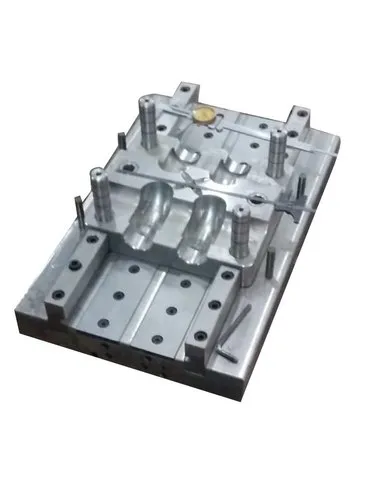
Epoxy thermoforming moulds are moulds made from epoxy resin systems, often reinforced with fillers or other materials, that are used to shape heated thermoplastic sheets into specific forms.
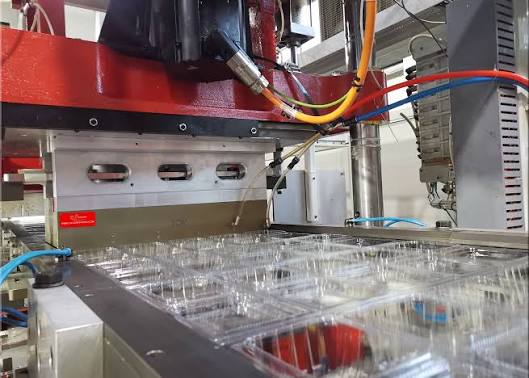
In thermoforming, a plastic sheet is heated until it becomes soft and pliable. The sheet is then formed over or into a mould using vacuum, air pressure, or mechanical force. After cooling, the plastic retains the shape of the mould.
Epoxy moulds are commonly used for prototypes, short production runs, product development, and applications where a low-cost alternative to metal tooling is desirable.
An important consideration is that standard epoxy resin is not automatically suitable for thermoforming. The resin system must have adequate heat resistance, stiffness, dimensional stability, and resistance to repeated thermal cycling.
2. What Is an Epoxy Thermoforming Mould?
An epoxy thermoforming mould is a tool whose forming surface and supporting body are made wholly or partly from cured epoxy resin.
The mould may be produced by casting epoxy around a master pattern, machining a cured epoxy tooling block, or applying an epoxy tooling system over a supporting structure.
Its main functions are to:
- Provide the required shape and dimensions of the product.
- Support the heated plastic sheet during forming.
- Maintain dimensional accuracy under vacuum or pressure.
- Transfer heat away from the plastic during cooling.
- Provide a suitable surface finish on the formed component.
3. Types of Epoxy Thermoforming Moulds
3.1 Cast Epoxy Moulds
These moulds are manufactured by pouring a suitable epoxy resin system into a prepared mould or around a master pattern.
Characteristics:
- Can reproduce complex geometries.
- Suitable for prototypes and low-volume manufacturing.
- Can incorporate mineral fillers to improve stiffness and reduce material cost.
- Require careful control of curing and post-curing.
They are particularly useful when the mould shape is too complex or expensive to machine directly from a solid block.
3.2 Machined Epoxy Tooling Blocks
These moulds are manufactured from solid epoxy-based tooling blocks that are machined to the required dimensions.
Characteristics:
- Good dimensional control when the tooling material is appropriate.
- Suitable for detailed surfaces and repeatable geometry.
- Can be polished or sealed to improve the mould finish.
- May be limited by tool wear, heat resistance, and material strength.
3.3 Filled Epoxy Moulds
Filled epoxy moulds contain materials such as mineral powders, metal particles, or other compatible fillers.
Fillers can improve certain properties, including stiffness, thermal conductivity, dimensional stability, and cost efficiency. However, the effect depends on the filler type, particle size, concentration, and resin formulation.
A highly filled epoxy system may be less tough or more difficult to machine than an unfilled system.
3.4 Epoxy Composite Tooling
Epoxy composite moulds use epoxy resin with reinforcing materials such as glass fibre or other compatible reinforcement.
Advantages:
- Improved strength-to-weight ratio.
- Greater structural stiffness when properly designed.
- Potentially suitable for larger moulds.
- Can be built over a lightweight support structure.
The mould surface may require a separate tooling coat or finishing layer to achieve the required smoothness and dimensional accuracy.
4. Materials Used in Epoxy Thermoforming Moulds
The selection of materials determines the mould’s strength, heat resistance, finish, and service life.
| Material | Main purpose |
|---|---|
| Heat-resistant epoxy resin | Forms the main mould body or tooling surface |
| Mineral fillers | Adjust stiffness, cost, and thermal properties |
| Glass-fibre reinforcement | Improves structural strength and rigidity |
| Metal inserts | Provide local reinforcement or durable mounting points |
| Surface coating or sealer | Reduces porosity and improves surface quality |
| Supporting frame | Provides rigidity and helps resist forming loads |
Material compatibility is essential. Fillers, reinforcement, coatings, and inserts must work together without causing excessive thermal expansion, cracking, or poor adhesion.
5. Manufacturing Process of Epoxy Thermoforming Moulds
Step 1: Design the Mould
The mould is designed according to the product geometry, plastic sheet material, forming method, and production volume.
Important design considerations include:
- Mould dimensions and tolerances.
- Draft angles for easy release.
- Wall thickness and depth of draw.
- Parting lines, where applicable.
- Vacuum holes and air evacuation paths.
- Cooling requirements.
- Mounting and support arrangements.
Step 2: Prepare the Master Pattern
A master pattern is created to represent the desired product shape. It may be produced by CNC machining, additive manufacturing, or another suitable process.
The master must have the correct dimensions and surface finish because its imperfections may be reproduced in the epoxy mould.
Step 3: Prepare the Casting Setup
The master or casting enclosure is cleaned and prepared. A suitable release agent is applied where required, and the casting system is checked for leaks.
The resin, hardener, and fillers must be measured and mixed according to the material manufacturer’s specifications.
Step 4: Mix and Cast the Epoxy
The epoxy components are mixed carefully to achieve a uniform material. Excessive air entrapment should be avoided.
Depending on the resin system, vacuum degassing may be used to remove trapped air. The mixture is then poured or applied into the prepared mould.
Large castings may require controlled pouring and staged curing to reduce heat build-up during the exothermic reaction.
Step 5: Cure and Post-Cure
The epoxy is allowed to cure under the specified temperature and time conditions.
Some tooling systems require post-curing to achieve their intended heat resistance and mechanical properties. The curing schedule must follow the manufacturer’s recommendations; overheating or curing too quickly can cause distortion, internal stress, or cracking.
Step 6: Machine and Finish the Mould
After curing, the mould may be machined to achieve accurate dimensions and a consistent forming surface.
Finishing operations can include:
- Trimming excess material.
- CNC machining or sanding.
- Polishing the forming surface.
- Applying a compatible sealer or coating.
- Drilling vacuum holes and mounting features.
Step 7: Install and Test the Mould
The finished mould is mounted securely in the thermoforming machine.
Initial trials should check the mould’s dimensional accuracy, vacuum performance, surface finish, release behaviour, and temperature stability. Process conditions should be adjusted before production begins.
6. Important Design Considerations
6.1 Heat Resistance
Heat resistance is one of the most important factors in epoxy mould design. The mould is repeatedly exposed to heated plastic sheets, which can soften or distort unsuitable epoxy systems.
The glass transition temperature (Tg) is particularly important. Above or near this temperature, an epoxy’s stiffness and dimensional stability may decrease significantly.
The mould’s operating temperature should be selected with an appropriate safety margin below the material’s effective thermal limits. Tg alone is not a complete measure of suitability; heat-deflection performance and long-term thermal stability should also be considered.
6.2 Thermal Conductivity
Epoxy generally conducts heat less effectively than aluminium or steel.
Low thermal conductivity can increase cooling time and produce uneven cooling, particularly in thick or deep moulds. Filled epoxy formulations may improve thermal conductivity, but the degree of improvement depends on the formulation.
Where fast cycle times are important, consider embedded cooling channels, metal inserts, or a hybrid mould construction, provided the design can accommodate them safely.
6.3 Draft Angle
A draft angle allows the formed plastic part to release more easily from the mould.
The required angle depends on the part geometry, depth, surface texture, shrinkage, and plastic material. Deeper parts or textured surfaces often need greater draft.
Insufficient draft can cause sticking, surface damage, and excessive stress on the mould.
6.4 Vacuum Hole Design
Vacuum holes allow air between the heated plastic sheet and the mould to escape.
The holes must be positioned so the sheet forms accurately without leaving undesirable marks on the finished part. Hole size and spacing depend on the sheet thickness, material, detail level, and forming method.
Epoxy moulds must be drilled carefully because brittle or highly filled formulations may chip or crack around holes.
6.5 Mould Wall Thickness and Support
The mould must resist the mechanical loads generated during forming without bending or cracking.
Thicker sections may improve stiffness but can also increase weight, material cost, and curing challenges. A supporting frame or backing structure may be preferable for larger tools.
6.6 Surface Finish
The mould surface directly affects the appearance of the formed plastic.
A smooth, well-sealed surface can improve product quality and release. However, coatings and sealers must withstand repeated heating and remain compatible with the plastic sheet and release method.
7. Advantages of Epoxy Thermoforming Moulds
- Lower initial tooling cost: Often economical for prototypes and short production runs.
- Flexible manufacturing: Complex shapes can be cast or machined.
- Good surface replication: Properly prepared masters can produce detailed mould surfaces.
- Lightweight construction: Epoxy tooling can be lighter than many solid-metal alternatives.
- Design flexibility: Fillers, reinforcement, inserts, and support structures can be combined.
- Rapid development: Epoxy tooling can help validate a product design before investing in production-grade metal tooling.
8. Disadvantages of Epoxy Thermoforming Moulds
- Limited heat resistance: Some formulations soften or lose stiffness at elevated temperatures.
- Lower thermal conductivity: Cooling can take longer than with metal moulds.
- Potential brittleness: Certain formulations may crack or chip under impact or concentrated loads.
- Wear limitations: The mould surface may degrade faster under repeated production cycles.
- Curing requirements: Incorrect mixing or curing can cause shrinkage, distortion, or weak regions.
- Repair challenges: Damaged areas may require careful patching, refinishing, and dimensional verification.
- Limited suitability for high-volume production: Frequent thermal cycling and mechanical loading can shorten service life.
9. Common Problems and Solutions
| Problem | Possible cause | Recommended solution |
|---|---|---|
| Mould distortion | Insufficient heat resistance or improper curing | Use a suitable high-temperature tooling system and follow its curing schedule |
| Surface cracking | Thermal stress, brittleness, or inadequate support | Review material selection, mould support, and heating conditions |
| Air bubbles or pinholes | Entrapped air during casting | Improve mixing and pouring technique; use vacuum degassing when appropriate |
| Plastic sticking to mould | Insufficient draft or unsuitable surface finish | Increase draft where feasible and improve surface preparation |
| Slow cooling | Low thermal conductivity | Consider cooling channels, metal inserts, or a hybrid design |
| Poor dimensional accuracy | Casting shrinkage, uneven curing, or machining errors | Control the casting process and verify dimensions after curing |
| Vacuum leakage | Porosity, cracks, or poor sealing | Seal the surface and inspect vacuum passages and connections |
| Chipped vacuum holes | Brittle material or aggressive drilling | Use suitable machining methods and reinforce critical areas if needed |
10. Epoxy Moulds Compared with Aluminium Moulds
| Feature | Epoxy mould | Aluminium mould |
|---|---|---|
| Initial cost | Usually lower for prototypes and short runs | Usually higher, particularly for complex machining |
| Thermal conductivity | Generally low | High |
| Cooling speed | Often slower | Often faster |
| Weight | Often low to moderate | Moderate, depending on construction |
| Machinability | Depends on formulation; some systems are brittle | Generally good |
| Heat resistance | Depends strongly on resin formulation | Generally suitable for repeated thermal cycling within its operating limits |
| Durability | Often best for low-volume applications | Generally better for repeated production |
| Typical use | Prototypes and short runs | Production tooling and demanding cycles |
The best choice depends on production volume, operating temperature, part complexity, surface-finish requirements, and budget.
11. Applications of Epoxy Thermoforming Moulds
Epoxy moulds may be used in:
- Prototype packaging and tray development.
- Product housings and covers.
- Automotive interior prototypes.
- Appliance component development.
- Display panels and decorative parts.
- Educational and laboratory thermoforming.
- Small-batch custom plastic components.
For high-volume production, high-temperature processing, or demanding dimensional tolerances, metal tooling or a purpose-designed composite tooling system may be more appropriate.
12. Maintenance and Safety
To maintain mould performance:
- Inspect the mould regularly for cracks, chips, and surface damage.
- Keep the forming surface clean and free from plastic residue.
- Avoid sudden temperature changes that may cause thermal stress.
- Check vacuum holes and passages for blockage.
- Use release agents only when compatible with the epoxy and plastic material.
- Store the mould in a stable environment and follow the manufacturer’s temperature limits.
- Repair damaged surfaces using compatible materials and verify dimensions before reuse.
During manufacture, uncured epoxy resin and hardeners can irritate or sensitize skin and may present eye or respiratory hazards. Follow the safety data sheets, use suitable gloves and eye protection, ensure adequate ventilation, and control exposure to sanding dust. Curing epoxy can also generate substantial heat, particularly in large castings, so the recommended casting thickness and curing conditions must be observed.
Conclusion
Epoxy thermoforming moulds are a practical option for prototype development, custom components, and low-volume production because they can be relatively inexpensive, lightweight, and adaptable to complex geometries.
Their success depends on selecting a suitable heat-resistant epoxy system, controlling curing, designing appropriate draft and vacuum features, ensuring adequate structural support, and managing cooling. For high-volume manufacturing or fast production cycles, aluminium or hybrid tooling may offer better thermal performance and durability.