1. Introduction
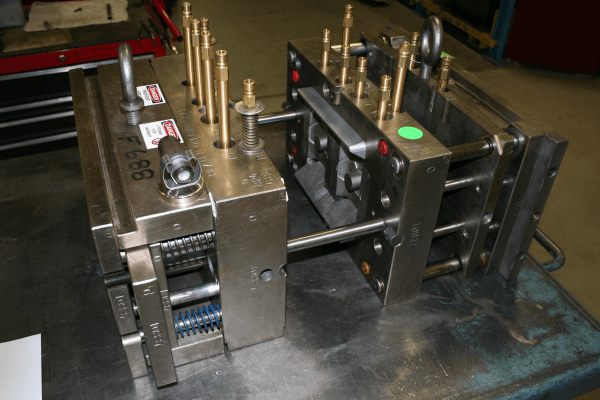
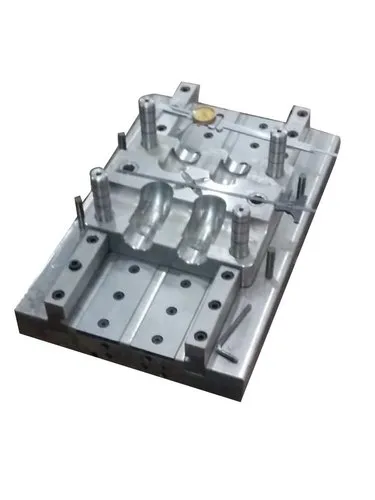
High cavitation moulds are critical in mass production environments, especially in the plastic injection moulding industry. These moulds contain a high number of cavities—ranging from 8 to over 128—which allows for the simultaneous production of multiple parts per cycle. This significantly improves production efficiency, reduces unit costs, and supports high-volume manufacturing demands in industries like packaging, medical devices, and consumer goods.
2. Purpose of High Cavitation Moulds
The primary objective of using high cavitation moulds is to:
Maximize output per machine cycle
Lower cost per part
Optimize machine utilization
Meet high market demand quickly and reliably
3. Key Design Considerations
3.1. Mould Balance
Ensuring that all cavities fill uniformly is critical. Any imbalance can lead to:
Part weight variation
Incomplete fills (short shots)
Dimensional inconsistencies
Solution: Balanced runner systems, preferably with hot runners, are used to ensure even flow distribution.
3.2. Mould Base and Material Selection
High cavitation tools require a strong and stable base to handle high pressures and repeated cycles.
Materials: High-grade tool steels (like H13, S136, or stainless steels) are commonly used for durability and wear resistance.
Coatings: Surface treatments like nitriding or PVD coatings may be applied to extend mould life and reduce wear.
3.3. Cooling System Design
Efficient and uniform cooling is crucial to maintain consistent cycle times and part quality.
Use of conformal cooling channels (enabled by 3D printing)
Turbulent flow design for better heat transfer
Zoned cooling for precise thermal management
3.4. Ejection System
With multiple cavities, the ejection system must ensure consistent part release without damaging the parts or causing sticking.
Options include pin ejectors, stripper plates, air ejection, or a combination.
Sensors can be used to confirm part ejection and detect any faults.
3.5. Parting Line and Venting
Proper venting is vital to prevent air traps, which can cause burn marks and incomplete fills.
Precise machining of parting lines and venting slots
Vacuum systems may be added for critical parts
4. Hot Runner vs. Cold Runner Systems
Hot Runner System
Preferred for high cavitation moulds
Eliminates runner waste
Reduces cycle time
Higher initial cost but lower operational cost
Cold Runner System
Simpler design, lower cost
Suitable for low to medium volume production
Generates more waste and increases cycle time
5. Manufacturing and Maintenance Challenges
Precision Machining: Requires high-precision CNC and EDM processes.
Tight Tolerances: Especially important for medical or micro moulded parts.
Maintenance: Regular servicing is needed to prevent cavity wear, runner blockage, and ensure consistent part quality.
6. Applications
High cavitation moulds are widely used in:
Medical (syringes, diagnostic components)
Packaging (caps, containers)
Personal care (toothbrush handles, razors)
Electrical components (connectors, housings)
7. Advantages of High Cavitation Moulds
High productivity
Reduced cost per part
Efficient use of injection moulding machines
Shorter lead times for large orders
8. Conclusion
High cavitation mould design is a sophisticated engineering discipline that demands precision, careful planning, and deep understanding of materials and processes. When executed well, it enables manufacturers to meet massive production demands while maintaining consistent part quality and operational efficiency.