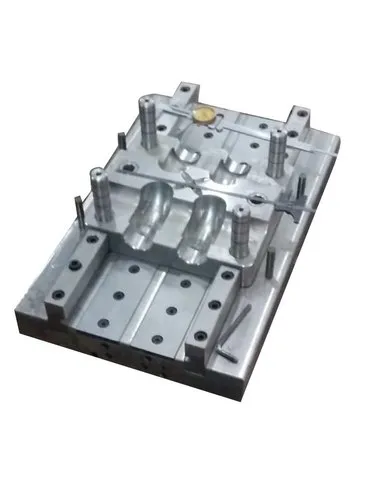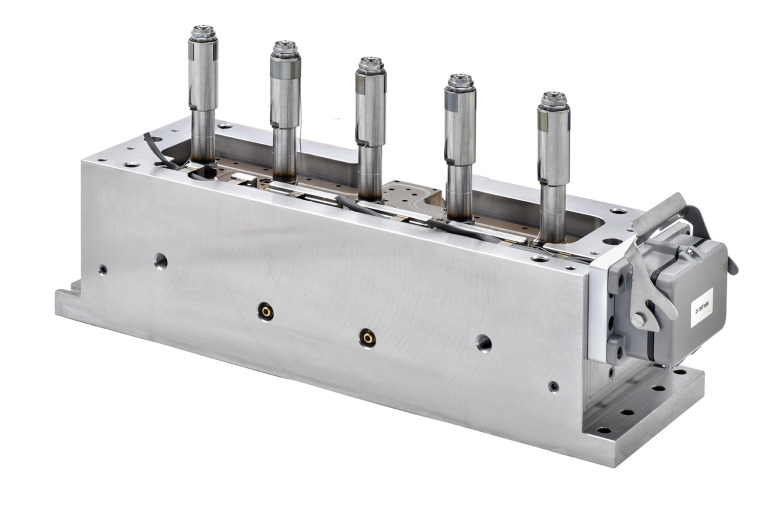
A Hot Runner Injection Mould is an injection moulding system in which the molten plastic is kept hot inside the mould’s runner system. Unlike a conventional cold runner mould, the material does not solidify inside the runners after every injection cycle.
Hot runner systems are widely used for high-volume plastic production, especially when fast cycle times, reduced material waste, and consistent part quality are important.
1. What Is a Hot Runner Mould?
In a conventional cold runner mould, molten plastic travels through runners that cool and solidify along with the moulded part. The solidified runner must then be separated and either recycled or discarded.
In a hot runner mould, the runner system is heated and maintained at a suitable temperature. The plastic remains molten until it reaches the gate and enters the cavity.
Basic flow:
Injection Unit → Sprue → Heated Manifold → Hot Runner Nozzle → Gate → Cavity
2. Main Components
| Component | Function |
|---|---|
| Hot Runner Manifold | Distributes molten plastic to multiple nozzles |
| Hot Runner Nozzles | Carry molten plastic from the manifold to the cavity |
| Heaters | Maintain the required temperature |
| Thermocouples | Monitor temperature |
| Gate | Controls the entry of plastic into the cavity |
| Temperature Controller | Controls individual heating zones |
| Mould Plates | Support and locate the hot runner components |
| Insulation | Helps prevent unwanted heat transfer |
| Cavity & Core | Form the final product |
3. How Hot Runner Injection Moulding Works
- Plastic pellets are fed into the injection moulding machine.
- The plastic is heated and melted in the barrel.
- Molten plastic enters the hot runner manifold.
- The heated manifold distributes the material to different nozzles.
- The plastic flows through the hot runner nozzles.
- The material enters the cavity through the gate.
- The cavity fills and the plastic is packed under pressure.
- The moulded part cools inside the cavity.
- The mould opens and the finished part is ejected.
- The hot runner remains heated and ready for the next cycle.
4. Types of Hot Runner Systems
A. Open Gate System
The nozzle remains open and molten plastic flows directly through the gate.
Advantages:
- Simple construction
- Suitable for many applications
- Relatively easy maintenance
Limitation: Gate appearance may be more noticeable.
B. Valve Gate System
A mechanical or pneumatic/hydraulic valve pin controls the flow of plastic through the gate.
Advantages:
- Better gate control
- Improved appearance
- Suitable for large and high-quality components
- Better control of filling sequence
Limitation: More complex and expensive than open-gate systems.
5. Advantages of Hot Runner Injection Moulds
- Reduced material waste because there is little or no solid runner scrap.
- Faster production cycles in many applications.
- Lower material consumption for high-volume production.
- Better suited to multi-cavity moulds.
- Can provide consistent filling between cavities.
- No need to separate runners from moulded parts.
- Can support automatic production lines.
- Useful for products requiring controlled and precise filling.
6. Limitations
Hot runner moulds also have some disadvantages:
- Higher initial mould cost.
- More complicated mould construction.
- Heating and temperature-control systems are required.
- Maintenance can be more difficult.
- Incorrect temperature control can cause material degradation.
- Gate design requires careful consideration.
- Not every plastic material is equally suitable for hot runner processing.
7. Hot Runner vs Cold Runner
| Feature | Hot Runner | Cold Runner |
|---|---|---|
| Runner temperature | Heated | Cooled |
| Runner scrap | Very low/minimal | Generated each cycle |
| Initial mould cost | Higher | Lower |
| Mould complexity | Higher | Lower |
| Material waste | Lower | Higher |
| Maintenance | More specialized | Generally simpler |
| Production volume | Excellent for high volume | Suitable for low to high volume |
| Temperature control | Important | Less complex |
| Automation | Highly suitable | Suitable |
8. Important Design Considerations
When designing a hot runner mould, engineers need to consider:
- Number of cavities
- Runner and manifold layout
- Gate location
- Nozzle type
- Material flow characteristics
- Plastic processing temperature
- Temperature-control zones
- Pressure drop
- Cooling system
- Moulding cycle time
- Part appearance requirements
- Shrinkage and warpage
- Maintenance accessibility
For multi-cavity moulds, balanced flow is particularly important so that all cavities fill consistently.
9. Common Applications
Hot runner moulds are commonly used for:
- Bottle caps
- Plastic containers
- Packaging components
- Automotive components
- Electrical parts
- Consumer products
- Medical components
- Household products
- Cosmetic packaging
- High-volume precision plastic parts
10. Common Problems
Some problems that can occur include:
Cold spots:
Insufficient heating can cause plastic to solidify inside the hot runner.
Material degradation:
Excessive temperature or long residence time can damage the plastic.
Gate stringing:
Material may continue to flow or form strings at the gate.
Uneven filling:
Incorrect runner balancing or temperature variation can cause different cavities to fill at different rates.
Nozzle blockage:
Contamination or degraded material can restrict material flow.
11. Key Maintenance Practices
Regular maintenance should include:
- Checking heaters and thermocouples
- Inspecting nozzles and gates
- Monitoring temperature zones
- Checking for leakage
- Cleaning the system when required
- Inspecting electrical connections
- Following the hot runner supplier’s recommended maintenance procedure
In Short
A Hot Runner Injection Mould uses a heated runner and manifold system to keep plastic molten until it reaches the mould cavity. It can significantly reduce runner waste and improve production efficiency, making it particularly useful for high-volume and multi-cavity injection moulding.
The main trade-off is that hot runner moulds generally require higher initial investment and more sophisticated temperature control and maintenance than cold runner moulds.