1. Introduction
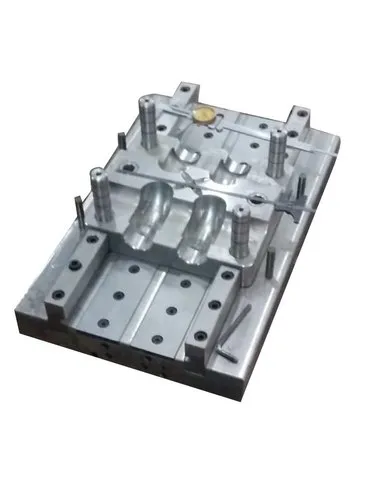
Injection mould materials are the metals and other engineering materials used to manufacture moulds for producing plastic components through the injection moulding process. The material selected for an injection mould has a significant influence on its strength, durability, wear resistance, corrosion resistance, surface finish, heat transfer, manufacturing cost, and service life.
During injection moulding, molten plastic is injected into a mould cavity under pressure. The mould must withstand repeated heating and cooling cycles, clamping forces, injection pressure, and mechanical stresses during part ejection.
Therefore, selecting an appropriate mould material is essential for achieving high-quality plastic products, maintaining dimensional accuracy, and reducing production costs.
2. Important Properties of Injection Mould Materials
An effective injection mould material should possess several important properties.
2.1. High Strength
The material must withstand injection pressure and clamping forces without permanent deformation or cracking.
2.2. High Hardness
Hardness helps the mould resist scratching, indentation, and surface damage during production.
2.3. Wear Resistance
Repeated contact between the mould, plastic components, ejector pins, slides, and other moving parts can cause wear. Wear-resistant materials help maintain mould accuracy over time.
2.4. Corrosion Resistance
Some plastics release corrosive gases during processing. Certain additives, moisture, and cleaning chemicals can also cause corrosion. Corrosion-resistant materials help protect mould surfaces and cavities.
2.5. Thermal Conductivity
Thermal conductivity determines how effectively heat moves through the mould. Good heat transfer can reduce cooling time and improve production efficiency.
2.6. Machinability
Mould materials should be suitable for machining operations such as milling, drilling, grinding, and polishing. Good machinability reduces manufacturing time and tooling costs.
2.7. Polishability
The material should be capable of achieving the surface finish required by the plastic product. High-quality polishing is especially important for transparent components and products with glossy surfaces.
2.8. Dimensional Stability
The material should resist distortion during heat treatment, machining, and repeated production cycles.
2.9. Toughness
Toughness helps the mould resist cracking, chipping, and damage caused by mechanical stress or impact.
2.10. Heat Resistance
The material must maintain its required mechanical properties at the temperatures encountered during moulding.
3. Types of Injection Mould Materials
Injection mould materials can be divided into several categories according to their composition, properties, and applications.
The most common categories include:
- Tool steels.
- Pre-hardened mould steels.
- Stainless steels.
- Hardened tool steels.
- Aluminium alloys.
- Copper alloys.
- Beryllium-copper alloys.
- Nickel-based materials and nickel coatings.
- Other specialised materials and surface treatments.
The appropriate choice depends on the plastic being processed, production volume, required surface finish, mould complexity, and available budget.
4. Tool Steels
Tool steels are among the most widely used materials for injection moulds because of their strength, hardness, wear resistance, and ability to achieve precise cavity finishes.
They are commonly used for mould cavities, cores, inserts, slides, and other components subjected to mechanical or thermal stress.
4.1. P20 Steel
P20 is a widely used pre-hardened mould steel.
Properties:
- Good machinability.
- Moderate to high strength.
- Suitable hardness in its supplied condition.
- Good polishability for many applications.
- Relatively straightforward mould manufacture.
Advantages:
- Often does not require additional hardening after machining.
- Suitable for many general-purpose moulds.
- Offers a practical balance between cost and performance.
- Can be used for moderately high production volumes, depending on the application.
Applications:
- Automotive plastic components.
- Appliance housings.
- Consumer product enclosures.
- General-purpose injection moulds.
- Medium-sized mould bases and cavity components.
P20 is not a single universally identical material specification. Its properties depend on the applicable grade and supplier. It may also be supplied in modified forms with improved toughness or machinability.
4.2. H13 Tool Steel
H13 is a hot-work tool steel used in applications involving elevated temperatures and thermal cycling.
Although it is often associated with die casting and hot-work tooling, it can also be used for injection mould components where its properties are advantageous.
Properties:
- Good toughness.
- Good resistance to thermal fatigue.
- Good strength at elevated temperatures.
- Suitable hardenability.
- Useful wear resistance after appropriate heat treatment.
Advantages:
- Performs well under demanding thermal conditions.
- Can provide good service life when correctly heat-treated.
- Suitable for selected high-stress mould components.
Applications:
- Specialised mould cores and inserts.
- Components exposed to demanding thermal cycles.
- Moulds requiring a combination of toughness and heat resistance.
H13 is not automatically superior to P20 for every application. Its suitability depends on the mould design, operating conditions, and required hardness.
4.3. D2 Tool Steel
D2 is a high-carbon, high-chromium tool steel known for its high hardness and wear resistance after appropriate heat treatment.
Properties:
- High wear resistance.
- High achievable hardness.
- Good resistance to abrasive wear.
- Lower toughness than many less highly alloyed tool steels, depending on condition and heat treatment.
Advantages:
- Suitable for components exposed to significant abrasion.
- Can maintain accurate working surfaces under appropriate conditions.
Applications:
- Selected wear-resistant mould components.
- Specialised inserts.
- Components exposed to abrasive fillers or repeated mechanical contact.
D2 is not a universal mould steel. Its relatively limited toughness and potentially challenging polishing requirements can make other grades more appropriate for complex cavities.
5. Pre-Hardened Mould Steels
Pre-hardened mould steels are supplied with a controlled hardness that is generally suitable for machining without requiring a separate hardening treatment after cavity manufacture.
These steels are popular because they reduce manufacturing steps and can minimise heat-treatment distortion.
Main Characteristics
- Supplied in a hardened or pre-hardened condition.
- Suitable for conventional machining.
- Generally offer a good balance of strength and toughness.
- Reduce the need for post-machining hardening.
- Available in different grades for different moulding applications.
Common Examples
- P20 and related grades.
- 1.2311 mould steel.
- 1.2738 mould steel.
The exact properties depend on the applicable material specification and heat-treatment condition.
Applications
Pre-hardened steels are widely used for general-purpose moulds, automotive components, appliance parts, consumer products, and moulds where cost-effective manufacturing is important.
Main advantage: They simplify mould production by reducing the risk of distortion associated with hardening a fully machined cavity.
Limitation: Their wear resistance may be insufficient for certain highly abrasive plastics or exceptionally demanding production conditions.
6. Stainless Steel for Injection Moulds
Stainless mould steels are selected when corrosion resistance, surface quality, and resistance to certain chemical environments are important.
Some plastic materials and additives can produce corrosive conditions inside a mould. Moisture and improper storage can also cause corrosion.
6.1. 420 Stainless Steel
420 stainless steel is a martensitic stainless steel that can be hardened through suitable heat treatment.
Properties:
- Corrosion resistance.
- Good achievable hardness.
- Suitable polishing capability in appropriate grades and conditions.
- Useful wear resistance after heat treatment.
Advantages:
- Helps resist corrosion from moisture and certain plastic-processing environments.
- Can provide a high-quality cavity surface.
- Suitable for moulds requiring both hardness and corrosion resistance.
Applications:
- Medical and laboratory plastic components.
- Optical and precision plastic products.
- Moulds processing selected corrosive plastics.
- Components requiring a clean, polished surface.
The corrosion resistance of 420 stainless steel is not equivalent to that of every other stainless grade. The specific environment and maintenance requirements must be considered.
6.2. 1.2083 Stainless Mould Steel
1.2083 is a commonly used stainless mould-steel grade, often compared with 420-type stainless steels.
Properties:
- Corrosion resistance.
- Good potential for cavity polishing.
- Suitable hardness after appropriate heat treatment.
- Useful wear resistance.
Applications:
- Moulds for PVC and other potentially corrosive processing environments, subject to compatibility assessment.
- Medical-related plastic products.
- Transparent or high-gloss plastic components.
- Precision mould cavities.
Advantages:
- Helps reduce corrosion-related surface deterioration.
- Can support high-quality mould finishes.
- Suitable for selected applications requiring a combination of polishability and corrosion resistance.
Stainless mould steel is often more expensive than general-purpose pre-hardened steel, so it is most beneficial when corrosion resistance or surface quality justifies the additional cost.
7. Hardened Tool Steels
Hardened tool steels are heat-treated to achieve a higher hardness than many pre-hardened mould steels.
They are useful when the mould must withstand substantial wear, high production volumes, or demanding surface conditions.
Characteristics
- High hardness.
- Good wear resistance.
- Potentially long service life.
- Suitable for precision components.
- May require specialised machining and grinding.
Advantages
Hardened steels can maintain cavity dimensions and working surfaces for extended periods under suitable operating conditions.
Limitations
- Higher manufacturing complexity.
- Possible distortion during heat treatment.
- More demanding machining and finishing.
- Greater cost in some applications.
Applications
- High-volume production moulds.
- Precision inserts.
- Wear-resistant core components.
- Selected mould components exposed to abrasive plastics.
The steel grade, heat-treatment method, hardness, and final finishing process must be selected together to achieve the required performance.
8. Aluminium Alloys
Aluminium alloys are widely used for prototype moulds, development tooling, and selected production moulds.
Aluminium is much lighter than steel and generally has substantially higher thermal conductivity.
Properties
- Low density.
- High thermal conductivity compared with most mould steels.
- Good machinability.
- Relatively easy material removal.
- Lower hardness and wear resistance than hardened tool steels in many comparisons.
Advantages
1. Faster machining
Aluminium is generally easier to machine than hardened tool steel, allowing mould cavities to be manufactured quickly.
2. Improved heat transfer
Its high thermal conductivity can help remove heat from the plastic and reduce cooling time.
3. Lower mould weight
Aluminium moulds are lighter, which can simplify handling and reduce the load associated with the tooling.
4. Lower tooling cost in suitable applications
Shorter machining times can reduce the cost of prototype and development moulds.
Limitations
- Lower wear resistance than many tool steels.
- Greater susceptibility to surface damage in some applications.
- Lower stiffness than steel.
- Possible limitations for highly abrasive plastics and demanding production conditions.
- Surface treatments may be required to improve performance.
Applications
- Prototype injection moulds.
- Product development.
- Short production runs.
- Selected low- to medium-volume applications.
- Moulds where rapid cooling is particularly valuable.
Aluminium is not necessarily the best option for every short-run mould. The selected alloy, cavity geometry, plastic material, required finish, and expected cycle count must all be considered.
9. Copper Alloys
Copper alloys are used in injection moulds primarily because of their excellent thermal conductivity.
They are especially useful in areas where heat accumulates and conventional mould cooling cannot remove it efficiently.
Properties
- High thermal conductivity in many grades.
- Good heat-transfer performance.
- Properties that vary substantially with alloy composition.
- Potentially useful machinability and wear resistance, depending on the grade.
Advantages
Copper-alloy inserts can improve heat removal from localised hot spots and help reduce temperature differences across a mould.
Applications
- Localised cooling inserts.
- Areas with difficult cooling access.
- Deep or complex mould cores.
- Selected high-cycle moulds.
- Specialised inserts used with steel mould bodies.
Limitations
Not all copper alloys have the same strength or hardness. Some offer excellent conductivity but lower mechanical strength, while others sacrifice some conductivity to improve strength and wear resistance.
For this reason, copper alloys are frequently used selectively rather than as the material for the entire mould.
10. Beryllium-Copper Alloys
Beryllium-copper alloys are specialised copper alloys used in certain mould inserts and heat-transfer components.
They can provide a useful combination of thermal conductivity, strength, and hardness, depending on the grade and heat-treatment condition.
Properties
- High thermal conductivity relative to many steels.
- Good strength in suitable conditions.
- Useful wear resistance for selected applications.
- Ability to remove heat from difficult-to-cool regions.
Advantages
Beryllium-copper inserts can improve cooling performance in areas where conventional steel inserts remove heat too slowly.
Applications
- Complex mould cores.
- Localised heat-transfer inserts.
- Deep ribs and difficult-to-cool regions.
- Selected high-productivity moulds.
Limitations and Safety
Beryllium-containing materials require careful handling during manufacture and maintenance.
Machining, grinding, or other operations that generate hazardous airborne particles can expose workers to beryllium. These operations require appropriate occupational hygiene controls, suitable extraction, and compliance with relevant safety regulations.
Beryllium-copper should therefore be selected only when its performance benefits justify the material, manufacturing, and safety requirements.
11. Nickel-Based Materials and Nickel Coatings
Nickel-based materials and nickel coatings are used in selected moulding applications to improve particular surface properties.
Their suitability depends on whether the nickel is used as a bulk material, a deposited coating, or part of a specialised mould surface.
Potential Benefits
- Corrosion resistance in suitable environments.
- Improved surface durability with appropriate coating systems.
- Ability to produce specialised surface finishes.
- Potential improvements in release or wear behaviour for selected applications.
Applications
- Specialised mould surfaces.
- Corrosion-resistant surface treatments.
- Selected prototype and production tooling.
- Applications requiring particular surface characteristics.
Nickel-based materials are not a universal substitute for tool steel. Coating adhesion, thickness, substrate preparation, dimensional tolerance, and the chemical environment must be assessed before use.
12. Comparison of Common Injection Mould Materials
| Material | Main advantage | Main limitation | Typical applications |
|---|---|---|---|
| P20 mould steel | Good balance of cost, strength, and machinability | Wear resistance may be insufficient for demanding conditions | General-purpose moulds |
| H13 tool steel | Toughness and resistance to thermal cycling | Requires suitable heat treatment and finishing | Specialised cores and inserts |
| D2 tool steel | High wear resistance and achievable hardness | Lower toughness in many conditions; polishing may be difficult | Selected wear-resistant components |
| 420 stainless steel | Corrosion resistance and achievable hardness | Grade-dependent corrosion and polishing performance | Precision and corrosion-sensitive moulds |
| 1.2083 stainless mould steel | Corrosion resistance and polishability | Higher cost than many general-purpose steels | High-gloss and corrosion-sensitive cavities |
| Hardened tool steel | High hardness and wear resistance | More difficult machining and finishing | High-volume production tooling |
| Aluminium alloy | Low weight, easy machining, and high thermal conductivity | Lower wear resistance and stiffness than many steels | Prototypes and selected production moulds |
| Copper alloy | Excellent heat transfer in suitable grades | Properties vary; some grades have limited strength | Cooling inserts and hot spots |
| Beryllium-copper alloy | High thermal conductivity with useful strength | Material cost and occupational safety requirements | Specialised cooling inserts |
| Nickel-based materials or coatings | Specialised surface and corrosion properties | Application-dependent cost and performance | Specialised mould surfaces |
The table provides general comparisons. Actual performance depends on the exact grade, heat treatment, manufacturing process, and operating conditions.
13. Factors Affecting the Selection of Injection Mould Materials
The material selection process should consider the following factors.
13.1. Type of Plastic
Different plastics create different demands on the mould.
For example:
- Polypropylene and polyethylene are often processed using general-purpose mould steels or suitable aluminium tooling, depending on production requirements.
- Glass-fibre-reinforced plastics can cause increased abrasive wear, making wear-resistant steels or specialised surface treatments valuable.
- PVC may create corrosion concerns under certain processing conditions, so corrosion resistance and process control are important.
- Transparent plastics may require highly polished cavity surfaces and careful material selection.
- Engineering plastics processed at higher temperatures may require mould materials with appropriate strength and thermal stability.
The actual grade and formulation of the plastic should be evaluated rather than relying only on its generic polymer name.
13.2. Production Volume
Expected production volume has a major effect on mould material selection.
Low-volume production: Aluminium or pre-hardened steel may be economical, depending on the design.
Medium-volume production: Pre-hardened mould steel often provides a practical balance of cost and durability.
High-volume production: Hardened tool steel or suitable stainless mould steel may be justified when wear, corrosion, or surface quality demands are high.
The number of moulding cycles alone is not sufficient to determine the correct material. Part geometry, cycle conditions, maintenance, and the plastic’s abrasiveness must also be considered.
13.3. Surface Finish Requirements
Products with high-gloss, transparent, or optical-quality surfaces require careful cavity preparation.
The mould material should be capable of achieving and maintaining the required surface finish.
13.4. Cooling Requirements
Thermal conductivity influences the rate at which heat is removed from the moulded component.
Steel moulds can provide durability, while aluminium and copper-alloy inserts may offer advantages in heat transfer.
However, cooling performance also depends on cooling-channel design, coolant flow, mould geometry, and the plastic material.
13.5. Corrosion Resistance
Corrosion resistance becomes important when the mould is exposed to corrosive processing environments, moisture, or unsuitable cleaning conditions.
Stainless mould steels may be appropriate when corrosion could otherwise damage the cavity or affect product quality.
13.6. Mould Complexity
Complex cavities, fine details, slides, and intricate inserts require materials that can be machined and finished accurately.
The material’s hardness and machinability should be considered together with the manufacturing methods available.
13.7. Budget
Material cost is only one part of the total mould cost.
A complete assessment should include:
- Raw material.
- Machining time.
- Heat treatment.
- Polishing and surface finishing.
- Cooling-system requirements.
- Maintenance.
- Expected service life.
- Potential production downtime.
A cheaper material may result in higher total costs if it wears quickly or requires frequent repair.
14. Heat Treatment of Injection Mould Materials
Heat treatment changes the properties of many mould steels to meet the requirements of a particular application.
14.1. Hardening
Hardening involves heating and cooling steel according to a controlled process to increase hardness and wear resistance.
14.2. Tempering
Tempering is commonly performed after hardening to adjust the balance between hardness, strength, and toughness while reducing excessive brittleness.
14.3. Stress Relieving
Stress relieving reduces internal stresses created by machining or other manufacturing operations. It can help minimise distortion during subsequent processing.
14.4. Nitriding
Nitriding introduces nitrogen into the surface of suitable steels to improve surface hardness and wear resistance.
14.5. Other Surface Treatments
Depending on the material and application, other processes may include specialised coatings and surface modification techniques.
Important: Not every mould steel requires every treatment. The correct sequence depends on the steel grade, starting condition, cavity design, required hardness, and finishing process. Improper treatment can cause distortion, cracking, or reduced toughness.
15. Surface Finishing of Injection Mould Materials
Surface finishing is essential for achieving the desired appearance and function of moulded components.
Common finishing operations include:
15.1. Grinding
Grinding removes material accurately and helps achieve dimensional tolerances and suitable surface quality.
15.2. Polishing
Polishing improves the cavity surface finish. Fine polishing may be required for transparent and high-gloss plastic components.
15.3. Texturing
Texturing produces a specified pattern or surface appearance, such as a matte finish, grain pattern, or leather-like texture.
15.4. Coating
Suitable coatings may improve wear resistance, corrosion resistance, or release characteristics in specific applications.
15.5. Surface Inspection
The finished cavity should be inspected for scratches, pits, defects, dimensional errors, and surface irregularities.
The final surface finish depends not only on the mould material but also on the heat treatment, machining quality, polishing method, and maintenance practices.
16. Maintenance of Injection Mould Materials
Proper maintenance helps extend mould life and maintain product quality.
Important maintenance practices include:
- Regular cleaning: Remove plastic residues and contamination using compatible cleaning methods.
- Corrosion prevention: Dry and protect mould surfaces when appropriate.
- Surface inspection: Check cavities for scratches, wear, pitting, and corrosion.
- Lubrication: Lubricate moving components according to the mould design and lubricant manufacturer’s recommendations.
- Cooling-system maintenance: Keep cooling channels free from deposits and blockages.
- Dimensional inspection: Monitor critical cavity and core dimensions.
- Proper storage: Protect unused moulds against moisture and mechanical damage.
- Controlled repair: Use suitable welding, polishing, or machining procedures for the specific mould material.
Maintenance procedures should account for the material’s hardness, coating system, corrosion resistance, and surface-finish requirements.
17. Common Problems Caused by Incorrect Material Selection
| Problem | Possible cause | Effect |
|---|---|---|
| Premature wear | Insufficient hardness or wear resistance | Loss of dimensional accuracy |
| Corrosion | Inadequate corrosion resistance or poor storage | Surface damage and defective parts |
| Cracking | Insufficient toughness or unsuitable heat treatment | Mould failure and costly repairs |
| Excessive cooling time | Inefficient heat transfer or cooling-channel design | Reduced productivity |
| Surface defects | Poor polishability or inappropriate finishing | Visible defects in plastic products |
| Distortion | Improper heat treatment or machining sequence | Dimensional inaccuracies |
| High maintenance costs | Material unsuitable for the production conditions | Increased downtime and operating costs |
Correct material selection reduces these risks but does not eliminate the need for proper mould design, process control, and maintenance.
18. How to Select the Right Injection Mould Material
A practical selection procedure is as follows:
Step 1: Identify the plastic material.
Determine the polymer type, processing temperature, additives, and potential corrosive or abrasive effects.
Step 2: Establish the production volume.
Estimate the number of parts and moulding cycles required over the mould’s expected service life.
Step 3: Define the surface finish.
Determine whether the product requires a textured, matte, polished, or optical-quality cavity.
Step 4: Evaluate mechanical requirements.
Consider injection pressure, clamping loads, cavity geometry, and the risk of wear or impact.
Step 5: Assess cooling requirements.
Determine whether conventional cooling channels are sufficient or if specialised high-conductivity inserts could improve performance.
Step 6: Select candidate materials.
Compare suitable mould steels, stainless steels, aluminium alloys, and copper alloys.
Step 7: Evaluate manufacturing requirements.
Consider machinability, heat treatment, polishing, coatings, and dimensional tolerances.
Step 8: Calculate total lifecycle cost.
Compare initial tooling costs with expected service life, maintenance, repair, and production efficiency.
Step 9: Confirm the material specification.
Verify the exact grade, material certificate, hardness, and required heat-treatment condition with the supplier.
Conclusion
Injection mould materials play a crucial role in the quality, durability, and efficiency of plastic manufacturing. Tool steels such as P20 and H13 are widely used because they offer useful combinations of strength, toughness, and wear resistance. Stainless mould steels are valuable when corrosion resistance and high-quality surface finishes are important, while aluminium and copper alloys can offer advantages in machining speed and heat transfer.
The best injection mould material is not necessarily the hardest, strongest, or most expensive one. It is the material that provides the appropriate combination of mechanical properties, thermal performance, surface quality, manufacturing cost, and service life for the specific moulding application.