1. Overview
Die and mould base technology is a critical aspect of manufacturing, particularly in the fields of metal forming and plastic injection molding. Dies and moulds serve as the tools used to shape materials into desired forms, and their base structures provide the foundation for ensuring precision, durability, and repeatability in production processes.
These technologies are essential in mass production industries such as automotive, aerospace, consumer electronics, packaging, and medical devices, where consistency and accuracy are vital.
2. Definitions
Die: A die is a specialized tool used in manufacturing industries to cut or shape material, typically using a press. Dies are most commonly used in sheet metal forming and forging.
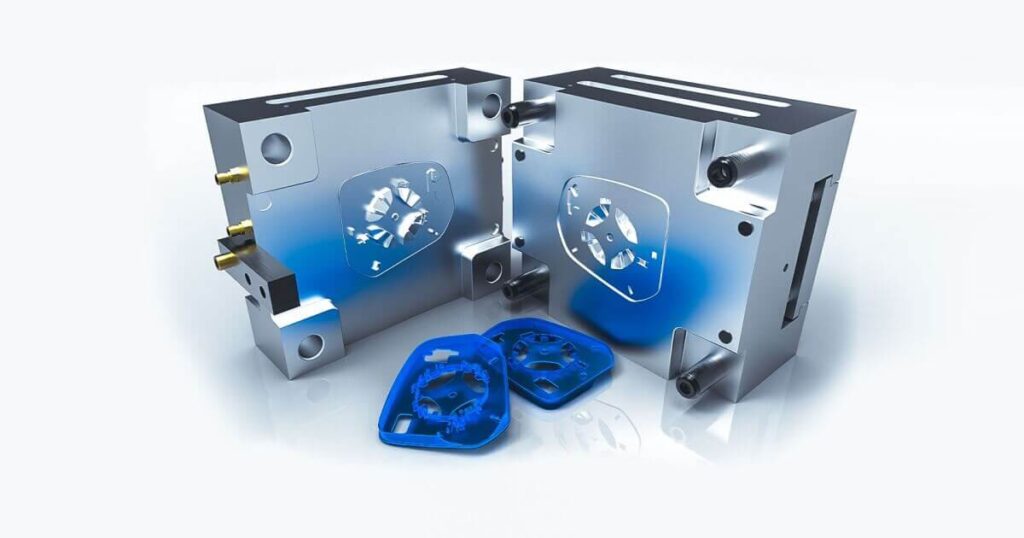
Mould (or Mold): A mould is a hollowed-out block that is filled with a liquid or pliable material like plastic, glass, or metal, which then hardens or sets into the shape of the cavity.
Mould Base / Die Set: This is the standardized, interchangeable assembly that holds and aligns the various components of the die or mould. It includes plates, guide pillars, bushings, and support elements.
3. Importance of Die and Mould Base Technology
Precision and Accuracy: The mould base ensures that all moving and stationary components are perfectly aligned, leading to accurate and defect-free products.
Repeatability: Enables consistent quality in mass production by maintaining tight tolerances.
Cost Efficiency: Reduces tooling time and manufacturing costs through the use of standard components and quick-change systems.
Customization: Supports a wide range of applications through modular design and compatibility with different inserts and tooling components.
4. Components of a Die and Mould Base
Top and Bottom Plates: Provide structural support and mounting surfaces.
Guide Pillars and Bushings: Ensure precise alignment of moving parts.
Spacer Blocks: Maintain required spacing between plates.
Ejector Plates and Pins: Used to remove the finished product from the mould.
Support Pillars and Rails: Provide additional rigidity and support under high pressures.
5. Types of Dies and Moulds
Progressive Die: Performs multiple operations in a single stroke (cutting, bending, punching).
Compound Die: Performs two or more operations at one station.
Injection Mould: Used to shape plastic parts by injecting molten material into a cavity.
Compression Mould: Material is placed into a heated mould and compressed to form the shape.
6. Materials Used
Die and mould bases are typically made from high-strength tool steels such as:
P20 (pre-hardened)
H13 (hot work tool steel)
S50C (for base plates)
Mild steel or aluminum (for prototype moulds)
7. Applications
Automotive parts (bumpers, dashboards, engine components)
Consumer electronics housings
Packaging containers and closures
Medical device casings
Household appliance components
8. Future Trends
CAD/CAM Integration: Automation in die and mould design using computer-aided tools.
Additive Manufacturing: Use of 3D printing to create complex mould inserts or cooling channels.
High-speed Machining: Advanced CNC machines for faster and more precise tool making.
Smart Moulds: Integration of sensors for predictive maintenance and real-time monitoring.
9. Conclusion
Die and mould base technology is the backbone of modern manufacturing. By ensuring precision, efficiency, and scalability, it plays a vital role in the production of complex components used in everyday life. As industries evolve with digital transformation and automation, the importance of mastering this technology continues to grow.