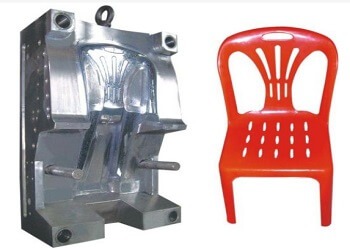
Plastic furniture moulds are precision-engineered tools used in the injection moulding process to produce items like chairs, tables, stools, and cabinets. These moulds are typically made of hardened steel or aluminum and consist of several critical components that ensure high-quality, efficient, and repeatable production. Below are the key components of a plastic furniture mould:
1. Mould Base (Mould Plate)
The mould base serves as the foundational structure that holds all the other components together. It includes:
Top and bottom plates
Support plates
Spacer blocks
Function: Provides rigidity and alignment for all parts of the mould.
2. Cavity and Core
These are the primary shaping parts of the mould:
Cavity (female part): The hollow area that defines the outer shape of the product.
Core (male part): Protrudes into the cavity and forms the inner surfaces of the product.
Function: Together, they determine the final shape and size of the plastic furniture item.
3. Injection System (Runner and Gate)
This system allows molten plastic to flow into the mould cavity:
Sprue: The main channel through which molten plastic enters the mould.
Runner: The network that distributes plastic from the sprue to various cavities.
Gate: The entry point into the cavity.
Function: Ensures controlled and efficient flow of plastic into the mould.
4. Ejection System
Once the plastic part solidifies, it must be removed from the mould:
Ejector pins
Ejector plate
Return pins
Function: Pushes the finished plastic part out of the mould without damaging it.
5. Cooling System
To maintain mould temperature and reduce cycle time:
Cooling channels or circuits
Water inlets and outlets
Function: Cools the mould rapidly to solidify the plastic, enhancing productivity and quality.
6. Guide Pillars and Bushings
These are alignment components:
Guide pillars (pins): Located on one side of the mould.
Guide bushings: On the opposite side.
Function: Ensures precise alignment of the cavity and core when the mould closes.
7. Clamping System
Used to mount the mould on the injection moulding machine:
Clamping plates
Bolts and clamps
Function: Secures the mould during the injection process.
8. Air Vents
Small channels around the cavity edges.
Function: Allows trapped air to escape during injection, preventing defects like voids or burn marks.
9. Slider, Lifter, and Insert Systems (if applicable)
Some complex furniture designs may require:
Sliders: For side cores or undercuts.
Lifters: For angled surfaces or features.
Inserts: Replaceable components for modularity or customizations.
Function: Enable the moulding of complex shapes and allow for easier maintenance.
10. Mould Surface Finish
Although not a physical component, the surface treatment of the cavity/core is crucial:
Polishing
Texturing
Coating (like chrome plating)
Function: Affects the final appearance, texture, and release properties of the product.
Conclusion
Each component of a plastic furniture mould plays a vital role in ensuring durability, functionality, and product quality. A well-designed mould improves production efficiency, reduces waste, and guarantees consistent product results. Understanding these components is essential for manufacturers, designers, and engineers involved in plastic furniture production.