1. Introduction to Micro Injection Moulding
Micro Injection Moulding (µIM) is a specialized form of traditional injection moulding used to manufacture extremely small and precise plastic parts, typically in the range of milligrams and with micro-scale features (often < 1mm). It is widely used in industries like medical devices, electronics, micro-optics, and telecommunications.
2. Importance of Micro Injection Moulding Dies
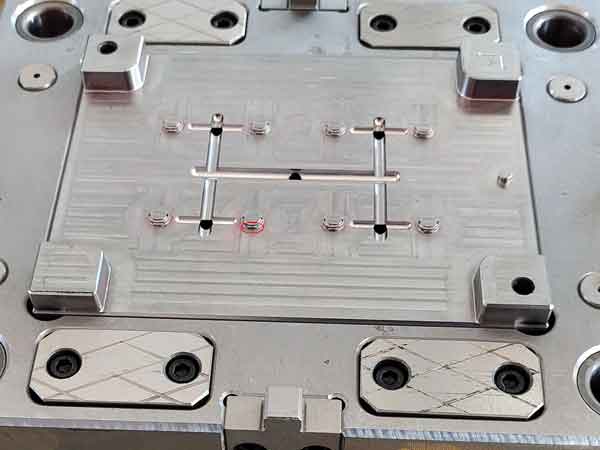
Micro injection moulding dies (or micro moulds) are the critical tooling components used in the process. These dies are responsible for shaping molten polymer into complex micro-scale geometries with high precision and repeatability. The accuracy and quality of these dies directly influence the quality of the final micro product.
3. Key Characteristics of Micro Moulding Dies
Precision: Dies are manufactured to tolerances as tight as ±2 µm or better.
Surface Finish: Polished to a mirror finish or micro-textured to suit specific applications.
Miniaturization: Capable of producing intricate micro-features such as micro-channels, micro-needles, or micro-gears.
High Strength: Designed to withstand high pressures and temperature cycles.
Wear Resistance: Made from hardened tool steels or tungsten carbide to handle high-volume production without degradation.
4. Materials Used for Micro Dies
Tool Steels (e.g., H13, S7, P20)
Tungsten Carbide
Stainless Steel
Nickel Alloys (for electroforming inserts)
The material choice depends on the production volume, type of plastic, required tolerances, and surface finish.
5. Manufacturing Techniques for Micro Dies
Producing micro moulding dies requires advanced machining and fabrication technologies, such as:
Electrical Discharge Machining (EDM)
Wire EDM (WEDM)
Micro-Milling
Laser Micromachining
LIGA (Lithography, Electroplating, and Moulding)
Electroforming
Ultra-precision CNC machining
These technologies allow for the creation of complex, high-resolution features with micron-level accuracy.
6. Design Considerations for Micro Moulding Dies
Parting Line Accuracy: To avoid flash and ensure feature precision.
Gate Design: Must be optimized to allow uniform flow without damaging micro features.
Ejection System: Special care is taken to avoid damaging delicate micro-parts during demoulding.
Cooling Channels: Miniature cooling systems are incorporated for thermal control.
Tolerance Management: Geometric dimensioning and tolerancing (GD&T) is critical.
7. Applications of Micro Injection Moulded Parts
Medical Devices: Micro-needles, surgical instruments, drug delivery systems.
Electronics: Micro-connectors, sensors, MEMS components.
Optics: Micro lenses, light guides, fiber-optic components.
Automotive: Micro-gears, precision connectors.
8. Challenges in Micro Injection Moulding Dies
High Initial Cost: Due to precision manufacturing requirements.
Tool Wear: Micro dies wear out faster due to the delicate features.
Alignment: Precise alignment is necessary to avoid defects.
Material Flow: Ensuring complete filling of tiny cavities is challenging.
9. Future Trends
Use of AI/ML for Die Design Optimization
Advanced Materials for Longer Tool Life
Integration with Micro 3D Printing for Hybrid Tooling
Nanostructured Surface Engineering
10. Conclusion
Micro injection moulding dies play a pivotal role in the production of highly precise and miniaturized plastic components. Their design and manufacturing require a deep understanding of materials, machining, and the micro injection moulding process itself. With growing demand for micro-scale components across various industries, the development and refinement of micro moulding dies will continue to be a critical area of innovation.