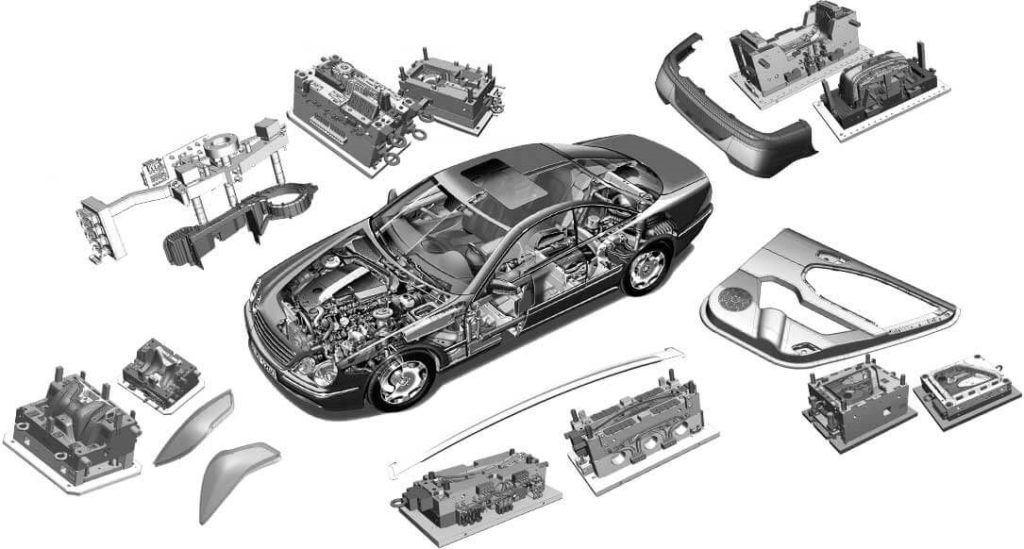
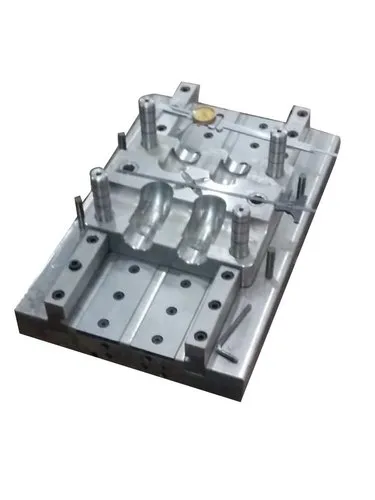
Automotive interior components such as dashboards, door panels, center consoles, and trim parts play a crucial role in defining the comfort, aesthetics, and ergonomics of a vehicle. The precision and quality of these components largely depend on the design and manufacture of their moulds. Moulds for automotive interior parts must ensure high dimensional accuracy, excellent surface finish, and consistent production efficiency.
1. Importance of Moulds in Interior Component Manufacturing
Moulds serve as the backbone of the injection moulding or compression moulding processes used to manufacture interior plastic parts. They determine the final geometry, surface texture, and fitting accuracy of components like dashboards and panels. A well-designed mould ensures seamless assembly with other vehicle parts and enhances the visual appeal of the cabin.
2. Common Materials Used for Moulds
P20 Steel: Widely used for prototype and production moulds due to its good machinability and toughness.
H13 Steel: Offers high wear and heat resistance, suitable for large-volume production.
Stainless Steel (420, 1.2083): Used where corrosion resistance and high polish are required for glossy surfaces.
Beryllium Copper Inserts: Applied in areas requiring rapid heat transfer to minimize cycle time and prevent sink marks.
3. Design Considerations
Complex Geometry: Dashboards and door panels often have integrated features like air vents, clips, and thin-walled sections requiring multi-part mould designs.
Surface Texture: Texturing and grain finishes are applied to mould cavities to achieve soft-touch or leather-like effects.
Parting Line and Ejection: Proper placement ensures smooth release of parts without surface defects.
Venting and Cooling: Effective cooling channels and venting systems are vital to prevent warpage, sink marks, and uneven shrinkage.
4. Moulding Technologies Used
Injection Moulding: The most common process for dashboards and panels due to its precision and scalability.
Gas-Assisted Injection Moulding: Used to create hollow sections, reduce weight, and minimize sink marks.
Compression Moulding (for composites): Used for fiber-reinforced materials to achieve lightweight and durable structures.
In-Mould Decoration (IMD) and In-Mould Labeling (IML): Enhance the aesthetic appeal with integrated graphics and textures.
5. Quality and Durability Factors
To meet automotive standards, moulds must withstand continuous operation under high pressure and temperature. Regular maintenance, polishing, and calibration are essential to ensure consistent part quality over thousands of cycles.
6. Trends and Innovations
Modern automotive interior moulds are evolving with advancements such as:
Smart Moulds with Sensors: For real-time monitoring of temperature, pressure, and cycle performance.
Lightweight Materials: To support the industry’s shift toward fuel-efficient and electric vehicles.
Sustainability: Use of recyclable polymers and energy-efficient moulding systems.
Conclusion:
Moulds for automotive interior parts are critical in achieving both functional and aesthetic excellence. By combining precision engineering, high-quality materials, and innovative technologies, manufacturers can produce dashboards and panels that meet the demanding standards of modern vehicle interiors.