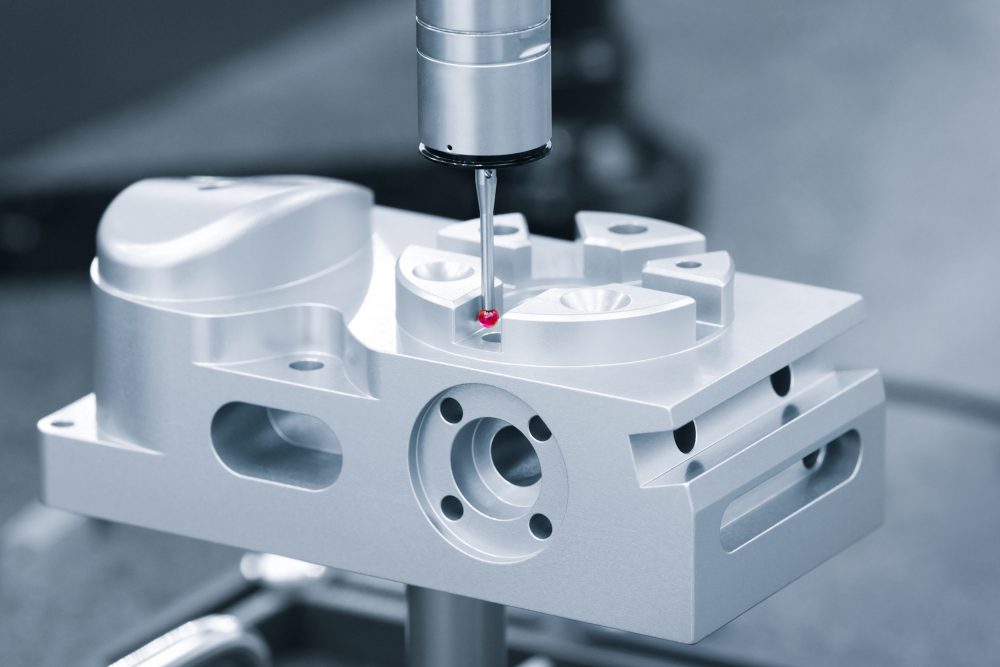
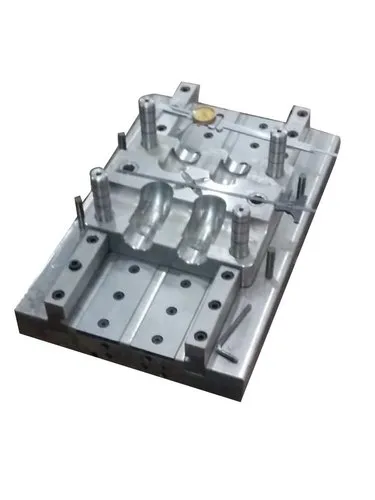
Die and mould manufacturing is a precision-driven process fundamental to various industries, including automotive, aerospace, consumer goods, and electronics. These components are used to shape and form materials into specific geometries through casting, forging, stamping, or injection molding. Due to their critical role in production, maintaining high quality in die and mould manufacturing is essential. Quality control (QC) ensures that these components meet strict dimensional, structural, and surface finish standards, thereby reducing downtime, waste, and cost in the final production.
Objectives of Quality Control
Ensure Dimensional Accuracy: To maintain the required tolerances.
Guarantee Surface Finish: For proper function and aesthetics.
Verify Material Integrity: To prevent premature wear or failure.
Improve Process Consistency: Minimizing variations in manufacturing.
Customer Satisfaction: Meeting or exceeding client specifications.
Key Aspects of Quality Control
1. Design Validation
Use of CAD/CAM software to ensure precision in design.
Simulation and analysis (e.g., flow analysis, stress analysis) before manufacturing.
Design for manufacturability (DFM) to avoid defects in later stages.
2. Material Inspection
Raw material testing (chemical composition, hardness, microstructure).
Certification from suppliers for material quality.
Use of non-destructive testing (NDT) methods for detecting flaws.
3. In-Process Inspection
First Article Inspection (FAI) to verify the initial output matches design.
Real-time monitoring using sensors or CNC systems.
Use of Coordinate Measuring Machines (CMM) to inspect complex geometries.
Statistical Process Control (SPC) to track variations and trends.
4. Final Inspection and Testing
Checking dimensional tolerances using micrometers, gauges, and CMM.
Visual inspection for surface defects like cracks, dents, or irregularities.
Fit and assembly checks to ensure proper mating with other parts.
Hardness and wear resistance testing to ensure longevity.
5. Surface Finish Evaluation
Surface roughness testers (profilometers) to measure Ra values.
Inspection under magnification for tiny imperfections or burrs.
Polishing and texturing inspections as per client specifications.
Advanced Quality Control Techniques
3D Scanning & Reverse Engineering: For verifying complex profiles and worn-out dies.
Laser Tracking Systems: For high-accuracy dimensional verification.
Digital Twin Technology: Real-time comparison between virtual and actual models.
Automated QC Systems: Integration of robotics and vision systems for faster inspection.
Documentation and Traceability
Maintaining inspection reports and process data.
Traceability of materials and components to their sources.
QC records used for audits, certifications (ISO, AS9100), and client validation.
Common Quality Issues in Die and Mould Manufacturing
Dimensional inaccuracy due to tool wear or thermal distortion.
Surface defects like pits, cracks, or machining marks.
Improper hardness or heat treatment.
Assembly misalignment due to inaccurate machining.
Preventive Measures
Regular calibration of machines and instruments.
Scheduled maintenance of machining and inspection equipment.
Training programs for QC staff and machine operators.
Implementation of Lean and Six Sigma practices.
Conclusion
Quality control in die and mould manufacturing is critical for ensuring that the components meet exacting specifications and function reliably over time. A robust QC system not only enhances product performance but also boosts customer confidence and reduces production costs. By integrating modern inspection technologies and process optimization techniques, manufacturers can achieve higher precision, efficiency, and competitiveness in the global market.