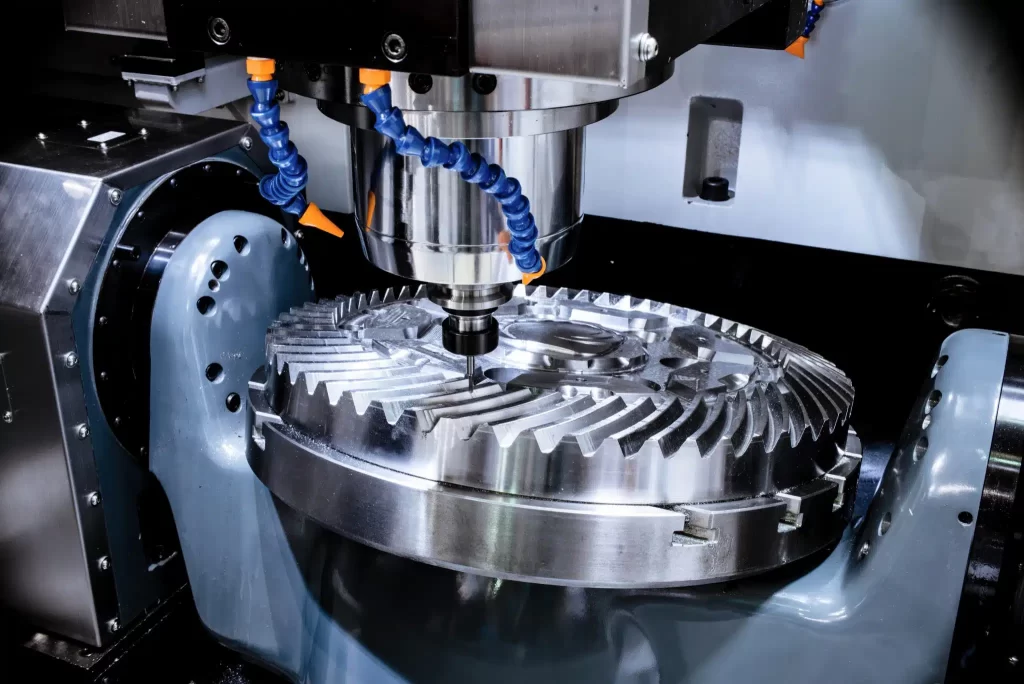
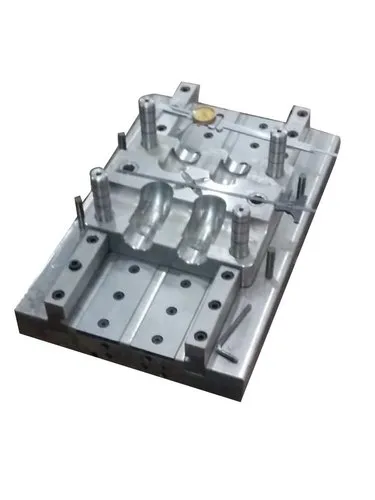
CNC (Computer Numerical Control) machining has revolutionized the process of die manufacturing, enabling high precision, repeatability, and efficiency in producing complex die components. Dies are critical tools used in manufacturing processes such as stamping, forging, injection molding, and extrusion. As the demand for high-quality, intricate, and durable dies grows, CNC machining has become the backbone of modern die-making.
What Is CNC Machining?
CNC machining is a subtractive manufacturing process where pre-programmed computer software controls the movement of factory tools and machinery. These tools can include lathes, mills, routers, grinders, and EDM (Electrical Discharge Machining) equipment.
By using CAD (Computer-Aided Design) models and CAM (Computer-Aided Manufacturing) software, CNC machines can fabricate parts with extremely tight tolerances, which is essential for die manufacturing.
Importance of CNC Machining in Die Manufacturing
1. Precision and Accuracy
Dies must meet strict dimensional tolerances to ensure the final products are consistent and defect-free. CNC machines can achieve tolerances in the range of microns, which is vital for applications such as injection molding dies or precision stamping tools.
2. Complex Geometries
Modern dies often require intricate internal features, cooling channels, or compound curves. CNC machining, especially with 5-axis capabilities, allows for the production of complex geometries that would be difficult or impossible to achieve with manual machining.
3. Consistency and Repeatability
Once a die design is programmed into the CNC machine, it can be reproduced multiple times with exact consistency. This repeatability is crucial for large-scale production or when multiple identical dies are required.
4. Material Versatility
CNC machining supports a wide range of materials used in die manufacturing, including:
Tool steels (e.g., D2, H13, A2)
Carbides
Hardened steels
Aluminum and copper alloys (for prototype or low-volume dies)
5. Speed and Efficiency
With automation and optimized tool paths, CNC machining reduces lead times significantly. It allows die manufacturers to meet tight deadlines and reduce time to market for end-use products.
CNC Processes Used in Die Manufacturing
1. CNC Milling
Used for shaping the die cavity and external features. High-speed milling is especially useful for hardened steel dies.
2. CNC Turning
Applicable when die components are round or cylindrical, such as guide pins or bushings.
3. CNC EDM (Electrical Discharge Machining)
Ideal for creating fine details and sharp internal corners. Both wire EDM and sinker EDM are widely used in precision die manufacturing.
4. Surface and Cylindrical Grinding
After CNC machining, precision grinding is used to achieve surface finishes and dimensional accuracy required in dies.
Applications of CNC-Machined Dies
CNC machining is used to create various types of dies, including:
Stamping Dies: For cutting and shaping sheet metal parts.
Injection Molding Dies: For producing plastic components with detailed geometries.
Die-Casting Dies: For high-volume production of metal parts.
Forging Dies: For shaping metal through compressive forces.
Advantages Over Traditional Die Making
| Traditional Methods | CNC Machining |
|---|---|
| Manual labor-intensive | Automated and repeatable |
| Limited precision | High precision and accuracy |
| Time-consuming | Fast and efficient |
| Inconsistent results | Reliable and consistent output |