1. Introduction
Resin thermoforming moulds are moulds made from specially formulated resin materials and used to shape heated thermoplastic sheets into desired products. In thermoforming, a plastic sheet is heated until it becomes soft and pliable, then formed over or into a mould using vacuum, air pressure, or mechanical force.
Resin moulds are often selected for prototype production, short production runs, product development, and applications where a mould must be manufactured relatively quickly and economically.
Their suitability depends on the type of resin, the forming temperature, the pressure applied, the required surface finish, and the expected number of production cycles.
2. What Is a Resin Thermoforming Mould?
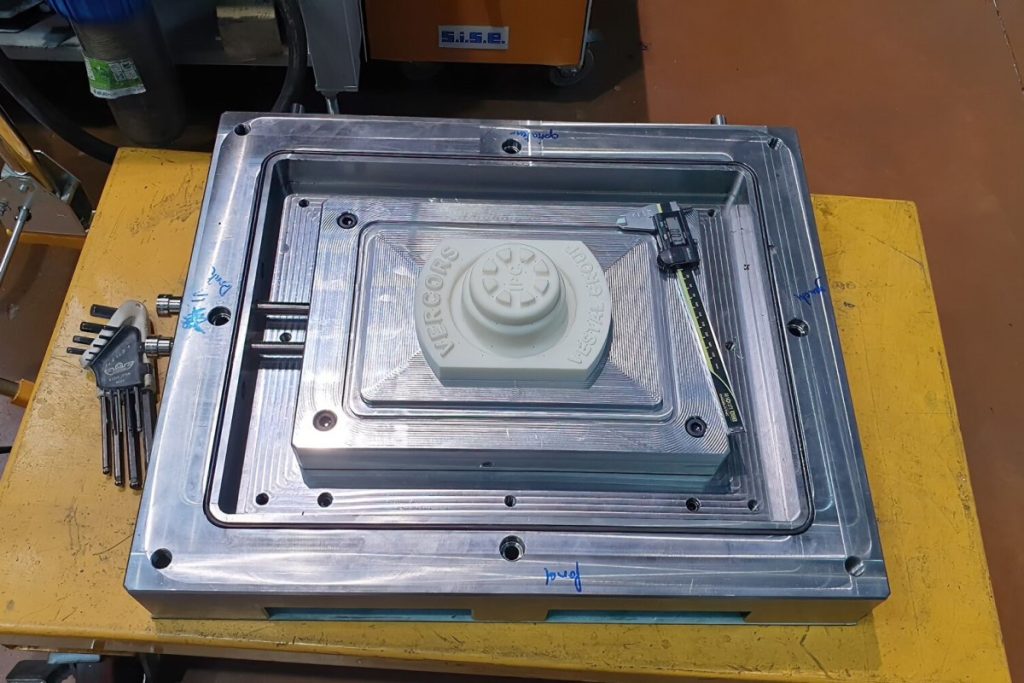
A resin thermoforming mould is a forming tool whose working surface or main body is manufactured from a cast, filled, or otherwise processed resin-based material.
Unlike conventional metal moulds, resin moulds may be produced by casting a liquid resin into a master pattern or mould box. Once the resin cures, the mould is removed, finished, and prepared for forming operations.
A typical resin mould may consist of:
- A resin mould body
- A moulding or forming surface
- Reinforcing materials, where necessary
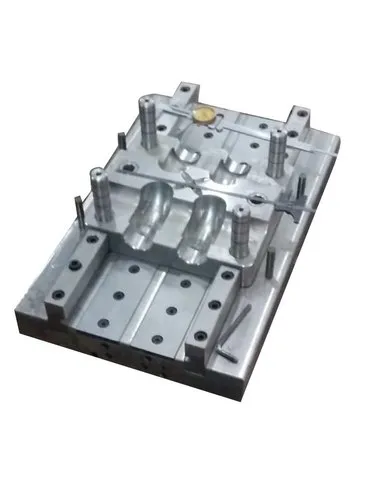
- A supporting frame or backing plate
- Vacuum channels or ports, if vacuum forming is used
- Mounting features
- Surface coatings or release treatments, when appropriate
Not every resin mould contains all these features. The design depends on the forming method and the component being manufactured.
3. How Resin Thermoforming Moulds Work
The working principle is similar to that of other thermoforming moulds.
- Sheet preparation: A thermoplastic sheet is selected according to the product requirements.
- Heating: The sheet is heated until it reaches its forming temperature.
- Positioning: The softened sheet is placed over or against the resin mould.
- Forming: Vacuum, compressed air, or mechanical force draws the sheet against the mould surface.
- Cooling: The plastic cools while retaining the shape of the mould.
- Demoulding: The formed product is removed after it has cooled sufficiently.
- Trimming and finishing: Excess material is removed, and the product is finished as required.
The resin mould must withstand the forming temperature, pressure, and repeated contact with the heated sheet without excessive deformation or surface damage.
4. Types of Resin Used for Thermoforming Moulds
Different resin systems provide different levels of heat resistance, strength, durability, and surface quality.
4.1 Epoxy resin moulds
A common option for prototype and short-run tooling.
Epoxy resins are thermosetting polymers that cure into rigid materials. For tooling, they are often combined with mineral fillers, glass reinforcement, or other additives to improve stiffness, dimensional stability, and thermal performance.
Advantages
- Good dimensional stability when properly formulated and cured
- Good surface finish
- Can be cast around a master pattern
- Available in filled formulations for tooling
- Suitable for many prototype applications
Limitations
- Heat resistance varies considerably by formulation
- Some formulations can become brittle
- Thermal expansion and repeated heating may affect dimensional accuracy
- Large moulds may require reinforcement
Applications: Prototype packaging, product development, short-run vacuum forming, and selected low-volume components.
4.2 Polyester resin moulds
Polyester resin can be used to produce moulds, often with glass-fibre reinforcement.
Advantages
- Generally economical
- Relatively easy to process
- Suitable for reinforced mould structures
- Useful for larger, relatively simple tooling
Limitations
- Properties depend strongly on formulation and reinforcement
- Shrinkage during curing may affect accuracy
- Heat resistance may be insufficient for demanding applications
- Surface quality and durability may require additional finishing
Polyester resin tooling is best suited to applications where its thermal and mechanical properties meet the process requirements.
4.3 Vinyl ester resin moulds
Vinyl ester resins combine characteristics of polyester and epoxy systems and are used in some reinforced tooling applications.
Advantages
- Good chemical resistance in suitable formulations
- Can provide useful mechanical strength
- Compatible with fibre reinforcement
- Can be suitable for larger composite mould structures
Limitations
- Requires careful curing and processing
- Heat resistance depends on the specific formulation
- Can involve more demanding handling requirements than some alternatives
4.4 Polyurethane tooling resin moulds
Certain rigid polyurethane casting resins are formulated for tooling and prototype mould production.
Advantages
- Rapid casting options are available
- Can reproduce detailed surface features
- Available in a range of stiffness levels
- Useful for prototype tooling and short production runs
Limitations
- Heat resistance varies widely
- Some formulations may soften or deform under repeated thermal exposure
- Thermal cycling can affect service life
- Material selection must be matched to the sheet-forming temperature
Ordinary polyurethane casting resin should not automatically be considered suitable for thermoforming. A tooling-grade, heat-resistant formulation is required.
4.5 Filled resin moulds
Filled resin moulds use a resin binder combined with materials such as mineral powder, silica, aluminium-containing fillers, or other suitable particles.
The filler can improve stiffness, reduce resin consumption, alter thermal conductivity, and help control dimensional behaviour.
Advantages
- Can offer better stiffness than unfilled resin
- May improve thermal stability
- Can reduce material cost
- Can be tailored for particular tooling requirements
Limitations
- Performance depends on filler type, particle size, and loading
- Poor mixing can create voids or inconsistent properties
- High filler content may make the mould more brittle
- Casting and machining can become more difficult
5. Materials Used in Resin Thermoforming Mould Construction
Besides the resin itself, other materials may be required.
| Material | Purpose |
|---|---|
| Epoxy or other tooling resin | Forms the mould body or working surface |
| Mineral fillers | Modify stiffness, thermal properties, and cost |
| Glass-fibre reinforcement | Improves structural strength in suitable designs |
| Metal backing plate | Supports the mould and improves mounting rigidity |
| Sealant or surface coating | Seals pores and improves surface quality |
| Release agent | Helps separate the formed plastic from the mould |
| Vacuum fittings and tubing | Allow vacuum forming where required |
Material compatibility must be checked carefully, especially when the mould will undergo repeated heating and cooling.
6. Manufacturing Process of Resin Thermoforming Moulds
Step 1: Product and mould design
The product geometry is studied before the mould is designed.
Important considerations include:
- Product dimensions
- Draft angles
- Wall thickness
- Undercuts
- Vacuum port locations
- Trimming allowance
- Mould mounting requirements
Draft angles and suitable geometry help the formed plastic release from the mould more easily.
Step 2: Master pattern preparation
A master pattern is made to represent the desired mould surface. It may be manufactured using CNC machining, 3D printing, or another suitable process.
The master must have the correct dimensions and surface finish because its quality directly affects the finished mould.
Step 3: Mould box preparation
A mould box or casting enclosure is prepared around the master pattern. It must be sealed properly to prevent resin leakage.
The master may need a compatible release treatment so that the cured resin can be separated without damaging either surface.
Step 4: Resin mixing
The resin, hardener, and any specified fillers are measured and mixed according to the manufacturer’s instructions.
Incorrect mixing ratios or poor mixing may result in incomplete curing, weak areas, or dimensional instability.
Step 5: Resin casting
The prepared mixture is poured into the mould box or applied around the master pattern.
Depending on the formulation and mould size, vacuum degassing or other methods may be used to reduce trapped air.
Step 6: Curing
The resin is allowed to cure under the specified time and temperature conditions.
Some tooling systems require a controlled post-cure to develop their intended thermal and mechanical properties. The manufacturer’s curing schedule should be followed.
Step 7: Demoulding
After adequate curing, the resin mould is separated from the master pattern and inspected for defects.
Step 8: Finishing and machining
The mould surface is sanded, polished, sealed, or machined as required.
Vacuum holes, fittings, mounting features, and support structures may be added during this stage.
Step 9: Inspection and testing
The completed mould is checked for dimensional accuracy, surface quality, vacuum integrity, and structural stability.
A trial forming cycle helps confirm whether the mould performs adequately at the intended operating conditions.
7. Design Considerations for Resin Thermoforming Moulds
7.1 Heat resistance
This is one of the most important design factors.
The resin must tolerate the actual mould surface temperature and repeated thermal cycling. The temperature rating should account for the resin’s heat-deflection characteristics, glass-transition temperature, curing state, and exposure duration.
A resin that performs well at room temperature may soften or lose stiffness when heated.
7.2 Mechanical strength
The mould must withstand vacuum loads, clamping forces, handling, and any mechanical pressure used during forming.
Large moulds may require a rigid backing plate, a supporting frame, or reinforcement to prevent bending.
7.3 Dimensional stability
Resin shrinkage during curing, thermal expansion, and repeated heating can affect mould dimensions.
Accurate master patterns, controlled curing, suitable formulations, and adequate support help maintain dimensional accuracy.
7.4 Surface finish
The mould surface directly influences the appearance of the formed product.
A smooth, well-sealed surface is often required for glossy or transparent products. Textured products may require a deliberately textured mould surface.
7.5 Vacuum distribution
For vacuum forming, vacuum ports must be positioned to remove air from between the plastic sheet and the mould.
The ports should be designed to avoid unwanted marks on the product while allowing air to escape effectively.
7.6 Draft angles and release
Draft angles help the formed component release from the mould. Deep cavities and complex shapes may require additional attention to release direction and part geometry.
7.7 Thermal expansion
The resin mould and any metal support structure may expand at different rates when heated.
The design should account for this difference to reduce distortion, cracking, or separation between the mould body and its support.
7.8 Production volume
Resin moulds are often attractive for prototypes and low-volume production. For high-volume production, a metal mould may provide better durability, dimensional stability, and long-term consistency.
The correct choice depends on the total cost over the expected production life rather than the initial tooling cost alone.
8. Advantages of Resin Thermoforming Moulds
- Lower initial tooling cost: Resin tooling can be economical for prototypes and limited production.
- Shorter manufacturing lead time: Casting may be faster than machining a complete metal mould.
- Design flexibility: Resin can reproduce complex master-pattern details.
- Reduced tooling weight: Many resin moulds are lighter than equivalent metal tools.
- Easy modification: Some resin moulds can be repaired or modified relatively easily.
- Useful for product development: Design changes can often be implemented before expensive production tooling is commissioned.
9. Disadvantages of Resin Thermoforming Moulds
- Lower heat resistance than many metal tooling materials
- Potential softening or deformation during repeated thermal exposure
- Shorter service life in demanding production conditions
- Possible brittleness or cracking
- Sensitivity to casting defects and incomplete curing
- Potential dimensional changes caused by thermal cycling
- Limited suitability for very high-volume production
These limitations can be reduced through correct resin selection, controlled manufacture, adequate support, and suitable operating conditions.
10. Common Problems and Troubleshooting
| Problem | Possible cause | Recommended solution |
|---|---|---|
| Mould deformation | Resin temperature limit exceeded or insufficient support | Use a suitable heat-resistant formulation and improve support |
| Surface cracking | Thermal stress, brittle resin, or poor curing | Review resin selection, curing, and heating uniformity |
| Poor surface finish | Rough master pattern or trapped air | Improve master preparation and casting technique |
| Vacuum leakage | Porous resin, damaged seals, or leaking fittings | Seal the surface and inspect all vacuum connections |
| Plastic sticks to the mould | Insufficient draft or unsuitable release treatment | Improve release geometry and use a compatible release agent |
| Dimensional inaccuracy | Cure shrinkage or thermal expansion | Improve process control and verify dimensions at operating temperature |
| Local hot spots | Uneven heating or poor contact | Review the heating arrangement and temperature distribution |
| Short mould life | Excessive temperature, abrasion, or repeated thermal cycling | Adjust operating conditions or consider a more durable mould material |
11. Applications of Resin Thermoforming Moulds
Resin moulds are used in a variety of industries.
Packaging
- Prototype trays
- Blister packaging samples
- Protective inserts
- Custom packaging prototypes
Automotive
- Interior trim prototypes
- Cover panels
- Small-batch plastic components
Medical and laboratory equipment
- Prototype equipment housings
- Trays and covers
- Development-stage plastic components
Consumer products
- Product housings
- Decorative panels
- Custom covers and enclosures
Product development and design
- Form and fit testing
- Prototype evaluation
- Short production runs before metal tooling is manufactured
Suitability for regulated or high-performance products depends on the material, cleanliness requirements, dimensional tolerances, and validation procedures.
12. Maintenance of Resin Thermoforming Moulds
Regular maintenance helps extend mould life.
- Clean the mould using materials compatible with the resin.
- Avoid excessive mechanical force during cleaning.
- Inspect the working surface for scratches, cracks, and wear.
- Check vacuum holes and passages for blockages.
- Inspect mounting points and backing structures.
- Use compatible release agents where necessary.
- Avoid operating above the resin’s specified temperature limits.
- Allow controlled heating and cooling to reduce thermal stress.
- Store the mould in a supported position to prevent distortion.
Damaged mould surfaces should be repaired using compatible materials and procedures. Repairs must restore the required surface finish and thermal performance.
13. Resin Moulds Compared with Metal Thermoforming Moulds
| Feature | Resin moulds | Metal moulds |
|---|---|---|
| Initial cost | Often lower | Generally higher |
| Manufacturing time | Often shorter for prototypes | Can be longer, especially for complex tools |
| Weight | Often lighter | Usually heavier |
| Heat resistance | Formulation-dependent and often more limited | Generally higher |
| Wear resistance | Usually lower | Generally higher |
| Modification | Often relatively easy | May require machining |
| Production volume | Best suited to prototypes and selected short runs | Often preferred for medium- to high-volume production |
| Surface quality | Can be very good with proper finishing | Can be very good with suitable machining and finishing |
These are general comparisons. High-performance resin tooling can outperform basic resin moulds, while metal mould cost and performance vary with material, complexity, and manufacturing method.
14. Safety Precautions
Resin mould manufacture and thermoforming require appropriate safety practices.
- Follow the resin manufacturer’s safety data sheet.
- Use suitable gloves, eye protection, and ventilation when mixing and casting resins.
- Avoid skin contact with uncured resin and hardeners.
- Control exposure to dust during sanding or machining.
- Use appropriate respiratory protection where required by the risk assessment.
- Allow the resin to cure fully before use.
- Monitor mould temperatures and never exceed the material’s rated limits.
- Handle hot thermoplastic sheets with suitable protective equipment.
- Ensure vacuum equipment, electrical heating systems, and support structures are suitable for the intended process.
Uncured resin components can present chemical hazards, while sanding cured resin can generate harmful dust. Both require appropriate controls.
15. Conclusion
Resin thermoforming moulds are useful for prototype development, custom tooling, and selected low-volume manufacturing applications. They can offer lower initial cost, relatively quick production, low weight, and flexibility in reproducing complex shapes.
However, their performance depends heavily on resin formulation, curing quality, heat resistance, structural support, and surface preparation.
The key to successful resin thermoforming tooling is selecting a resin that can withstand the actual forming conditions while maintaining dimensional stability and surface quality. For demanding temperatures or high production volumes, a metal mould or another more durable tooling solution may be the better choice.