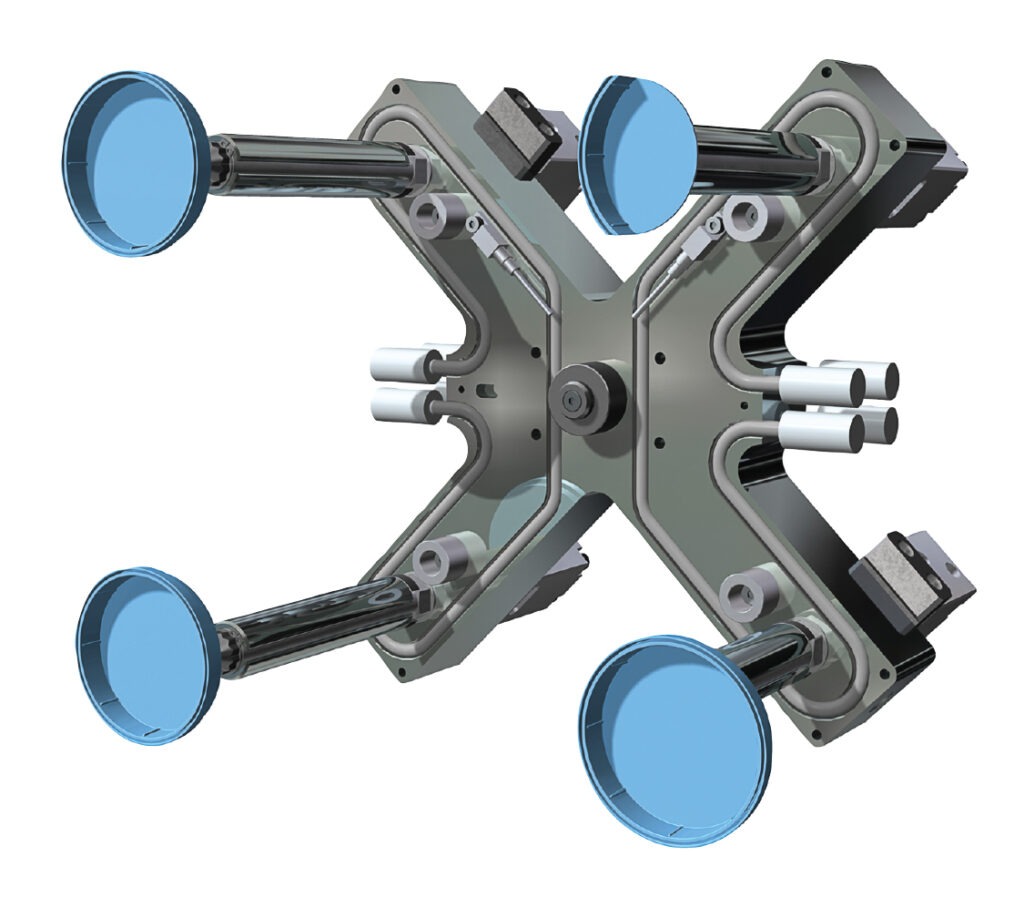
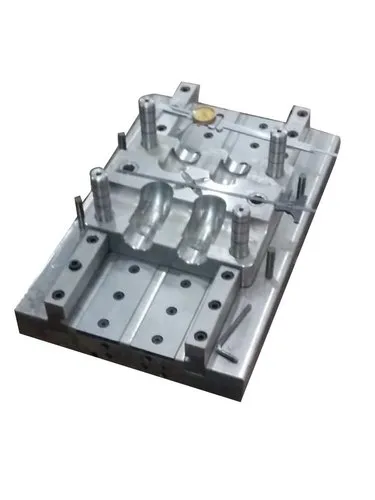
In injection molding, multiple cavities are often filled simultaneously using a network of runners and gates. Ensuring that each cavity fills uniformly and consistently is critical to producing parts with high quality and minimal variation. To achieve this, runner and gate balancing techniques are applied to ensure that molten plastic reaches all cavities at the same time, with equal pressure and temperature.
Key Definitions
Runner: A channel through which molten plastic flows from the sprue to the gate(s).
Gate: The final point where the molten plastic enters the mold cavity.
Balancing: Ensuring that all cavities in a multi-cavity mold are filled at the same rate.
Importance of Runner and Gate Balancing
Ensures uniform cavity filling
Reduces part defects (e.g., short shots, flash)
Minimizes cycle time and material waste
Improves dimensional consistency and part quality
Avoids excessive injection pressure
Types of Balancing
1. Geometrical Balancing
This approach focuses on equalizing the flow length and geometry of the runner system to ensure that molten plastic reaches all cavities at the same time.
Equal Runner Lengths: All runners from the sprue to each cavity are designed to have equal length and cross-sectional area.
Symmetrical Layouts: A symmetrical runner layout (e.g., H-shape, X-shape) helps maintain equal flow paths.
Advantages:
Simple and effective for symmetrical molds
No advanced simulation required
Limitations:
Difficult to achieve in molds with asymmetrical cavity layouts
May increase runner waste due to extra length
2. Rheological (Flow) Balancing
Instead of matching physical lengths, this technique focuses on matching pressure drops by adjusting runner dimensions (diameter, cross-section) to compensate for unequal flow lengths.
Shorter runners have smaller cross-sections
Longer runners are made thicker to reduce pressure loss
Advantages:
Ideal for asymmetrical layouts
Saves material compared to geometrical balancing
Limitations:
Requires flow analysis (CAE tools like Moldflow)
Complex design and validation process
3. Gate Balancing
Gate balancing involves adjusting gate size and location to control how the molten plastic enters each cavity.
Smaller gates are used for cavities closest to the sprue
Larger gates for distant cavities to equalize filling time
Gate types commonly used:
Edge gate
Submarine gate
Fan gate
Pin gate
Advantages:
Fine-tunes filling balance
Can be used in combination with runner balancing
Limitations:
May affect part appearance and gate vestige
Improper gate design may cause flow hesitation or weld lines
Balancing Techniques in Practice
| Technique | Suitable For | Tools Needed | Comments |
|---|---|---|---|
| Geometrical Balancing | Symmetrical molds | CAD modeling | Easy to implement in early design stages |
| Rheological Balancing | Asymmetrical molds | Flow simulation software (e.g., Moldflow) | Requires trial/simulation |
| Gate Balancing | All mold types | Design experience, simulation | Often used for final fine-tuning |