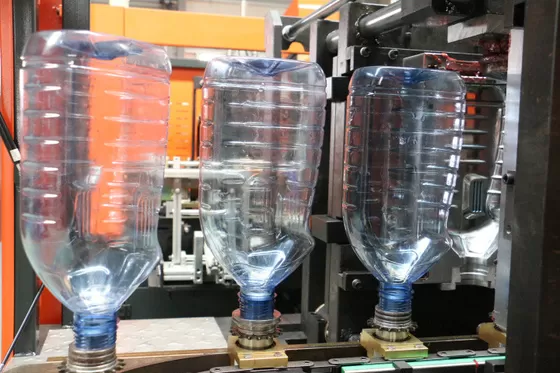
Stretch Blow Moulding (SBM) is a widely used manufacturing process for producing hollow plastic containers, particularly bottles made from polyethylene terephthalate (PET). It combines elements of extrusion and injection moulding with blow moulding techniques, offering high precision, strength, and clarity. The method is especially favored in the beverage, cosmetic, and pharmaceutical industries.
Mechanism of Stretch Blow Moulding
Stretch Blow Moulding generally occurs in two main steps: preform production and blow moulding. The process can be divided into two types: Single-stage and Two-stage SBM.
1. Preform Production (Injection Moulding)
A plastic preform (also known as a parison) is created using injection moulding.
The preform resembles a test tube with a threaded neck that forms the bottle’s mouth.
2. Conditioning
The preform is reheated (in the two-stage process) to a temperature suitable for orientation — typically just below the crystallization point of PET (~90-110°C).
In a single-stage process, this is done immediately after injection moulding.
3. Stretching and Blowing
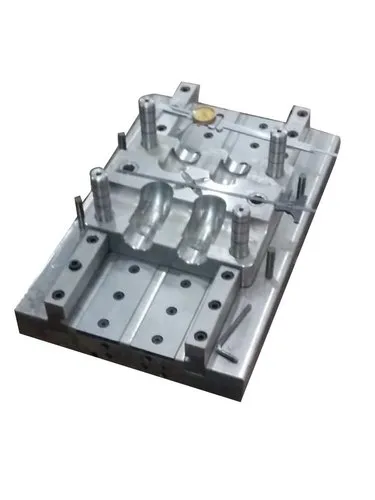
The preform is placed in a blow mould.
A stretch rod extends down into the preform, stretching it lengthwise.
Simultaneously, high-pressure air (usually 20–40 bar) is blown into the preform, causing it to expand radially against the inner walls of the mould.
4. Cooling and Ejection
The bottle is rapidly cooled in the mould to maintain its shape.
The finished container is ejected after solidification.
Benefits of Stretch Blow Moulding
1. Improved Mechanical Strength
The biaxial orientation (stretching in both axial and radial directions) aligns polymer chains, enhancing tensile strength, impact resistance, and top-load performance.
2. High Clarity and Aesthetics
SBM produces containers with superior optical properties, making them ideal for consumer-facing products where clarity is crucial.
3. Lightweight Containers
The process allows for thin walls without compromising strength, enabling significant material savings and lower transportation costs.
4. Design Flexibility
Offers versatility in container shapes and sizes, including complex geometries and integrated features like handles or grips.
5. Barrier Properties
The molecular orientation also improves barrier properties against gases like oxygen and carbon dioxide — a vital benefit for carbonated drinks and perishables.
6. Cost Efficiency
High-speed production and minimal material waste contribute to cost-effectiveness, especially in large-scale manufacturing.
7. Sustainability
The ability to use recycled PET (rPET) supports sustainable practices. PET containers are also widely recyclable.
Applications
Beverage bottles (water, soft drinks, juices)
Personal care containers (shampoos, lotions)
Food packaging (jars, condiment bottles)
Pharmaceutical bottles
Conclusion
Stretch Blow Moulding is a highly efficient and reliable method for producing high-quality plastic containers. Its combination of mechanical robustness, aesthetic appeal, and cost-effectiveness makes it a dominant technology in the packaging industry. With increasing focus on sustainability and lightweighting, SBM continues to evolve to meet modern manufacturing demands.