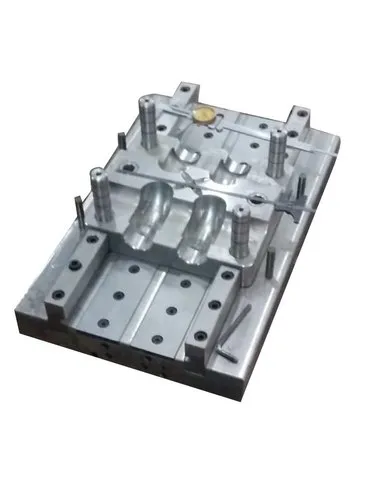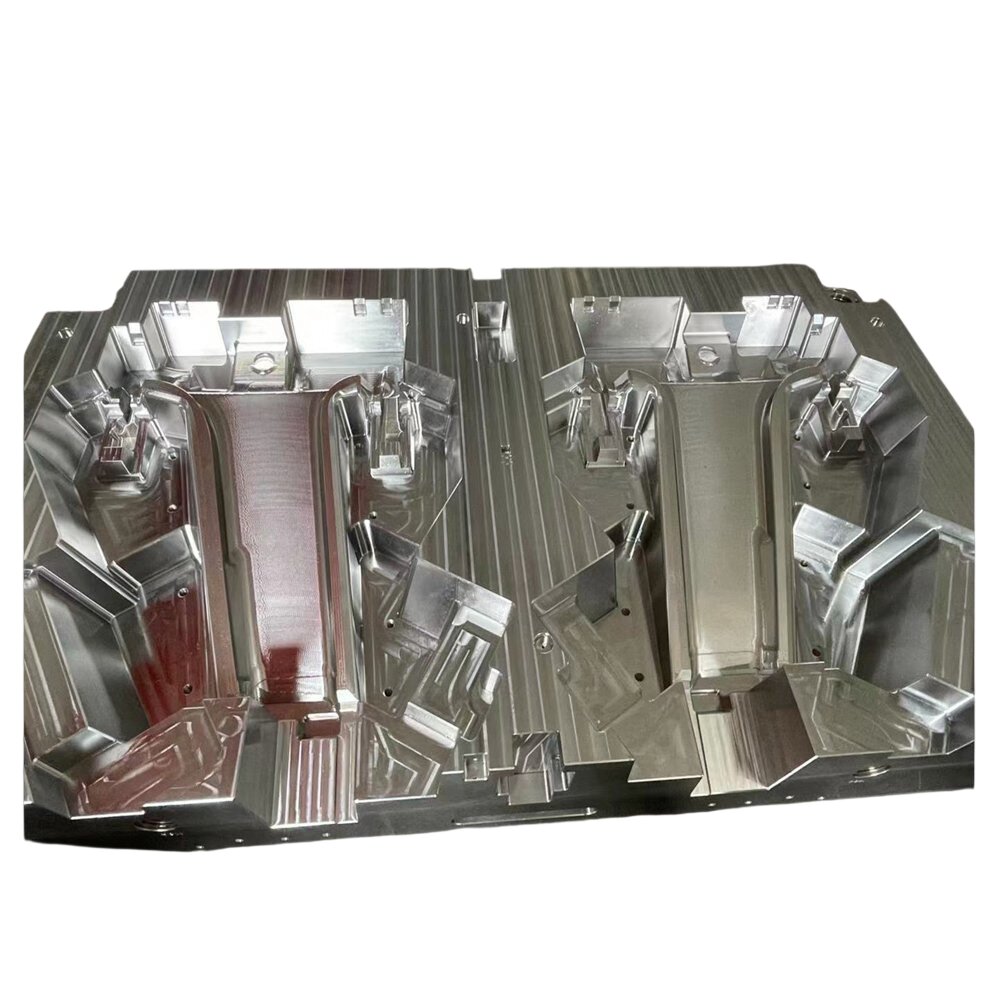
A Two-Plate Injection Mould is one of the most common and straightforward types of injection mould used for manufacturing plastic components. It consists primarily of two main mould plates that separate along a single parting line to allow the finished component to be removed.
Two-plate moulds are widely used because they have a relatively simple construction, are easier to manufacture, and can be suitable for both small and high-volume production.
What Is a Two-Plate Injection Mould?
A two-plate mould generally consists of:
- Fixed half – Attached to the stationary side of the injection moulding machine.
- Moving half – Attached to the moving platen.
- Parting line – The surface where the two mould halves separate.
- Cavity – Forms the external shape of the component.
- Core – Forms the internal features of the component.
- Runner system – Carries molten plastic toward the cavity.
- Gate – Controls the entry of molten plastic into the cavity.
- Ejection system – Removes the cooled component from the mould.
Basic Construction
A typical two-plate injection mould includes the following components:
| Component | Function |
|---|---|
| Fixed Plate | Holds the stationary mould half |
| Moving Plate | Holds the moving mould half |
| Cavity Plate | Contains the cavity |
| Core Plate | Contains the core |
| Sprue | Receives molten plastic from the machine nozzle |
| Runner | Distributes plastic toward the gate |
| Gate | Allows plastic to enter the cavity |
| Ejector Pins | Push the finished part out |
| Guide Pins & Bushes | Maintain alignment |
| Cooling Channels | Control mould temperature |
| Venting | Allows trapped air to escape |
How a Two-Plate Injection Mould Works
The process generally follows these steps:
1. Mould Closing
The moving mould half closes against the fixed half.
2. Plastic Injection
Molten plastic enters the mould through the sprue, runner, and gate.
3. Filling and Packing
The cavity is filled, and additional pressure may be applied to compensate for material shrinkage.
4. Cooling
Cooling channels remove heat from the mould and allow the plastic to solidify.
5. Mould Opening
The mould opens along its parting line.
6. Ejection
The ejector system pushes the finished component away from the core.
7. Cycle Repeats
The mould closes again for the next injection cycle.
Two-Plate vs. Three-Plate Mould
| Feature | Two-Plate Mould | Three-Plate Mould |
|---|---|---|
| Main Plates | Two | Three |
| Parting Lines | Usually one | Usually two |
| Construction | Simpler | More complex |
| Tooling Cost | Generally lower | Generally higher |
| Runner System | Usually remains with part or runner side | Can separate runner automatically |
| Maintenance | Easier | More involved |
| Applications | Very common | Used where special gating/part separation is required |
Advantages of Two-Plate Injection Moulds
- Simple construction
- Lower tooling complexity
- Generally easier to manufacture
- Easier maintenance
- Straightforward mould operation
- Suitable for many plastic products
- Can be designed as single-cavity or multi-cavity
- Compatible with various gate designs
- Suitable for automated production
Limitations
Two-plate moulds may have some limitations depending on the product design:
- Runner and gate location can restrict design options.
- The gate may leave a visible mark on the product.
- Certain complex geometries may require additional mechanisms.
- Some products are better suited to three-plate or hot-runner systems.
- Proper parting-line design is essential to avoid flash and moulding defects.
Types of Gates Used
Several gate designs can be incorporated into a two-plate mould, including:
- Edge gate
- Side gate
- Direct gate
- Fan gate
- Tab gate
- Submarine/tunnel gate in suitable designs
The gate type is selected according to the material, component geometry, appearance requirements, and production requirements.
Applications
Two-plate injection moulds are commonly used to manufacture:
- Plastic containers
- Caps and closures
- Household products
- Automotive components
- Electrical housings
- Appliance parts
- Industrial components
- Toys
- Packaging components
- Consumer products
Important Design Considerations
When designing a two-plate injection mould, several factors should be considered:
Parting Line: The parting line should be positioned to allow easy mould opening and part removal.
Draft Angle: Suitable draft helps the component release from the mould without damage.
Gate Location: The gate should allow effective filling and minimize visible marks where required.
Cooling: Proper cooling-channel placement helps maintain consistent cycle times and dimensions.
Ejection: Ejector pins should be positioned so that the component can be removed without deformation.
Ventilation: Proper vents help release trapped air and reduce burn marks or incomplete filling.
Shrinkage: The mould dimensions must account for the expected shrinkage of the selected plastic material.
In Short
A Two-Plate Injection Mould is a simple and widely used mould design consisting of a fixed half and a moving half separated by a primary parting line. Molten plastic enters through the sprue, runner, and gate, fills the cavity, cools, and is then ejected.
Its simple construction, relatively easy maintenance, and versatility make it suitable for a wide range of injection-moulded plastic products.