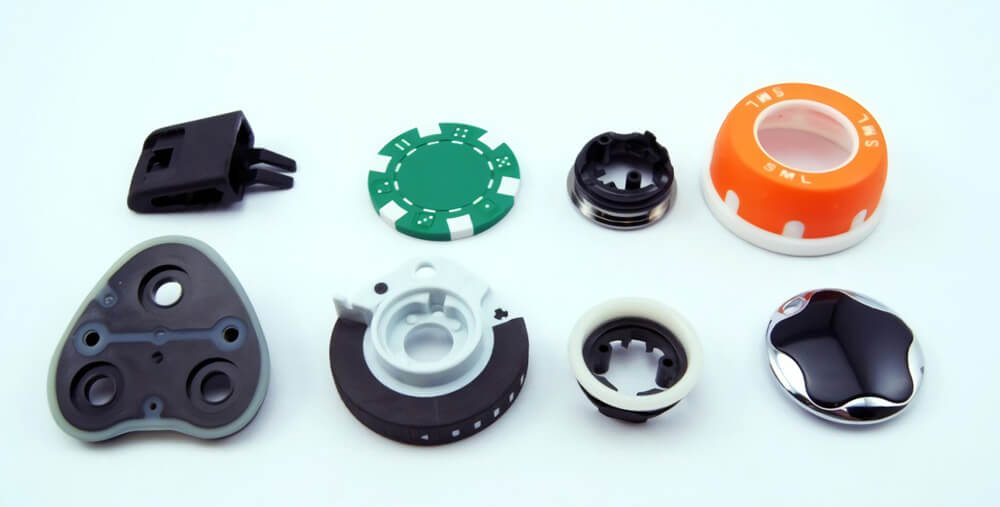
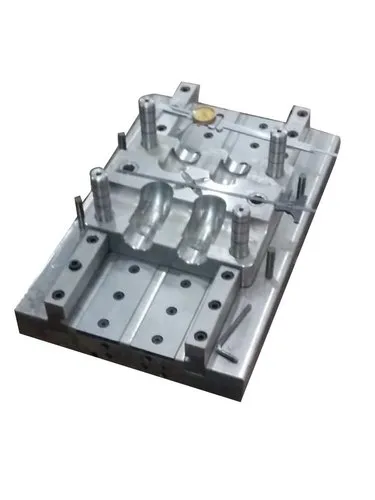
Two-shot injection moulding, also known as multi-material or dual-shot moulding, is an advanced manufacturing process where two different materials or two different colors of the same material are injected into a single mould during two separate, consecutive injection cycles. The result is a single, multi-material component with enhanced functionality, appearance, or performance.
How It Works:
First Shot:
The first material is injected into the mould cavity to form the base part of the product.Mould Rotation/Transfer:
After the first shot cools slightly, the mould rotates (typically 180°) or the part is transferred to another cavity using a robotic arm or a sliding core.Second Shot:
The second material is injected, bonding with the first material to form a single, integrated component.
This process takes place within one moulding machine using a specially designed mould and a two-barrel injection unit.
Key Features:
Single Moulding Cycle: Produces a finished part in one continuous process.
Multiple Materials: Can use materials with different properties, such as rigid and flexible plastics.
Precision Alignment: Critical to ensure proper bonding and positioning between the two materials.
Automation: Highly automated, reducing the need for secondary operations.
Benefits:
Improved Product Quality:
Strong inter-material bond improves part integrity and durability.Enhanced Aesthetics:
Enables the creation of complex designs, color contrasts, and soft-touch surfaces.Reduced Assembly Time:
Eliminates the need for gluing or manual assembly of multiple parts.Cost Efficiency:
Reduces labor and inventory costs by producing complete parts in a single process.Design Flexibility:
Facilitates complex geometry and functional integration (e.g., sealing, grip areas).
Applications:
Automotive Industry: Soft-touch dashboards, seals, buttons.
Consumer Electronics: Multi-colored phone cases, buttons.
Medical Devices: Ergonomic grips, dual-hardness components.
Household Products: Toothbrushes with soft grip handles.
Power Tools: Overmolded grips, protective housings.
Material Selection:
Common Combinations:
Polypropylene (PP) + Thermoplastic Elastomer (TPE)
ABS + Polycarbonate (PC)
Nylon + TPE
Compatibility Considerations:
Materials must be chemically or thermally compatible to ensure bonding.
Mould Design Considerations:
Precision Alignment Mechanisms
Rotating/Indexing Platen
Complex Cooling and Gating Systems
Material Flow Control
Challenges:
High Initial Tooling Cost:
Complex moulds and machines increase capital investment.Material Compatibility:
Not all materials bond well, requiring careful selection.Process Complexity:
Requires skilled design and process control for optimal results.
Conclusion:
Two-shot injection moulding is a highly efficient and innovative process that allows the creation of complex, multi-material components in a single cycle. Despite higher upfront tooling costs, the benefits of enhanced product functionality, reduced assembly, and design flexibility make it an ideal solution for many industries seeking performance and aesthetic improvements in their plastic parts.