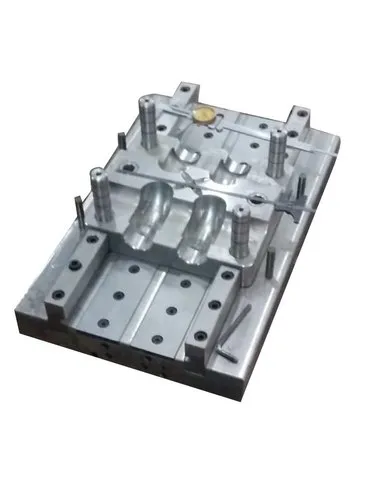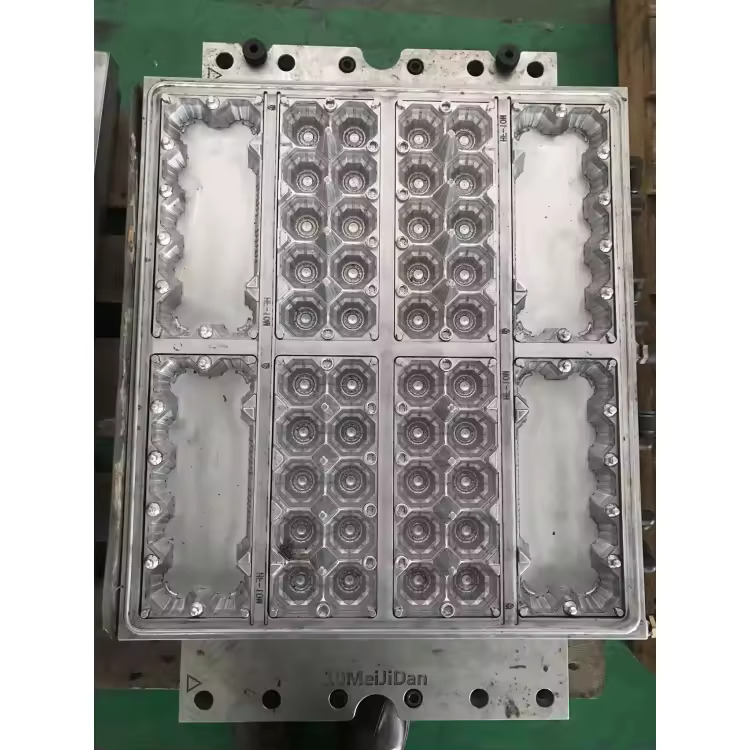
Thermoforming moulds are used to shape heated thermoplastic sheets or films into specific products. Different mould types are selected based on the product shape, required detail, forming method, production quantity, and desired surface finish.
1. Positive (Male) Mould
A positive mould, also called a male mould, has a raised shape. The heated plastic sheet is placed over the outside of the mould and formed around it.
Features:
- Relatively simple mould construction
- Suitable for many basic shapes
- Useful for producing products with controlled external dimensions
- Suitable for prototypes and production applications
2. Negative (Female) Mould
A negative mould, also called a female mould, contains a cavity. The heated sheet is drawn or pressed into the cavity to reproduce its internal shape.
Features:
- Can reproduce detailed cavity surfaces
- Suitable for products requiring specific internal dimensions
- Can provide good surface definition
3. Vacuum Forming Mould
Vacuum forming moulds are used with a vacuum-forming process. After the plastic sheet is heated, air is removed from between the sheet and mould. Atmospheric pressure then pushes the sheet against the mould surface.
Applications: Packaging trays, containers, covers, displays, and decorative products.
4. Pressure Forming Mould
Pressure forming uses compressed air to push the heated sheet against the mould. It can provide greater definition than basic vacuum forming.
Advantages:
- Better reproduction of fine details
- Sharper corners and surface features
- Suitable for products requiring a more detailed appearance
5. Twin-Sheet Thermoforming Mould
Twin-sheet thermoforming uses two heated plastic sheets, which are formed separately and then joined together.
This method can produce hollow products with greater structural rigidity.
Applications: Large covers, housings, tanks, ducts, and other hollow components.
6. Single-Cavity Mould
A single-cavity mould forms one product during each cycle.
Advantages:
- Simple design
- Easier to manufacture
- Suitable for prototypes
- Useful for smaller production quantities
7. Multi-Cavity Mould
A multi-cavity mould contains several cavities, allowing multiple products to be formed during one cycle.
Advantages:
- Higher production output
- Better production efficiency
- Suitable for repetitive, high-volume manufacturing
8. Custom Thermoforming Mould
Custom moulds are designed specifically for a particular product. They can incorporate unique shapes, textures, patterns, logos, grooves, and other design features.
Custom moulds are useful when standard moulds cannot meet the required product specifications.
Comparison of Thermoforming Mould Types
| Mould Type | Main Characteristic | Typical Application |
|---|---|---|
| Positive/Male | Sheet forms over the mould | Basic shapes and covers |
| Negative/Female | Sheet forms inside a cavity | Detailed products |
| Vacuum Forming | Vacuum draws sheet against mould | Trays, containers, packaging |
| Pressure Forming | Air pressure provides additional forming force | Detailed components |
| Twin-Sheet | Two sheets are formed and joined | Hollow products |
| Single-Cavity | One product per cycle | Prototypes and small production |
| Multi-Cavity | Multiple products per cycle | Higher-volume production |
| Custom | Designed for a specific product | Specialized products |
Choosing the Right Thermoforming Mould
When selecting a thermoforming mould, consider:
- Product shape and dimensions
- Type of thermoplastic
- Sheet thickness
- Required surface detail
- Forming depth
- Production quantity
- Vacuum or pressure requirements
- Cooling requirements
- Ease of demoulding
- Required surface finish
- Mould durability and cost
Conclusion
Thermoforming moulds are available in different designs to meet different manufacturing requirements. Positive and negative moulds determine how the sheet is formed, while vacuum and pressure forming moulds are selected according to the forming method. Single-cavity, multi-cavity, twin-sheet, and custom moulds provide additional options for production volume and product complexity.
Selecting the appropriate mould type helps achieve accurate shapes, consistent dimensions, good surface details, and efficient production.