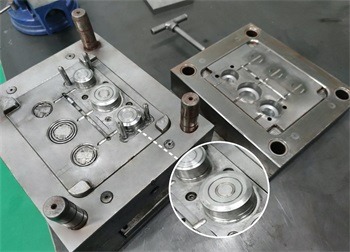
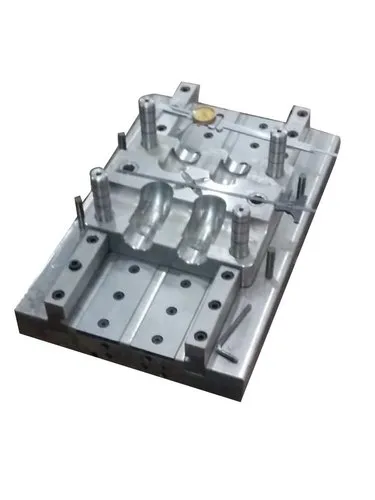
In plastic injection moulding, producing threaded components—such as bottle caps, closures, and threaded connectors—poses unique challenges. Unlike standard moulded parts that can be ejected using simple ejector pins or sleeves, threaded parts often require unscrewing mechanisms to safely remove the part without damaging the threads.
This is where unscrewing moulds come into play. These specialized moulds incorporate mechanical or motorized systems to rotate the threaded core or cavity, allowing the part to be unscrewed before ejection.
Why Unscrewing is Necessary
Thread Integrity: Threads are delicate and precise. Forcefully ejecting a threaded part can deform or strip the threads.
Undercuts: Threads act like undercuts, mechanically locking the part onto the mould core.
Part Design: Some parts have internal or external threads that cannot be snap-fit or stripped without damage.
Types of Unscrewing Mechanisms
Mechanical Unscrewing
Uses rack and pinion systems, cams, or linkages.
Rotation is driven by the mould opening action or hydraulic movement.
Ideal for high-speed, high-volume production.
Hydraulic or Pneumatic Unscrewing
Uses hydraulic or pneumatic cylinders to drive rotary motion via a gear system.
Offers greater control and is suitable for more complex thread designs.
Motorized Unscrewing (Servo-driven)
Uses electric servo motors for precision control.
Allows programmable speeds, torque limits, and synchronization with moulding cycles.
More expensive but provides excellent flexibility and repeatability.
Basic Working Principle
Mould Closes: Plastic is injected into the cavity around the threaded core.
Cooling Phase: The part solidifies with the threads formed around the core.
Mould Opens: The movable side of the mould retracts.
Unscrewing Begins: The core holding the thread starts rotating (either internally or externally threaded part).
Ejection: Once the part is fully unscrewed, it is ejected using standard ejector pins or plates.
Design Considerations
Thread Pitch and Direction: Must be designed to allow smooth unscrewing within the cycle time.
Draft Angle: Non-threaded areas should have appropriate draft to ease part removal.
Material Shrinkage: Consider how the material behaves when cooling, as it may tighten around the core.
Cycle Time: Unscrewing adds time to the cycle, so optimizing speed and mechanics is crucial.
Advantages of Unscrewing Moulds
Produces high-quality threaded components with no post-processing.
Prevents thread damage during ejection.
Supports complex, high-precision thread designs.
Limitations
Higher initial cost due to complex mechanics.
Longer cycle times compared to standard moulds.
Requires precise maintenance and calibration to avoid mechanical failures.
Applications
Bottle caps and closures
Medical device components
Cosmetic containers
Automotive threaded parts
Plumbing fittings
Conclusion
Unscrewing moulds are essential for manufacturing precision threaded plastic parts in a consistent and automated way. While more complex and costly than conventional moulds, their benefits in maintaining thread quality and product performance make them indispensable for certain applications. Proper design, synchronization, and maintenance are key to leveraging the full advantages of unscrewing moulds in plastic injection moulding.