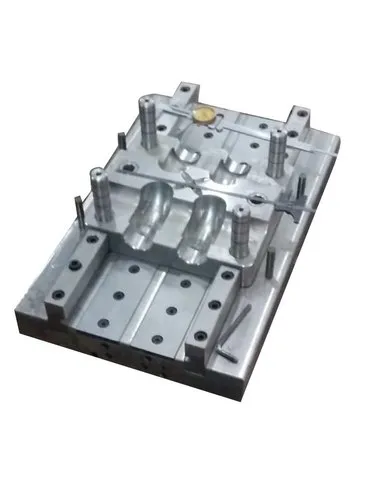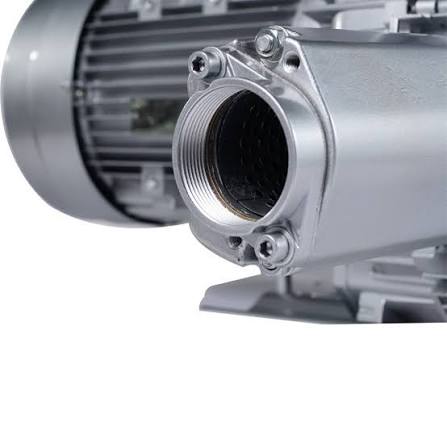
Vacuum channels are passages incorporated into thermoforming moulds to remove trapped air between the heated plastic sheet and the mould surface during the forming process. They are an important part of vacuum-forming mould design because they allow atmospheric pressure to push the plastic sheet accurately against the mould.
A properly designed vacuum-channel system helps achieve consistent forming, accurate reproduction of mould details, uniform surface contact, and reliable part quality. Without adequate air evacuation, trapped air can prevent the plastic sheet from fully conforming to the mould.
How Vacuum Channels Work
During vacuum thermoforming, a heated plastic sheet is positioned over the mould. When the vacuum system is activated, air between the sheet and mould surface is drawn through small vacuum holes and connected channels.
This creates a pressure difference between the upper and lower sides of the plastic sheet. Atmospheric pressure then pushes the softened sheet against the mould surface.
The basic process involves:
- Heating the plastic sheet until it becomes sufficiently flexible.
- Positioning the sheet over the mould.
- Sealing the sheet around the mould perimeter.
- Activating the vacuum system.
- Removing trapped air through vacuum holes and channels.
- Allowing the plastic to conform to the mould surface.
- Cooling the formed part before demoulding.
Types of Vacuum Passages
Vacuum systems can use different types of passages depending on mould construction and component geometry.
Drilled Vacuum Holes:
Small holes are drilled through the mould to connect the moulding surface with an internal vacuum system. These are common and relatively simple to manufacture.
Vacuum Grooves or Channels:
Grooves can be machined into the mould surface or internally connected to vacuum ports. They help distribute vacuum to larger areas.
Internal Vacuum Manifolds:
A network of internal passages can connect multiple vacuum holes to one or more vacuum ports, providing more uniform air removal.
Porous Mould Materials:
Porous materials can allow air to pass through a large portion of the mould surface. This can be useful for complex geometries where conventional drilled holes would be difficult to position.
Importance of Vacuum Channels
1. Complete Sheet Forming
Effective vacuum channels allow the plastic sheet to closely follow the mould contour, including detailed features, recesses, ribs, and corners.
2. Improved Surface Detail
Proper air removal helps the plastic contact the mould surface uniformly, allowing fine mould textures and surface details to be reproduced more accurately.
3. Reduced Air Traps
Poorly vented areas can retain pockets of air. These air traps may result in incomplete forming, surface defects, or inconsistent dimensions.
4. Better Dimensional Consistency
Uniform evacuation helps produce more consistent contact between the plastic and mould, improving repeatability from one production cycle to another.
5. Improved Production Reliability
A well-designed vacuum system reduces the likelihood of incomplete forming and allows the thermoforming process to operate more consistently.
Vacuum Channel Design Considerations
Channel Location:
Vacuum passages should be positioned in areas where air is likely to become trapped, particularly at the ends of forming paths, deep recesses, corners, and detailed features.
Hole Size:
Vacuum holes should be large enough to evacuate air effectively but sufficiently small to minimize visible marks on the finished component.
Hole Distribution:
Vacuum points should be distributed according to the geometry of the mould rather than using a uniform pattern everywhere. Complex or deep areas may require additional venting.
Channel Connectivity:
Individual vacuum holes should connect effectively to the main vacuum manifold. Restrictions or dead-end passages can reduce vacuum performance.
Mould Depth and Geometry:
Deep-draw areas and narrow features often require more carefully positioned vacuum passages because air can become trapped more easily.
Surface Appearance:
For visible surfaces, vacuum holes should be designed to minimize witness marks. Hole dimensions and locations should therefore be selected according to the required cosmetic quality.
Maintenance:
Vacuum passages should be designed so they can be inspected and cleaned. Dust, plastic particles, and mould debris can gradually restrict airflow.
Common Problems Caused by Poor Vacuum Design
Insufficient or poorly distributed vacuum channels can lead to:
- Incomplete forming
- Trapped air
- Poor reproduction of fine details
- Wrinkles or folds
- Uneven wall distribution
- Surface defects
- Dimensional variation
- Longer forming cycles
- Inconsistent production quality
Vacuum Channels in Complex Moulds
Complex thermoforming moulds may require a combination of drilled holes, grooves, manifolds, and specialized venting arrangements. Areas with deep pockets, sharp transitions, narrow ribs, or complex textures should receive particular attention during the design stage.
Computer-aided mould analysis can also help identify potential air-trap locations and determine where additional vacuum passages may be beneficial.
Key Benefits
A properly designed vacuum-channel system provides:
- Effective air evacuation
- Better mould detail reproduction
- More uniform forming
- Improved dimensional accuracy
- Reduced forming defects
- Consistent production
- Better surface quality
- Improved process reliability
Conclusion
Vacuum channels are a critical feature of vacuum thermoforming moulds because they provide the pathways required to remove air between the heated plastic sheet and mould surface. Their size, location, distribution, and connection to the vacuum system directly influence forming quality.
Effective vacuum-channel design should therefore be considered together with mould geometry, material behaviour, venting requirements, surface finish, and production conditions. A well-designed system ensures that the plastic sheet conforms closely and consistently to the mould, resulting in higher-quality thermoformed components.