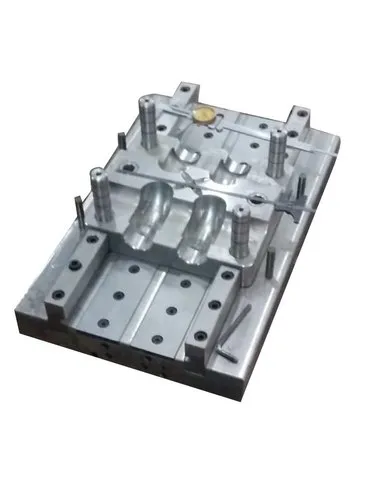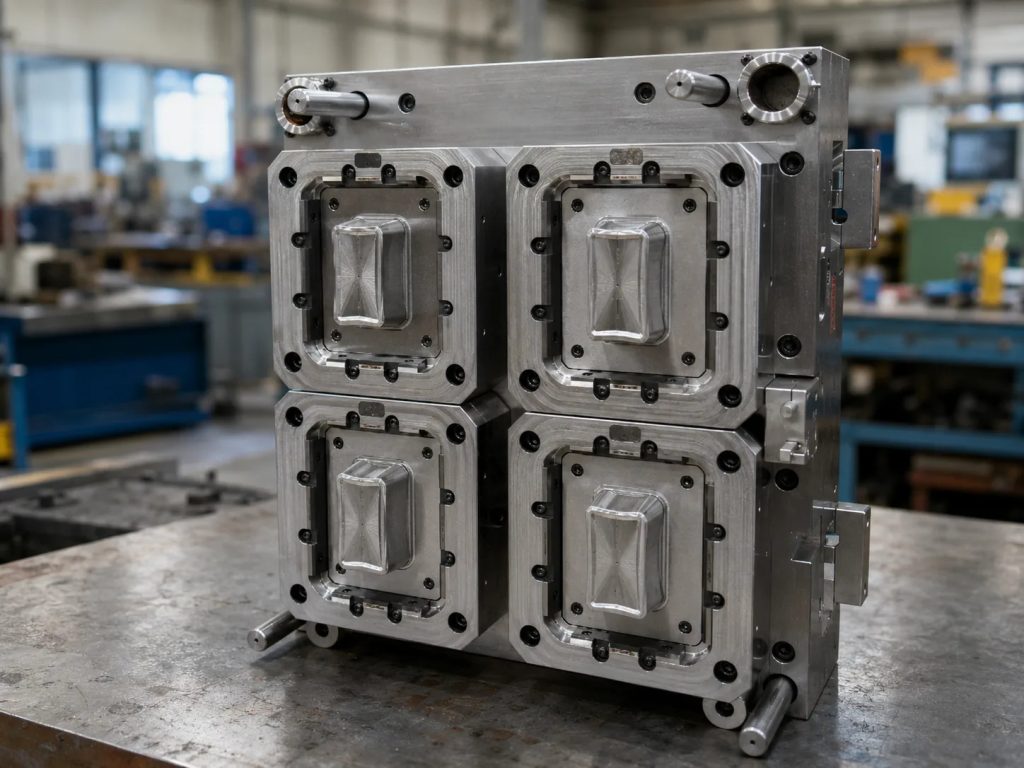
Vent hole design is an essential part of thermoforming mould development, particularly in vacuum and pressure thermoforming. Vent holes allow trapped air between the heated plastic sheet and the mould surface to escape, enabling the sheet to conform accurately to the mould geometry.
Properly designed venting helps achieve complete forming, accurate reproduction of fine details, uniform surface quality, and consistent wall thickness. Inadequate venting can result in air pockets, incomplete forming, webbing, surface defects, and variations in material distribution.
Key Functions of Vent Holes
- Allow trapped air to escape during forming
- Improve contact between the plastic sheet and mould surface
- Support accurate reproduction of mould details
- Reduce air pockets and incomplete forming
- Improve dimensional consistency
- Help achieve uniform material distribution
- Improve forming cycle efficiency
Key Design Considerations
- Hole Location: Position vent holes at areas where air is likely to become trapped, such as deep corners, recesses, pockets, and areas around detailed features.
- Hole Diameter: Use sufficiently small openings to provide effective air evacuation without leaving noticeable marks on the finished component.
- Vent Density: Increase venting in deep or geometrically complex areas where air evacuation is more difficult.
- Vent Depth: Vent passages should provide a suitable flow path from the mould surface to the vacuum or pressure system.
- Fine Details: Small vents may be required around embossed lettering, grooves, ribs, and other detailed features to ensure complete forming.
- Surface Appearance: Vent holes should be designed to minimize visible witness marks on the finished product.
- Vacuum Path: Ensure that vent passages are connected effectively to the main vacuum system and are not restricted by mould construction.
- Maintenance: Design vents so they can be inspected and cleaned easily, as wax, dust, plastic residue, or other contamination can reduce their effectiveness.
- Mould Material: Consider the machining characteristics and permeability of the mould material when selecting the venting method.
Common Venting Methods
- Drilled Vent Holes: Small holes are drilled through the mould at strategic locations and connected to the vacuum system.
- Vent Grooves: Fine grooves can be machined into the mould surface to provide additional air evacuation paths.
- Porous Mould Materials: Materials such as porous aluminium can provide distributed venting across the mould surface.
- Vacuum Channels: Larger internal passages can connect multiple vent locations to the main vacuum circuit.
Typical Vent Hole Guidelines
There is no universal vent-hole size or spacing because the correct design depends on the plastic material, sheet thickness, mould geometry, vacuum level, forming speed, and required surface finish. Fine venting is generally preferred on visible surfaces, while larger or more numerous vents may be appropriate in deep sections and areas where air entrapment is likely.
Common Problems Caused by Poor Venting
- Incomplete mould filling
- Air entrapment
- Poor reproduction of fine details
- Webbing and folds
- Uneven wall thickness
- Surface blemishes
- Longer forming cycles
- Inconsistent component dimensions
Importance of Proper Vent Hole Design
Effective venting is particularly important in deep-draw thermoforming, where the heated sheet must travel a significant distance before contacting the mould surface. Vent locations should be identified during the mould design stage using the component geometry and expected air-flow paths.
A properly engineered vent-hole system provides efficient air evacuation, improved mould detail reproduction, consistent component quality, reduced forming defects, and reliable thermoforming performance.