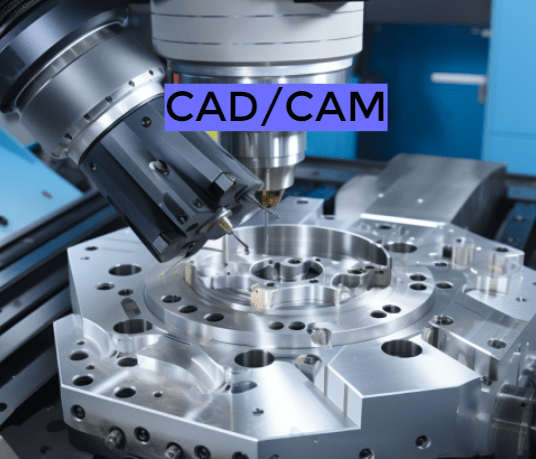
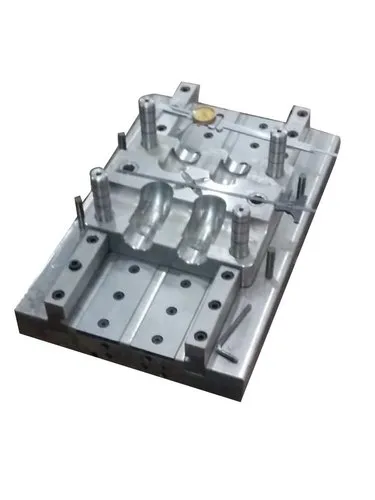
In the manufacturing of houseware products—such as plastic containers, kitchen utensils, storage bins, and bathroom accessories—the quality, functionality, and aesthetic appeal of the final product largely depend on the precision of the mould used. Computer-Aided Design (CAD) and Computer-Aided Manufacturing (CAM) software play a critical role in the design and production of these mould dies, ensuring high accuracy, repeatability, and efficiency.
Role of CAD in Mould Die Design
1. Conceptual Design & 3D Modeling
CAD software allows designers to create detailed 3D models of houseware products. These models serve as the foundation for designing the moulds. Key features include:
Parametric modeling
Surface and solid modeling
Assemblies for multi-part designs
2. Mould Core and Cavity Design
CAD tools help in:
Splitting the 3D product model into core and cavity
Designing parting lines and surfaces
Draft analysis to ensure demoulding feasibility
Detecting undercuts and optimizing part geometry
3. Simulation and Analysis
Before moving to production, simulations can be run to:
Analyze wall thickness and uniformity
Predict material flow and potential air traps
Optimize gate, runner, and vent locations
Evaluate shrinkage and warpage
Popular CAD Software Used:
Autodesk Inventor
SolidWorks
Siemens NX
PTC Creo
CATIA
Role of CAM in Mould Die Manufacturing
1. Toolpath Generation
CAM software takes the CAD model and generates optimized toolpaths for CNC machining. This includes:
Roughing and finishing operations
High-speed machining strategies
Multi-axis toolpath support (3-, 4-, and 5-axis)
2. Simulation and Verification
Toolpath simulation helps prevent collisions
Material removal verification ensures dimensional accuracy
Optimization for tool wear and cutting time reduction
3. Integration with CNC Machines
CAM software outputs G-code directly compatible with CNC milling, EDM (Electrical Discharge Machining), and other machine tools used for die manufacturing.
Popular CAM Software Used:
Mastercam
PowerMill
EdgeCAM
Fusion 360 (CAD + CAM)
HyperMill
Advantages of Using CAD/CAM in Houseware Mould Die Design
Precision and Accuracy: Reduces human error and ensures consistent mould dimensions.
Faster Turnaround: Speeds up both design and machining processes.
Cost Efficiency: Minimizes material wastage and tooling errors.
Improved Collaboration: Allows designers and machinists to work on a unified digital platform.
Design Revisions and Version Control: Easily modify and reuse design data.
Product Optimization: Enhances the quality and durability of the final houseware product.
Conclusion
CAD/CAM technology has revolutionized the mould and die design process in the houseware industry. It empowers manufacturers to deliver high-quality products faster and more efficiently while reducing overall production costs. As consumer demand for stylish, functional, and affordable houseware grows, the adoption of advanced CAD/CAM tools becomes not just an advantage but a necessity for competitive manufacturing.