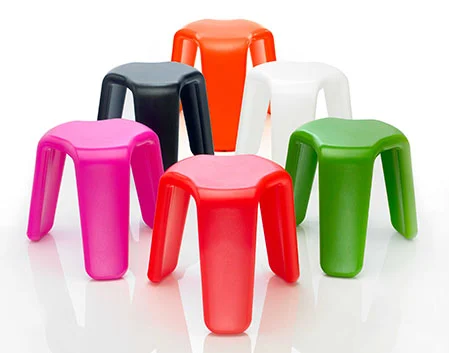
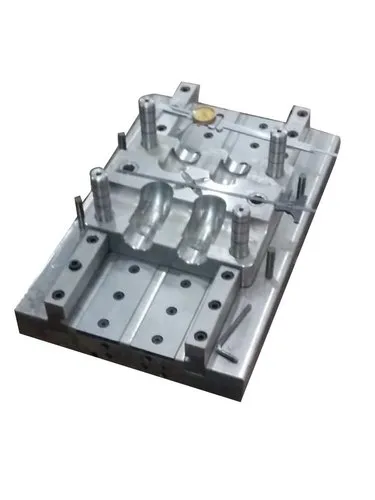
Rotational moulding, often called rotomoulding, is a versatile plastic moulding process ideal for creating hollow, seamless products. In the houseware industry, it is widely used to manufacture durable and lightweight items such as water tanks, storage bins, containers, toys, laundry baskets, and coolers.
Principle of Rotational Moulding
Rotational moulding involves placing a powdered thermoplastic material inside a hollow mould. The mould is then heated and simultaneously rotated on two perpendicular axes. As the mould rotates, the polymer melts and coats the inner surface of the mould uniformly, forming a hollow product when cooled.
Key Features of Rotational Moulds
Rotational moulds are essential to ensuring product quality, surface finish, and dimensional accuracy. The moulds used for hollow houseware items possess the following characteristics:
Single-piece or split design: Depending on the product complexity.
Hollow cavity design: Facilitates uniform wall thickness and seamless construction.
Lightweight and durable materials: Typically made from aluminium or cast aluminium due to excellent thermal conductivity and ease of fabrication.
Surface texturing: To impart a desired finish (e.g., smooth, matte, or patterned) to the final product.
Venting systems: Allow air to escape during heating and filling, preventing blowholes or incomplete fill.
Materials Used for Moulds
Aluminium (Cast or CNC-machined): Most common for houseware due to its light weight, good heat transfer, and corrosion resistance.
Steel: Occasionally used for high-volume production where durability is critical.
Sheet metal (welded): Used for low-cost, large-sized products with simple geometries.
Design Considerations for Hollow Houseware Items
Wall Thickness Uniformity:
Controlled by heating time, rotational speed, and powder quantity.
Aids in improving mechanical strength and aesthetics.
Draft Angles:
Allow easy demoulding; typically 2–5 degrees.
Undercuts and Inserts:
Minimized to simplify demoulding and avoid the need for complex mould mechanisms.
Parting Line Placement:
Optimized for aesthetics and functionality.
Cooling and Ejection:
Moulds are air- or water-cooled post-heating.
The product is manually or pneumatically removed.
Applications in Houseware Products
Rotational moulds are used to produce a variety of hollow houseware items, including:
| Item | Design Benefit | Material Used |
|---|---|---|
| Water storage tanks | Seamless, leak-proof | LLDPE |
| Laundry bins | Lightweight, strong | HDPE/LLDPE |
| Coolers & iceboxes | Double-wall with foam | LLDPE with PU foam |
| Trash cans | UV-resistant, durable | LLDPE |
| Storage containers | Custom colors & textures | HDPE/LLDPE |
| Planters | Weather-resistant | LLDPE |