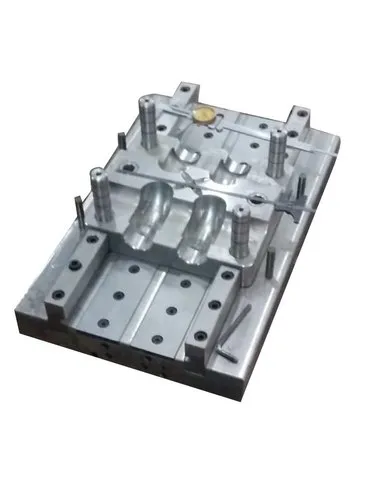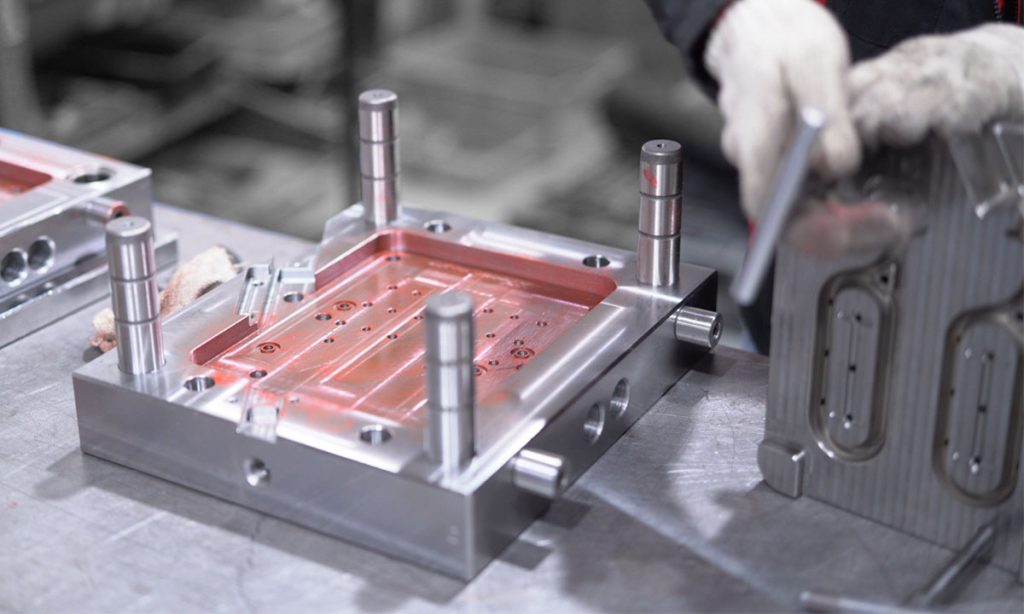
Injection moulding is a widely used manufacturing process for producing consistent, accurate, and detailed products. In this process, a material is heated until it becomes flowable and is then injected into a mould cavity under pressure. After cooling or curing, the finished product is removed from the mould.
1. Material Preparation
The required raw material is selected according to the product specifications. In conventional plastic injection moulding, materials are commonly supplied as plastic pellets or granules.
The material should be clean, properly stored, and prepared according to the manufacturer’s requirements.
2. Material Feeding
The material is loaded into the machine’s hopper. It then moves from the hopper into the heated barrel.
3. Heating and Melting
Inside the barrel, heaters and the rotating screw heat and move the material. The material becomes molten or sufficiently flowable for injection.
The correct temperature depends on the material being processed.
4. Mould Closing
The two halves of the injection mould are closed and securely clamped together.
The mould must be correctly aligned and able to withstand the injection pressure without opening during the cycle.
5. Injection
The screw moves forward and pushes the molten material through the nozzle, sprue, runners, and gate into the mould cavity.
Injection pressure and speed must be controlled to ensure proper filling.
6. Filling the Mould Cavity
The molten material flows through the cavity and takes the shape of the mould.
Proper material flow is important for producing a product with consistent dimensions and minimizing defects such as incomplete filling or air entrapment.
7. Holding and Packing
After the cavity is filled, holding pressure may be maintained for a specified period.
This helps compensate for material shrinkage as the product begins to cool and helps maintain the required dimensions.
8. Cooling or Curing
The material remains inside the mould while it cools and solidifies. For certain materials, curing rather than simple cooling may be required.
Cooling channels in the mould help control temperature and shorten the production cycle.
9. Mould Opening
Once the product has sufficiently solidified, the clamping system opens the mould.
The two mould halves separate to expose the finished product.
10. Product Ejection
The ejector system, often using ejector pins, pushes the product out of the mould.
The ejection process should be carefully controlled to prevent damage or deformation.
11. Runner and Gate Removal
Depending on the mould design, the finished product may still be connected to runners or gates. These are removed when required.
Hot-runner systems can reduce or eliminate some runner waste.
12. Inspection and Finishing
The finished product is inspected for:
- Correct dimensions
- Shape and appearance
- Surface quality
- Flash
- Warping
- Short shots
- Sink marks
- Other defects
Additional finishing operations may be performed if required.
Simple Injection Moulding Flow
Material Preparation → Feeding → Heating & Melting → Mould Closing → Injection → Filling → Holding → Cooling/Curing → Mould Opening → Ejection → Finishing → Inspection
Important Process Parameters
Successful injection moulding depends on controlling:
- Material temperature
- Mould temperature
- Injection pressure
- Injection speed
- Holding pressure
- Holding time
- Cooling time
- Screw speed
- Material quantity
- Mould design
Common Injection Moulding Problems
Incorrect settings or mould design can lead to:
- Short Shot – The cavity is not completely filled.
- Flash – Excess material escapes between mould surfaces.
- Warping – The product becomes distorted during cooling.
- Sink Marks – Depressions appear on the product surface.
- Burn Marks – Material or trapped air becomes overheated.
- Weld Lines – Flow fronts meet and create a visible line.
- Voids – Internal empty spaces develop within the product.
Conclusion
The injection moulding process involves feeding, heating, injecting, filling, holding, cooling, opening, and ejecting the material from a mould. Careful control of material temperature, injection pressure, cooling, and mould design helps manufacturers produce consistent, high-quality products efficiently and repeatedly.