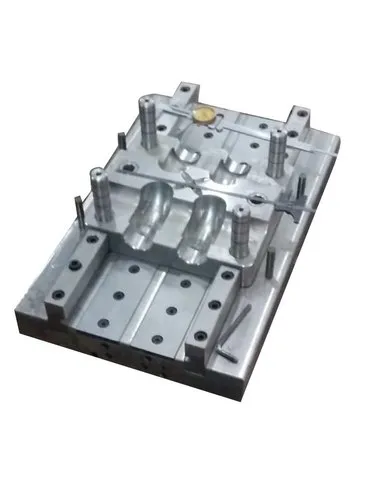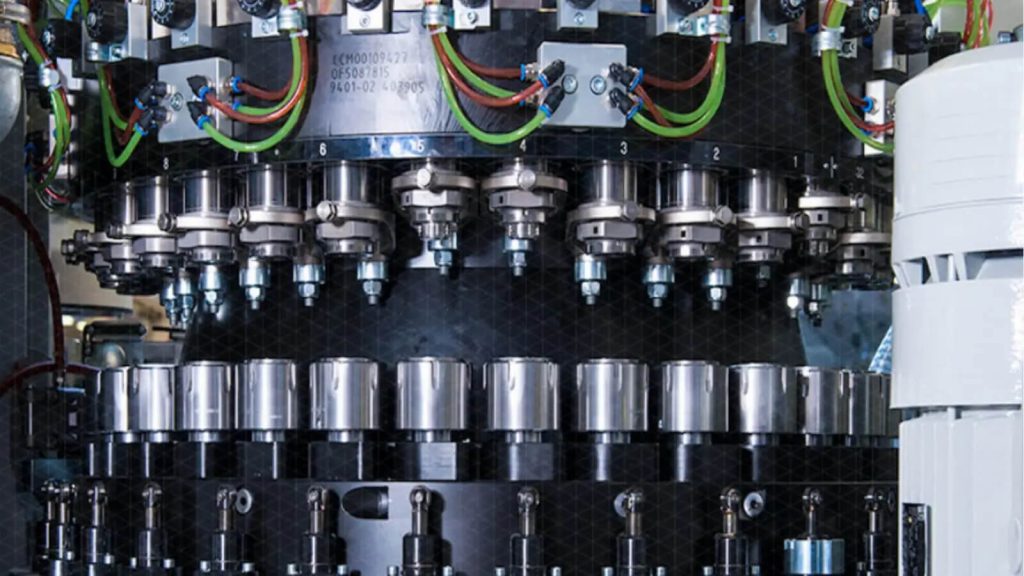
Compression moulds are designed to shape materials by applying pressure, often together with heat, inside a mould cavity. Different types of compression moulds are used depending on the product design, material, production quantity, and level of detail required.
1. Single-Cavity Compression Mould
A single-cavity mould has one mould cavity and produces one product during each moulding cycle.
Advantages:
- Simple mould design
- Easy to operate and maintain
- Suitable for prototypes and small production
- Useful for testing new product designs
Applications: Customized candles, soaps, decorative products, and prototype components.
2. Multi-Cavity Compression Mould
A multi-cavity mould contains two or more cavities in a single mould. Several products can therefore be produced during one cycle.
Advantages:
- Higher production output
- Saves production time
- Suitable for repeated products
- Improves manufacturing efficiency
The cavities should be designed and arranged to provide consistent filling and pressure distribution.
3. Flash-Type Compression Mould
In a flash-type mould, excess material can escape from the mould cavity through a controlled parting area, creating a thin layer called flash.
After moulding, the flash is removed during finishing.
Advantages:
- Relatively simple construction
- Suitable for certain moulding materials
- Can accommodate a controlled amount of excess material
4. Positive Compression Mould
A positive mould is designed so that the mould sections closely contain and compress the material within the cavity.
This type provides greater control over material volume and compression.
Applications: Products where accurate material control and consistent dimensions are important.
5. Semi-Positive Compression Mould
A semi-positive mould combines characteristics of flash and positive mould designs. It provides controlled compression while allowing some space for excess material.
Advantages:
- Better control than a basic flash mould
- Suitable for products requiring consistent dimensions
- Can accommodate small variations in material quantity
6. Transfer-Compression Mould
A transfer-compression mould uses a combination of compression and transfer techniques. Material is placed in a designated area and then transferred into one or more mould cavities before being compressed.
Advantages:
- Can produce detailed components
- Suitable for complex designs
- Can provide better control over material distribution
7. Decorative Compression Mould
Decorative compression moulds are designed to create patterns, textures, embossed designs, logos, and other visual details on the finished product.
Applications:
- Decorative candles
- Soap designs
- Craft products
- Decorative components
- Embossed products
8. Custom Compression Mould
Custom compression moulds are designed specifically according to the shape, dimensions, design, and production requirements of a particular product.
They can incorporate features such as:
- Special textures
- Logos
- Patterns
- Unique shapes
- Multiple cavities
- Special release mechanisms
Comparison of Compression Mould Types
| Type | Main Feature | Typical Use |
|---|---|---|
| Single-Cavity | One product per cycle | Small production & prototypes |
| Multi-Cavity | Multiple products per cycle | Higher-volume production |
| Flash-Type | Allows controlled excess material | General moulding applications |
| Positive | Greater material compression control | Accurate products |
| Semi-Positive | Combination of compression approaches | Consistent production |
| Transfer-Compression | Material transferred into cavities | Detailed components |
| Decorative | Creates patterns and textures | Candles, soaps & crafts |
| Custom | Designed for a specific product | Specialized applications |
How to Choose a Compression Mould
The right mould depends on several factors:
- Product shape and size
- Material being moulded
- Required production quantity
- Level of surface detail
- Required dimensional accuracy
- Mould temperature and pressure
- Ease of demoulding
- Maintenance requirements
- Production cost
Conclusion
Different compression mould designs are suited to different manufacturing requirements. Single-cavity moulds are useful for small-scale production, while multi-cavity moulds can increase output. Positive, semi-positive, and flash-type moulds provide different levels of material and compression control, while decorative and custom moulds are useful for specialized product designs.
Selecting the appropriate mould type helps improve production efficiency, product consistency, surface quality, and overall manufacturing results.