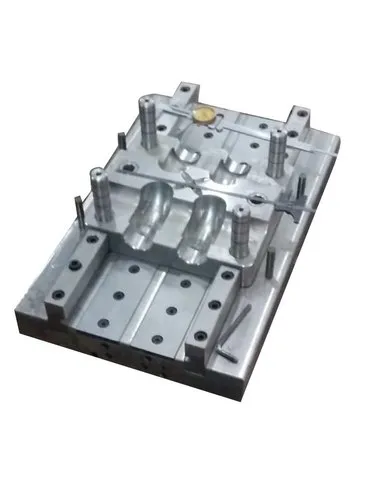
Compression moulding is a manufacturing process in which a measured amount of material is placed into a heated mould cavity. The mould is then closed and pressure is applied, causing the material to flow and take the shape of the mould.
The materials used depend on the product design, required strength, temperature resistance, flexibility, and application.
1. Thermosetting Plastics
Thermosetting plastics are commonly used in compression moulding. Once heated and cured, they form a permanent shape and cannot normally be melted and reshaped.
Examples:
- Phenolic resin
- Melamine-formaldehyde
- Urea-formaldehyde
- Epoxy compounds
Applications: Electrical components, appliance parts, handles, automotive components, and industrial products.
2. Sheet Moulding Compound (SMC)
SMC is a composite material containing resin, glass fibers, fillers, and additives. It is supplied in sheet form and compressed in heated moulds.
Applications: Automotive body panels, electrical enclosures, covers, and structural components.
3. Bulk Moulding Compound (BMC)
BMC is a dough-like composite containing thermosetting resin, short reinforcing fibers, fillers, and additives.
Applications: Electrical housings, automotive components, switches, connectors, and industrial parts.
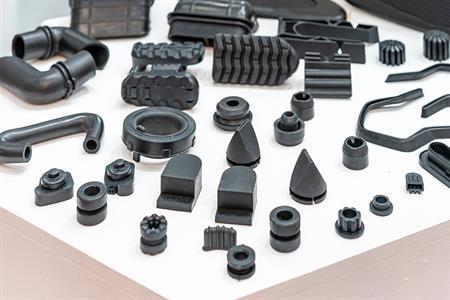
4. Rubber and Elastomers
Certain rubber compounds and elastomers can be compression moulded by applying heat and pressure to cure the material.
Examples:
- Silicone rubber
- Natural rubber
- EPDM
- Neoprene
Applications: Seals, gaskets, flexible components, vibration mounts, and specialized molded products.
5. Fiber-Reinforced Composites
Compression moulding can be used with composites reinforced with fibers such as:
- Glass fiber
- Carbon fiber
- Aramid fiber
- Natural fibers
These materials can provide increased strength, stiffness, and reduced weight.
6. Thermoplastics
Some thermoplastic materials can also be processed using compression moulding, particularly in specialized applications.
Examples:
- Polypropylene (PP)
- Polyethylene (PE)
- Polyamide (PA)
- PTFE and other specialized thermoplastics
Unlike thermosetting materials, thermoplastics can generally be reheated and reshaped.
7. Natural-Fiber Composites
Materials combining natural fibers with suitable polymer matrices can also be compression moulded.
Examples of natural fibers:
- Jute
- Flax
- Hemp
- Kenaf
These composites are used in selected automotive, furniture, construction, and consumer-product applications.
Factors for Selecting the Material
When selecting a material for compression moulding, consider:
- Required mechanical strength
- Heat resistance
- Flexibility
- Chemical resistance
- Surface finish
- Curing or processing temperature
- Production volume
- Material cost
- Required dimensional stability
In Short
Compression moulding can process a wide range of materials, including thermosetting plastics, rubber, SMC, BMC, thermoplastics, and fiber-reinforced composites. The material should be selected according to the product’s performance requirements and the moulding process being used.