1. Introduction
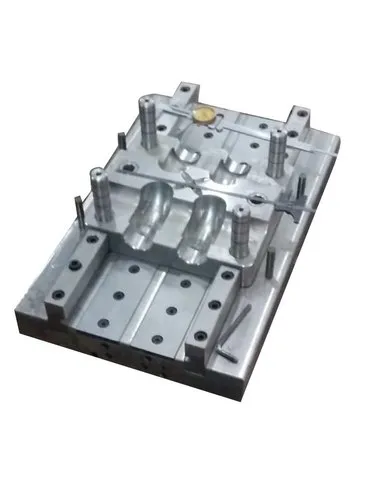
A heating system for compression moulds is a system designed to supply and maintain the required temperature in a mould during the compression moulding process. It helps soften, melt, cure, or chemically react the moulding material so that it forms a finished component with the required shape and properties.
Compression moulding is commonly used to manufacture components from thermosetting plastics, rubber, composite materials, and certain thermoplastics. Depending on the material, heating may soften the material for shaping or activate a chemical curing reaction.
The heating system is an essential part of the mould because temperature directly affects product quality, curing time, dimensional accuracy, and production efficiency.
2. What Is a Heating System for a Compression Mould?
A heating system is an arrangement of heating elements, temperature sensors, controllers, and associated components used to heat the mould to a specified processing temperature.
The system transfers heat to the mould cavity and core, allowing the material inside the mould to reach the required processing conditions.
A typical heating system may include:
- Electric heating elements
- Heating plates or cartridges
- Temperature sensors
- Temperature controllers
- Electrical wiring and connectors
- Thermal insulation
- Heating channels for circulating fluids, where applicable
- Safety devices and over-temperature protection
The heating system must provide uniform and stable temperatures throughout the mould to ensure consistent product quality.
3. Why Is Heating Important in Compression Moulding?
3.1 Softening or melting the material
Some materials must be softened or melted before they can flow into the mould cavity and fill the required shape.
3.2 Curing thermosetting materials
Thermosetting materials undergo a chemical reaction when heated. This reaction, known as curing, transforms the material into a rigid structure that generally cannot be remelted into its original form.
3.3 Improving material flow
Proper temperature allows the material to flow into the mould cavity, including ribs, corners, and other detailed features.
3.4 Reducing production time
An appropriately designed heating system helps the material reach its required processing temperature quickly and consistently.
3.5 Improving product quality
Uniform heating reduces the risk of incomplete curing, surface defects, internal voids, and dimensional variation.
3.6 Maintaining consistent production
Stable mould temperature helps ensure that successive components have similar mechanical properties, appearance, and dimensions.
4. Main Types of Heating Systems for Compression Moulds
4.1 Electric resistance heating system
The most common option for many electrically heated compression moulds.
Electric resistance heating converts electrical energy into heat through a resistive element.
When electric current passes through the element, heat is generated and transferred to the mould body.
Common resistance heaters include cartridge heaters, tubular heaters, and strip heaters.
Advantages
- Accurate temperature control
- Relatively simple installation
- Clean operation
- Fast response with suitable heater design
- Easy integration with automatic controls
Disadvantages
- Requires a reliable electrical supply
- Heating elements may fail over time
- Poor placement can cause uneven temperatures
- Electrical faults can create safety risks
Applications: Plastic compression moulds, rubber moulds, laboratory moulds, and many industrial heated tools.
4.2 Cartridge heating system
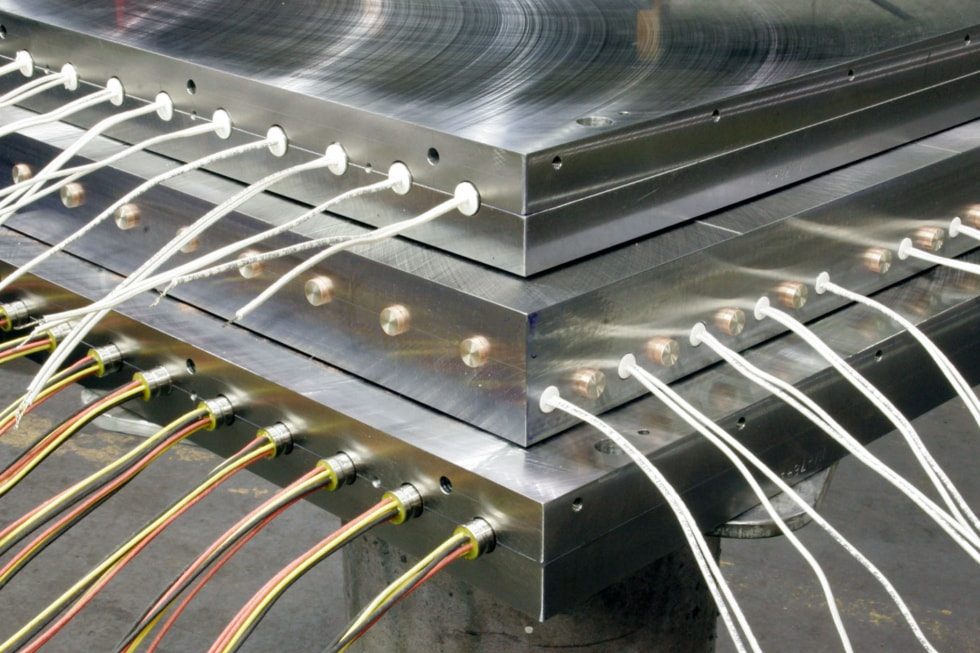
Cartridge heaters are cylindrical electric heaters inserted into accurately machined holes in the mould or in a heating plate.
They are particularly useful where heat must be delivered close to specific cavity areas.
Characteristics
- Compact construction
- High heat output in a small space
- Relatively easy replacement
- Suitable for localized heating
Advantages
- Space-efficient design
- Good temperature response
- Can be arranged in multiple zones
- Useful for thick mould plates and inserts
Limitations
- Incorrect hole clearance can reduce heat transfer
- Poor contact may cause localized overheating
- Heaters can be damaged by excessive operating temperature
- Replacing a seized heater may be difficult
Cartridge heaters should be positioned to provide uniform heat distribution without weakening the mould or interfering with ejector mechanisms and other components.
4.3 Heating plate system
In this system, heating elements are incorporated into a plate attached to or integrated with the compression mould.
The plate transfers heat across a relatively large area.
Advantages
- Suitable for large mould surfaces
- Can distribute heat over a broad region
- Simplifies heating for certain mould designs
- Can be designed with multiple temperature zones
Disadvantages
- Requires good thermal contact with the mould
- May respond more slowly than localized heaters
- Poor plate flatness can create temperature differences
- Maintenance may require partial disassembly
Heating plates are frequently used in compression presses for rubber, thermosetting plastics, and composite materials.
4.4 Tubular heating system
Tubular heaters contain a resistance element enclosed in a protective metal sheath. They may be installed in grooves, channels, or specially designed housings.
Heat passes from the element through its sheath into the mould structure.
Advantages
- Durable construction
- Flexible installation arrangements
- Suitable for heating larger mould areas
- Available in different shapes and sizes
Disadvantages
- Requires suitable mounting and thermal contact
- Replacement may be difficult in enclosed installations
- Temperature uniformity depends on element spacing and mould geometry
Tubular heaters are useful when the mould design requires a robust heating element distributed around the tool.
4.5 Hot oil heating system
A hot oil system heats a thermal fluid in an external unit and circulates it through channels in the mould or its heating plates.
The oil transfers heat to the mould as it flows through the channels.
Advantages
- Suitable for controlled heating over large areas
- Can provide relatively uniform temperatures with good circuit design
- Allows the heating equipment to be located away from the mould
- Useful for applications requiring controlled fluid circulation
Disadvantages
- Requires a pump, heater, pipes, and control equipment
- Oil leaks can create fire and housekeeping hazards
- Fluid degrades if overheated or poorly maintained
- Heat transfer depends on flow rate and channel layout
Hot oil systems are used in selected industrial moulding applications where fluid-based temperature control is suitable.
4.6 Steam heating system
Steam heating uses steam circulating through passages in the mould or press heating equipment.
Heat is transferred as the steam condenses, releasing latent heat.
Advantages
- Effective heat transfer
- Can heat large surfaces relatively uniformly
- Suitable where a reliable steam supply is available
Disadvantages
- Requires pressure-rated equipment
- Condensate must be removed effectively
- Temperature is linked to steam pressure
- Corrosion and leakage require attention
Steam heating is used in certain industrial rubber and composite-processing applications, although the required temperature range and equipment design determine its suitability.
4.7 Hot water heating system
A hot water system circulates heated water through channels or heating plates associated with the mould.
It is generally appropriate for applications requiring moderate temperatures rather than very high mould temperatures.
Advantages
- Good heat-transfer properties
- Relatively simple fluid circulation
- Can provide stable temperature control
- Water is readily available in many facilities
Disadvantages
- Limited by the operating conditions of the system
- Leakage and corrosion can occur
- Mineral deposits may restrict flow
- High-temperature water systems require suitable pressure-rated equipment
4.8 Induction heating system
Induction heating uses an alternating electromagnetic field to generate heat in a suitable conductive component.
It can heat selected metal regions without direct contact between the induction coil and the heated component.
Advantages
- Rapid heating of suitable metal components
- Potential for localized heating
- Can reduce heating time in specialized applications
- No direct electrical connection is required to the heated metal itself
Disadvantages
- Equipment can be expensive
- Requires suitable electromagnetic and thermal design
- Heating uniformity may be difficult to achieve in complex mould geometries
- Not every mould material responds equally to induction heating
Induction heating is a specialized option rather than the default choice for conventional compression moulds.
5. Comparison of Heating Systems
| Heating system | Main advantage | Main limitation | Typical use |
|---|---|---|---|
| Electric resistance | Simple and controllable | Heater placement affects uniformity | General compression moulds |
| Cartridge heaters | Compact, localized heating | Requires accurate heater bores | Inserts and thick mould plates |
| Heating plates | Broad-area heat distribution | Requires good thermal contact | Large press moulds |
| Tubular heaters | Robust construction | Installation affects performance | Industrial moulds |
| Hot oil | Flexible fluid-based heating | Requires circulation equipment | Large or specialized moulds |
| Steam | Effective heat transfer | Requires pressure-rated equipment | Selected industrial processes |
| Hot water | Stable moderate-temperature heating | Limited temperature range | Moderate-temperature tooling |
| Induction | Rapid, targeted heating | Higher equipment complexity | Specialized metal tooling |
The best choice depends on the mould size, processing temperature, material, available utilities, and required temperature uniformity.
6. Main Components of a Heating Control System
6.1 Heating elements
These generate the heat needed to raise the mould to its operating temperature.
Their power rating, location, and spacing must be selected according to the mould’s thermal requirements.
6.2 Temperature sensors
Temperature sensors measure the temperature of the mould or heating medium.
Common options include:
- Thermocouples
- Resistance temperature detectors (RTDs)
- Other suitable industrial temperature sensors
Sensors must be positioned where they provide representative readings of the mould’s actual thermal condition.
6.3 Temperature controller
The controller compares the measured temperature with the set temperature and adjusts heater output accordingly.
A proportional-integral-derivative (PID) controller is commonly used where precise regulation is needed.
6.4 Power control devices
Relays, contactors, or solid-state relays switch or regulate electrical power supplied to the heaters.
The selected device must be rated for the heater load and operating environment.
6.5 Thermal insulation
Insulation reduces heat loss from the mould or heating plates to the surrounding environment.
This can improve heating efficiency, reduce energy consumption, and help maintain a stable temperature.
6.6 Safety devices
Safety components may include independent over-temperature cut-outs, circuit protection, grounding, emergency stops, and suitable fluid-pressure protection.
These devices help protect operators and equipment if the primary control system fails.
7. How the Heating System Works
A typical electrically heated compression mould follows this sequence:
- Temperature setting: The operator or control system selects the required mould temperature.
- Heat generation: Electrical power is supplied to the heating elements.
- Heat transfer: Heat travels from the elements into the mould body.
- Temperature measurement: Sensors monitor the temperature at designated locations.
- Automatic regulation: The controller adjusts heater power to approach and maintain the set temperature.
- Material loading: The material is placed in the mould according to the process requirements.
- Compression and processing: The mould closes under pressure, and the material softens, flows, or cures as appropriate.
- Holding period: Temperature and pressure are maintained for the required processing time.
- Opening and removal: The mould is opened when the process requirements are satisfied, and the component is removed.
The precise sequence varies by material and machine. Some processes require preheating, staged temperature settings, or a controlled cooling period before demoulding.
8. Important Design Factors
8.1 Required mould temperature
The target temperature depends on the material and its processing requirements. Thermosetting plastics, rubber, composite systems, and thermoplastics may require substantially different temperatures.
The mould should be designed to reach and maintain the required temperature without exceeding the safe operating limits of the material or equipment.
8.2 Heater power
Heater power must be sufficient to warm the mould within the required time and compensate for heat losses during production.
The calculation should consider:
- Mould mass
- Specific heat capacity
- Initial and target temperatures
- Desired heating time
- Heat losses
- Material and process heat loads
A simplified estimate of the energy required to heat the mould is:
\[ Q = m c_p \Delta T \]
where:
- \(Q\) = heat energy required
- \(m\) = mould mass
- \(c_p\) = specific heat capacity of the mould material
- \(\Delta T\) = temperature increase
This estimates the energy needed to raise the mould temperature. Actual heater sizing must also account for losses and the available heating time.
8.3 Heater position and spacing
Heaters should be positioned to distribute heat evenly throughout the mould.
Incorrect placement may produce hot spots, cold regions, or excessive temperature gradients.
8.4 Mould material
The thermal conductivity and heat capacity of the mould material influence heating speed and temperature uniformity.
Mould materials must also provide sufficient mechanical strength, wear resistance, and durability at the operating temperature.
8.5 Mould size and geometry
Large moulds require more energy to heat. Thick sections, deep cavities, inserts, and complex geometries may create temperature differences that require additional heaters or separate heating zones.
8.6 Temperature uniformity
Uniform heating is important because temperature variation can cause different curing rates, uneven shrinkage, and inconsistent product properties.
For large moulds, multiple sensors and independently controlled heating zones may be necessary.
8.7 Thermal insulation
Suitable insulation helps reduce energy losses and improves temperature stability.
However, insulation must be compatible with the operating temperature and must not interfere with press operation, structural support, or safe maintenance.
8.8 Pressure and mechanical loading
Compression moulds operate under substantial closing forces. Heating elements, wiring, fluid channels, and sensor locations must be arranged so they do not weaken critical structural sections or become damaged by the press load.
9. Common Heating Problems and Their Solutions
| Problem | Possible cause | Recommended solution |
|---|---|---|
| Uneven heating | Poor heater spacing or uneven thermal contact | Review heater layout and improve contact |
| Slow heating | Insufficient heater power or excessive heat loss | Check heater output, insulation, and mould mass |
| Temperature overshoot | Poor controller tuning or sensor placement | Check the control settings and sensor location |
| Heater failure | Overheating, electrical faults, or wear | Test and replace defective elements |
| Incomplete curing | Insufficient temperature or processing time | Verify the actual mould temperature and curing schedule |
| Surface defects | Incorrect processing conditions or uneven temperature | Check the material, mould temperature, and process settings |
| Excessive energy use | Heat loss or inefficient control | Improve insulation and review heating cycles |
| Temperature fluctuations | Unstable control or inconsistent power supply | Inspect sensors, controllers, connections, and power delivery |
| Sensor reading errors | Sensor damage or poor installation | Calibrate or replace the sensor and verify its mounting |
These problems may have multiple causes. For example, incomplete curing can also result from incorrect material formulation, moisture, contamination, or an unsuitable processing cycle.
10. Maintenance of Heating Systems
Regular maintenance helps maintain consistent production and prevents unexpected downtime.
Routine checks
- Monitor mould temperature during operation.
- Inspect electrical connections and cables.
- Check for fluid leaks in oil, steam, or water systems.
- Confirm that sensors provide plausible readings.
- Look for signs of localized overheating.
Periodic maintenance
- Test heating elements for electrical faults.
- Check controller accuracy and calibration.
- Inspect insulation for damage.
- Examine fluid channels for deposits or corrosion.
- Verify over-temperature protection and other safety devices.
- Inspect heaters and wiring during scheduled mould servicing.
Maintenance must be carried out using appropriate isolation procedures. Electrical supplies, hot surfaces, press loads, and pressurized fluids can create serious hazards.
11. Advantages of a Properly Designed Heating System
An effective heating system provides several benefits:
- Consistent processing temperature
- More reliable curing or material softening
- Improved product quality
- Reduced risk of incomplete curing
- Better dimensional consistency
- Potentially shorter processing cycles
- Reduced energy losses
- Improved production repeatability
- Reduced scrap and rework
12. Limitations and Challenges
Heating systems also have practical limitations:
- Initial equipment and installation costs
- Energy consumption
- Uneven temperature distribution in large moulds
- Heater failure and maintenance requirements
- Difficult access to embedded heaters
- Temperature sensor errors
- Thermal expansion and stress
- Safety risks associated with electricity, hot surfaces, and pressurized fluids
Good mould design and suitable control equipment help minimize these issues.
13. Applications
Heating systems for compression moulds are used in many industries.
Automotive industry
- Rubber seals and gaskets
- Thermoset electrical components
- Selected composite panels and structural parts
Electrical and electronics industry
- Insulating components
- Switchgear parts
- Thermoset housings
Rubber industry
- Rubber seals
- O-rings
- Industrial diaphragms
- Vibration-control components
Consumer products
- Handles and knobs
- Household components
- Selected thermoset products
Composite manufacturing
- Fibre-reinforced components
- Certain thermoset composite parts
- Specialized laminated components
14. Safety Precautions
Because compression mould heating systems operate at elevated temperatures, safety is essential.
- Use suitable electrical protection and grounding.
- Provide independent over-temperature protection where required.
- Keep wiring away from moving press components and hot surfaces.
- Use appropriate protective equipment when handling hot moulds.
- Depressurize fluid systems before maintenance.
- Isolate and verify the energy supply before servicing.
- Follow the heater and press manufacturer’s operating instructions.
- Ensure that the heating system does not exceed the temperature limits of the mould, seals, wiring, or processing material.
15. Conclusion
Heating systems are essential in compression moulding because they provide the temperature required for material softening, flow, or curing. Common options include electric resistance heaters, cartridge heaters, heating plates, tubular heaters, hot oil, steam, hot water, and induction heating.
The correct system depends on the material, mould geometry, operating temperature, production rate, and required temperature uniformity.
The main objective is to achieve controlled, uniform, and energy-efficient heating while maintaining product quality and safe mould operation. Proper heater placement, accurate temperature sensing, reliable control, insulation, and preventive maintenance are key to achieving consistent compression moulding results.