1. Introduction
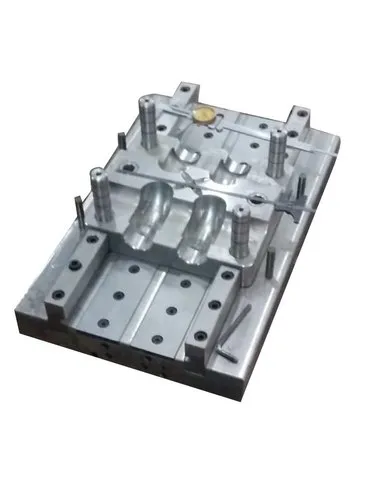
Heating and temperature control are essential aspects of moulding processes used in the manufacture of plastic products, rubber components, silicone products, candles, and other moulded materials. Proper heating ensures that the material reaches the required processing temperature, while temperature control maintains stable conditions throughout production.
In compression moulding, injection moulding, and thermoforming, temperature directly affects material flow, curing, solidification, surface finish, dimensional accuracy, and production cycle time. Incorrect temperatures can lead to defects such as incomplete mould filling, warping, sticking, uneven curing, surface imperfections, and inconsistent product quality.
An effective heating and temperature-control system helps manufacturers achieve repeatable results, reduce material waste, and improve production efficiency.
2. Importance of Heating in Moulding
Heating prepares the material for the required moulding operation. Depending on the material and process, heating may soften a thermoplastic sheet, reduce the viscosity of a moulding compound, melt wax, or activate the curing reaction of a thermosetting material.
The main purposes of heating include:
- Material preparation: Brings the material to the appropriate processing condition.
- Improved flow: Helps suitable materials flow into the required mould geometry.
- Consistent forming: Supports uniform shaping during the moulding cycle.
- Curing and solidification: Provides the thermal conditions needed for chemical curing or physical solidification.
- Surface quality: Helps reduce defects associated with unsuitable processing temperatures.
- Dimensional accuracy: Supports consistent shrinkage and final dimensions.
- Production efficiency: Helps establish predictable cycle times.
The required temperature depends on the material, mould design, processing method, and product specifications.
3. Types of Heating Systems Used in Moulding
3.1 Electric Resistance Heating
Electric resistance heating uses electrical elements to generate heat. The elements may be installed inside or around the mould, heating plate, barrel, or processing equipment.
Main components:
- Electric heating elements
- Temperature sensors
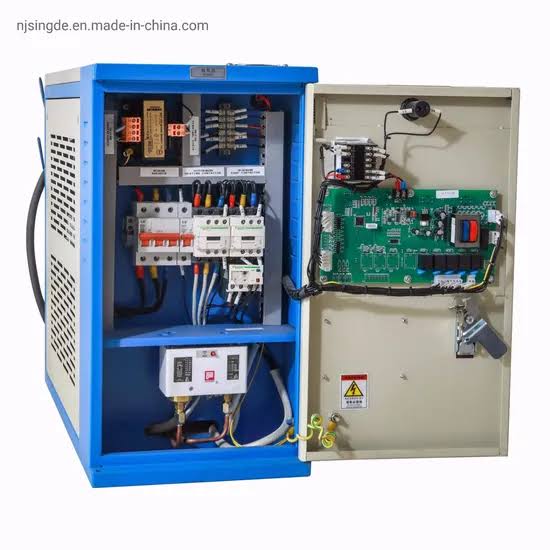
- Temperature controllers
- Electrical connections
- Heating plates or mounting blocks
- Safety cut-outs
Working principle:
When electric current passes through a resistance element, electrical energy is converted into heat. The heat transfers to the mould or material, raising its temperature to the required level.
Advantages:
- Accurate temperature control when properly designed
- Relatively simple installation
- Clean operation without combustion gases at the point of use
- Suitable for automated production
- Easy integration with electronic controllers
Disadvantages:
- Electrical energy consumption
- Potential for localised hot spots if heating is poorly distributed
- Heating elements may require replacement
- Requires appropriate electrical protection and insulation
Applications: Injection mould heating, heated compression-mould platens, laboratory moulding equipment, and certain wax-processing systems.
3.2 Cartridge Heaters
Cartridge heaters are compact electrical heating elements inserted into drilled holes in moulds, plates, or tooling blocks.
They are particularly useful when heat must be delivered close to a specific region of a mould.
Advantages:
- Compact design
- Direct heating of mould components
- Suitable for localised heating
- Easy integration into many metal moulds
Limitations:
- Poor contact between the heater and its mounting hole can reduce heat transfer.
- Incorrect installation may cause overheating or premature failure.
- Heater placement must be carefully planned to avoid uneven temperatures.
Applications: Small compression moulds, heated tooling, injection mould components, and specialised moulding equipment.
3.3 Hot Oil Heating System
A hot oil system circulates heated thermal fluid through channels or jackets to maintain the mould at a controlled temperature.
Main components:
- Thermal-fluid heater
- Circulation pump
- Mould heating channels
- Temperature controller
- Expansion tank, where required
- Pipes, valves, and sensors
Working principle:
The thermal fluid is heated and circulated through the mould. Heat transfers from the fluid to the mould body, maintaining the required operating temperature. The fluid returns to the heating unit for reheating.
Advantages:
- Suitable for controlled heating over larger systems
- Can provide relatively uniform temperatures when properly designed
- Useful for processes requiring temperatures beyond the practical range of ordinary hot water
Disadvantages:
- Requires fluid monitoring and maintenance
- Leakage may create safety and housekeeping problems
- Fluid degradation can occur if operating limits are exceeded
- Requires suitable pumps, seals, and thermal-fluid-compatible components
Applications: Industrial compression moulding, rubber processing, composite moulding, and other processes requiring circulating thermal fluid.
3.4 Steam Heating
Steam heating uses pressurised steam to transfer heat to moulds or processing equipment through channels, jackets, or heating plates.
As steam condenses, it releases heat to the surrounding metal.
Advantages:
- Effective heat transfer
- Suitable for some large industrial systems
- Can provide relatively uniform heating when condensate is removed correctly
Disadvantages:
- Requires a suitable steam supply and pressure-rated equipment
- Condensate management is important
- Corrosion and leakage must be controlled
- Temperature control depends on steam pressure and system design
Applications: Certain rubber moulding systems, industrial heating equipment, and specialised manufacturing processes.
3.5 Infrared Heating
Infrared heating transfers energy through electromagnetic radiation. Infrared emitters can heat the surface of a material without requiring direct contact.
It is particularly useful in thermoforming, where a plastic sheet must be heated before it is shaped.
Advantages:
- Rapid heating response
- Can heat selected areas
- Suitable for automated production
- Allows different heating zones to be controlled independently
Disadvantages:
- Heating uniformity depends on emitter arrangement and material properties.
- Some materials absorb infrared energy more effectively than others.
- Poor control can cause overheating or uneven sheet temperatures.
Applications: Thermoforming sheet heaters, preheating stations, and selected industrial material-heating operations.
3.6 Hot Water Heating
Hot water can be circulated through mould channels or heating jackets when relatively moderate operating temperatures are required.
Advantages:
- Straightforward heat-transfer method
- Suitable for lower-temperature applications
- Can provide stable heating with suitable circulation and controls
Disadvantages:
- Limited by the operating pressure and temperature capability of the system
- Corrosion and scale may affect performance
- Generally unsuitable for processes requiring temperatures well above water’s practical operating range
Applications: Certain wax-processing systems and temperature-controlled moulds operating within suitable temperature limits.
4. Temperature-Control Systems
Heating equipment generates heat, but a temperature-control system determines when to apply heat, how much heat is needed, and when to reduce or stop heating.
4.1 Thermostatic Control
A thermostat switches a heater on or off according to a set temperature.
When the measured temperature falls below the lower switching threshold, heating turns on. When the temperature reaches the upper threshold, heating turns off.
Advantages:
- Simple operation
- Relatively low cost
- Suitable for basic temperature regulation
Limitations:
- Temperature may fluctuate around the setpoint.
- Control accuracy depends on the thermostat and system design.
- It may be unsuitable for processes requiring very precise temperature stability.
4.2 PID Temperature Control
PID stands for proportional-integral-derivative control. A PID controller continuously adjusts heater output based on the difference between the measured temperature and the target temperature.
It uses three control actions:
- Proportional: Responds to the current temperature error.
- Integral: Corrects accumulated error over time.
- Derivative: Responds to how quickly the error is changing.
Advantages:
- More precise regulation when correctly tuned
- Can reduce temperature overshoot
- Suitable for automated heating systems
- Helps maintain stable operating conditions
Applications: Injection moulding equipment, heated compression moulds, industrial ovens, and multi-zone temperature-control systems.
4.3 Multi-Zone Temperature Control
Large or complex moulds may require several independently controlled heating zones.
Each zone has its own temperature sensor and control output, allowing different regions to receive different amounts of heat.
Benefits:
- Better temperature uniformity
- Independent control of different mould regions
- Improved response to uneven heat loss
- Reduced risk of localised overheating
Multi-zone control is particularly useful for large moulds, complex geometries, and processes where temperature variation can affect product quality.
5. Temperature Sensors Used in Moulding
Accurate temperature measurement is essential for effective control.
5.1 Thermocouples
Thermocouples generate a small voltage related to the temperature difference between two junctions made from different metals.
Advantages:
- Wide operating-temperature range, depending on type
- Relatively fast response
- Rugged construction
- Available in many industrial configurations
They are commonly used in moulds, heating plates, barrels, and industrial processing equipment.
5.2 Resistance Temperature Detectors (RTDs)
RTDs measure temperature through changes in electrical resistance, commonly using platinum sensing elements.
Advantages:
- Good accuracy and stability
- Suitable for many controlled industrial heating applications
- Useful where reliable temperature measurement is important
Their response time and maximum operating temperature depend on the sensor design.
5.3 Infrared Temperature Sensors
Infrared sensors estimate surface temperature by measuring emitted infrared radiation without physical contact.
Advantages:
- Non-contact measurement
- Useful for moving plastic sheets
- Can monitor surfaces that are difficult to access
Limitations:
- Readings depend on emissivity, surface condition, viewing angle, and sensor setup.
- They measure surface temperature rather than the internal temperature of the material.
- They require suitable calibration and application-specific validation.
6. Temperature Control in Different Moulding Processes
6.1 Injection Moulding
In injection moulding, temperature must be controlled in several areas:
- Plasticising barrel and nozzle
- Mould cavity and core
- Hot-runner system, if fitted
- Cooling circuits
- Surrounding process equipment
The barrel heats the plastic to the required processing condition. The mould temperature then influences filling, cooling, shrinkage, surface finish, and ejection.
If the melt is too cold, it may flow poorly or solidify prematurely. If it is too hot, the material may degrade or cause other processing defects. The appropriate temperature depends on the plastic grade and supplier recommendations.
6.2 Compression Moulding
Compression moulding uses heat and pressure to shape material inside a mould.
For thermosetting materials, heat helps initiate and complete the curing reaction. For thermoplastics, heat may soften or melt the material, followed by controlled cooling.
Important temperature-control considerations:
- Uniform heating across the mould
- Correct mould temperature for the material
- Consistent pressure and heating time
- Proper curing time for thermosetting compounds
- Controlled cooling where required
Insufficient heating may cause incomplete curing or poor consolidation. Excessive heating may degrade the material or lead to surface defects.
6.3 Thermoforming
Thermoforming requires a plastic sheet to be heated until it becomes sufficiently soft for forming.
Temperature control is important because different areas of the sheet may heat at different rates.
Important considerations:
- Uniform sheet temperature
- Independent control of heating zones
- Prevention of local overheating
- Suitable transfer time from heater to mould
- Correct mould temperature and cooling conditions
If the sheet is too cold, it may not form fully. If it is too hot, it may sag excessively, thin unevenly, or develop surface damage.
6.4 Candle Making
In candle making, heating and temperature control help melt wax, incorporate compatible additives, and prepare the wax for pouring.
The required temperatures depend on the wax formulation and the supplier’s instructions.
Important considerations include:
- Melting the wax using suitable equipment
- Avoiding overheating
- Adding fragrance and colour at the recommended temperatures
- Maintaining suitable pouring conditions
- Allowing controlled cooling and solidification
Excessive temperatures can affect wax quality or fragrance performance, while unsuitable pouring and cooling conditions may contribute to frosting, cracking, shrinkage cavities, or poor surface finish.
Always follow the wax supplier’s temperature recommendations and use suitable heating equipment. Avoid direct, uncontrolled heating of wax.
7. Common Temperature-Related Defects and Solutions
| Defect | Possible cause | Recommended solution |
|---|---|---|
| Incomplete mould filling | Material or mould temperature too low | Verify the material’s recommended processing range |
| Material degradation | Excessive temperature or residence time | Reduce overheating and check process settings |
| Uneven surface finish | Uneven heating across the mould or material | Check sensor positions and heating-zone performance |
| Warping | Uneven cooling or temperature gradients | Improve thermal uniformity and cooling balance |
| Incomplete curing | Insufficient temperature or curing time | Verify the material’s curing requirements |
| Excessive shrinkage variation | Inconsistent temperature conditions | Standardise heating and cooling cycles |
| Candle cracking | Unsuitable pouring or cooling conditions | Follow wax-specific temperature and cooling guidance |
| Thermoforming sheet sagging | Excessive sheet temperature or uneven heating | Adjust heating zones and transfer timing |
| Long production cycle | Inadequate heating capacity or poor heat transfer | Inspect heaters, insulation, and control settings |
Temperature is only one possible cause of these defects. Material selection, mould design, pressure, moisture, ventilation, and processing time may also contribute.
8. Factors Affecting Temperature Control
8.1 Material Properties
Different materials have different melting, softening, curing, and degradation temperatures. Processing settings must be appropriate for the exact material grade.
8.2 Mould Material
The thermal conductivity and heat capacity of the mould material affect how quickly the mould heats up and how evenly heat spreads.
Aluminium generally transfers heat more quickly than many steels, while steel moulds may offer different strength, wear, and temperature-resistance advantages.
8.3 Mould Geometry
Thick sections, deep cavities, and complex shapes can create temperature gradients. Heater placement and sensor location should account for these differences.
8.4 Heating Capacity
An undersized heater may take too long to reach the setpoint or may fail to maintain it during production. An oversized heater without appropriate control may cause overshoot.
8.5 Sensor Placement
A sensor should measure a temperature representative of the process being controlled. A sensor too far from the working surface may respond slowly or fail to detect local hot spots.
8.6 Insulation
Appropriate insulation reduces heat loss to the surroundings, improves energy efficiency, and can help stabilise operating temperatures.
8.7 Production Cycle
Opening and closing the mould, introducing cold material, and circulating cooling media can change the thermal load. Controllers should be configured for the actual production cycle rather than only for idle conditions.
9. Best Practices for Heating and Temperature Control
- Follow the material manufacturer’s recommended processing temperatures.
- Select a heating system appropriate for the mould size and thermal load.
- Position temperature sensors close enough to monitor relevant process conditions.
- Use PID or multi-zone control where tighter regulation is needed.
- Verify sensor accuracy and calibrate instruments at suitable intervals.
- Insulate heating equipment where appropriate.
- Monitor temperature changes during actual production, not only during warm-up.
- Avoid rapid or uncontrolled heating that may create temperature gradients.
- Maintain heaters, electrical connections, pumps, and thermal-fluid systems.
- Record process settings and product-quality results to establish repeatable operating conditions.
10. Safety Precautions
Heating systems can create risks involving burns, fire, electrical hazards, hot fluids, and pressure.
- Use suitable personal protective equipment.
- Install appropriate over-temperature protection.
- Ensure electrical systems are correctly rated and grounded.
- Protect hot surfaces and exposed heating elements.
- Inspect hoses, pipes, seals, and pressure connections.
- Use thermal fluids only within their specified operating limits.
- Keep combustible materials away from heaters.
- Follow equipment instructions for shutdown, maintenance, and lockout.
- Never leave a potentially hazardous heating process unattended unless the equipment is designed and approved for such operation.
For candle making, use controlled heating equipment and avoid exposing wax directly to an uncontrolled flame.
11. Conclusion
Heating and temperature control are fundamental to successful moulding operations. They determine how materials soften, flow, cure, form, cool, and retain their final shape.
Electric resistance heaters, cartridge heaters, hot oil, steam, infrared systems, and hot water are used according to the application. Thermostats, PID controllers, temperature sensors, and multi-zone systems help maintain the required conditions.
By selecting suitable equipment, measuring temperatures accurately, controlling heating and cooling cycles, and following material-specific recommendations, manufacturers can improve product quality, reduce defects, increase production consistency, and operate moulding equipment more safely.