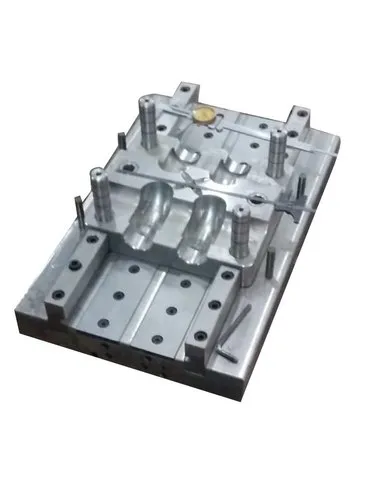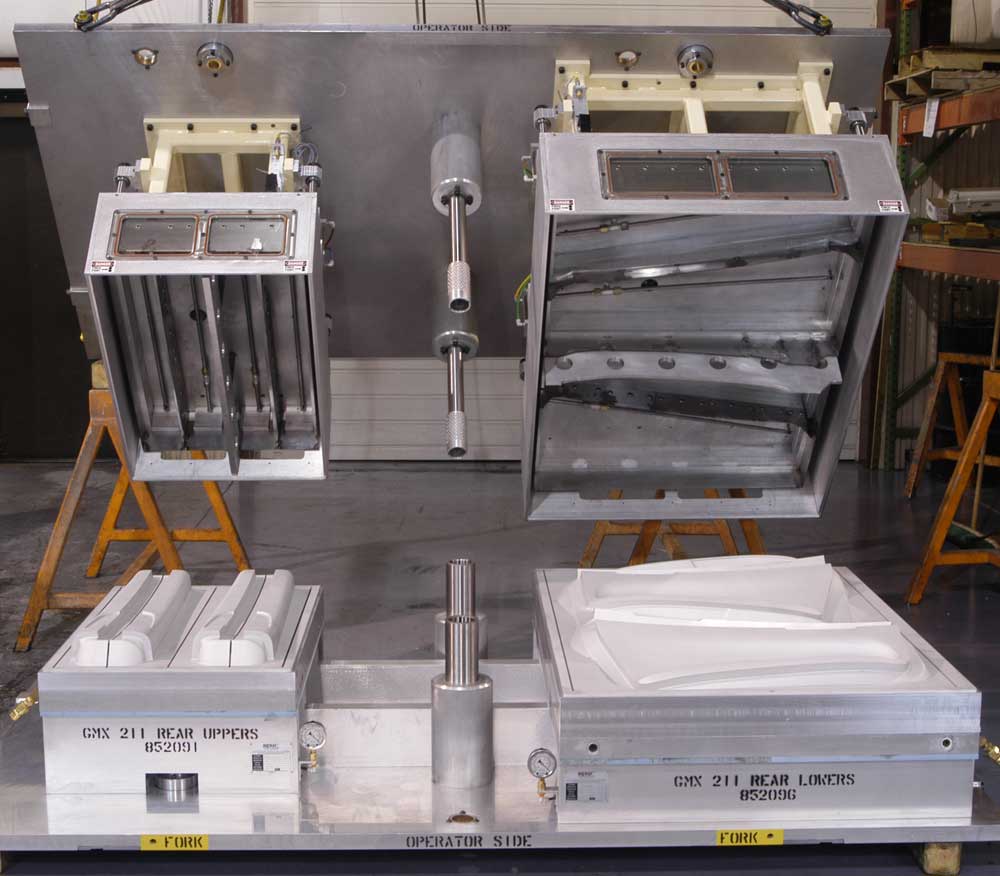
Male and female thermoforming moulds are two basic types of moulds used to shape heated thermoplastic sheets into different products. The main difference is the direction in which the plastic sheet is formed.
- Male mould: The plastic sheet is formed over the outside of a raised mould.
- Female mould: The plastic sheet is formed inside a recessed mould cavity.
Both types are widely used in plastic packaging, automotive parts, appliance components, trays, containers, and industrial products.
1. Male Thermoforming Mould
A male mould, also called a positive mould, has a raised or protruding shape. The heated plastic sheet is positioned over the mould and pulled against its outer surface using vacuum and/or pressure.
Working Process
- Thermoplastic sheet is heated until it becomes flexible.
- The heated sheet is positioned over the male mould.
- Vacuum or pressure draws the sheet around the mould.
- The plastic takes the shape of the mould’s outer surface.
- The material is cooled.
- The formed product is removed and trimmed.
Advantages
- Simple mould construction
- Generally easier to manufacture
- Suitable for prototypes and low-volume production
- Easy access for maintenance
- Suitable for relatively simple shapes
- Can have lower tooling costs
Limitations
- Material can become thinner around raised areas.
- Deep shapes may cause uneven wall thickness.
- Fine surface details can be more difficult to reproduce.
- Proper draft angles are required for easy removal.
2. Female Thermoforming Mould
A female mould, also called a negative mould, contains a recessed cavity. The heated plastic sheet is drawn into this cavity using vacuum and/or pressure.
Working Process
- The thermoplastic sheet is heated.
- The heated sheet is positioned above the mould cavity.
- Vacuum removes air between the sheet and cavity.
- The sheet is drawn into the cavity.
- Pressure may be applied to improve forming and detail.
- The plastic cools and becomes rigid.
- The finished product is removed and trimmed.
Advantages
- Can reproduce detailed cavity surfaces.
- Suitable for products requiring defined external surfaces.
- Can provide good dimensional control when properly designed.
- Suitable for many production applications.
- Allows detailed features to be incorporated into the mould.
Limitations
- Tooling can be more complicated.
- Adequate draft is required for part removal.
- Deep cavities can cause material thinning.
- Proper vacuum holes and venting are important.
Male vs. Female Thermoforming Moulds
| Feature | Male Mould | Female Mould |
|---|---|---|
| Other Name | Positive mould | Negative mould |
| Mould Shape | Raised/protruding | Recessed/cavity |
| Plastic Forms | Around the mould | Inside the cavity |
| Construction | Generally simpler | Generally more complex |
| Surface Detail | Limited by stretching | Can reproduce cavity details well |
| Wall Thickness | Can vary considerably | Depends on cavity depth and forming conditions |
| Part Removal | Usually straightforward | Requires suitable draft |
| Typical Use | Simple parts, prototypes | Detailed production parts |
Materials Used for Thermoforming Moulds
Common mould materials include:
- Aluminum – Durable and provides good heat transfer.
- Epoxy – Useful for prototypes and low-volume production.
- Polyurethane tooling board – Easy to machine and suitable for prototype tooling.
- Composite materials – Used for specialized applications.
- Wood – Sometimes used for basic prototype moulds.
Important Design Considerations
Draft Angle: Adequate draft allows the formed plastic to separate from the mould easily.
Vacuum Holes: Properly positioned vacuum holes help the sheet conform to the mould surface.
Venting: Trapped air must be removed to prevent incomplete forming.
Corner Radius: Rounded corners generally provide better material distribution than sharp corners.
Wall Thickness: Designers should consider how much the sheet will stretch during forming.
Cooling: Proper temperature control helps improve cycle time and dimensional stability.
Common Applications
Male and female thermoforming moulds are used for:
- Plastic trays
- Food packaging
- Blister packaging
- Containers
- Automotive interior components
- Appliance parts
- Medical trays
- Machine covers
- Industrial housings
- Protective packaging
In Short
Male thermoforming moulds have a raised shape and form the heated plastic around the outside of the mould. Female thermoforming moulds have a cavity and form the plastic inside the mould.
The choice between the two depends on the product design, required surface detail, wall-thickness requirements, tooling cost, production volume, and ease of part removal.