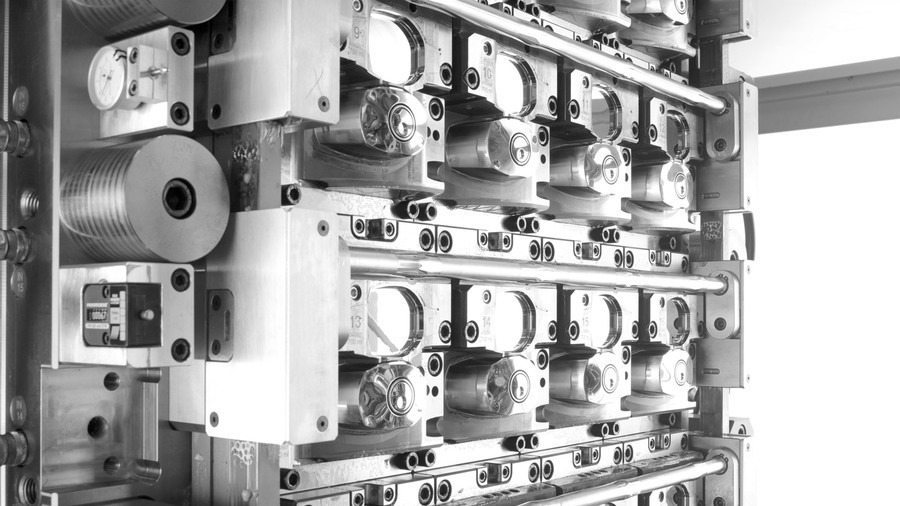
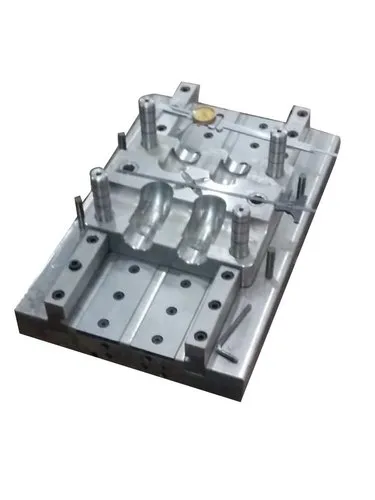
A Modular Mould Base System refers to a standardized, pre-engineered base framework for injection moulds or die casting moulds. These systems are designed with interchangeable and customizable components, allowing mould makers to build moulds more efficiently, reduce manufacturing time, and improve flexibility in mould design.
Unlike traditional custom-built mould bases, modular systems use standard components that can be selected and assembled based on the specific requirements of a mould, promoting ease of design, cost-effectiveness, and faster turnaround times.
Key Components of a Modular Mould Base System
Top Clamping Plate
Connects the mould to the injection moulding machine.
Provides clamping and alignment support.
Cavity Plate
Houses the cavity side of the mould impression.
Can be custom-machined based on product design.
Core Plate
Contains the core side of the mould.
Also customizable depending on part geometry.
Spacer Blocks / Support Pillars
Maintain proper spacing between plates.
Provide structural rigidity and allow for ejection systems.
Ejector Plate & Ejector Retainer Plate
Hold and guide ejector pins to remove parts from the mould.
Ensure precise and synchronized movement during part ejection.
Bottom Clamping Plate
Base plate that connects the lower portion of the mould to the machine.
Guide Pillars and Bushes
Ensure perfect alignment of mould halves during each closing cycle.
Cooling Channels (optional)
Allow for efficient thermal regulation using water or oil circuits.
Interchangeable Inserts / Blocks
Allow quick replacement of damaged or worn parts.
Enable the use of the same mould base for different part geometries.
Advantages of Modular Mould Base Systems
1. Reduced Lead Time
Standard components are readily available, minimizing time spent on designing and machining the base.
2. Flexibility and Customization
Easily adaptable for different mould types by switching inserts or plates.
Ideal for prototyping and small-batch production.
3. Cost-Effectiveness
Reduced machining and design work leads to overall lower costs.
Spare parts can be stocked and replaced independently.
4. Improved Maintenance
Damaged components can be replaced individually without rebuilding the entire mould.
Downtime is significantly reduced.
5. Scalability
Modular systems are scalable for small to large mould sizes.
Manufacturers can expand or modify moulds with minimal changes.
Applications
Modular mould base systems are widely used across various industries, including:
Automotive components
Consumer electronics
Medical devices
Packaging industry
Household goods
Prototyping and R&D
Types of Modular Mould Bases
2-Plate Mould Base
Most common type; simple and cost-effective.
Consists of cavity and core plates with a single parting line.
3-Plate Mould Base
Includes an additional plate for gating; allows for better gate placement.
Suitable for complex part geometries.
Hot Runner Mould Base
Uses a hot runner system instead of cold channels.
Reduces material waste and cycle time.
Standardization and Suppliers
Standardization is key to modularity. Components are manufactured according to industry standards such as DIN, JIS, or DME specifications. Leading global suppliers include:
DME Company
Hasco
Futaba
Misumi
Meusburger
LKM (Lung Kee Group)
Conclusion
Modular mould base systems revolutionize the traditional approach to mould making by enabling standardization, reusability, and faster development cycles. As manufacturing industries continue to demand more agility and cost control, the adoption of modular systems becomes increasingly vital for staying competitive and responsive to market needs.