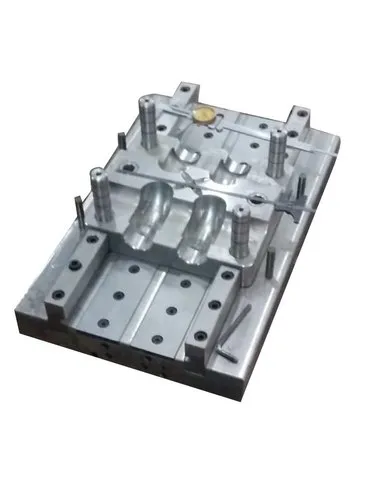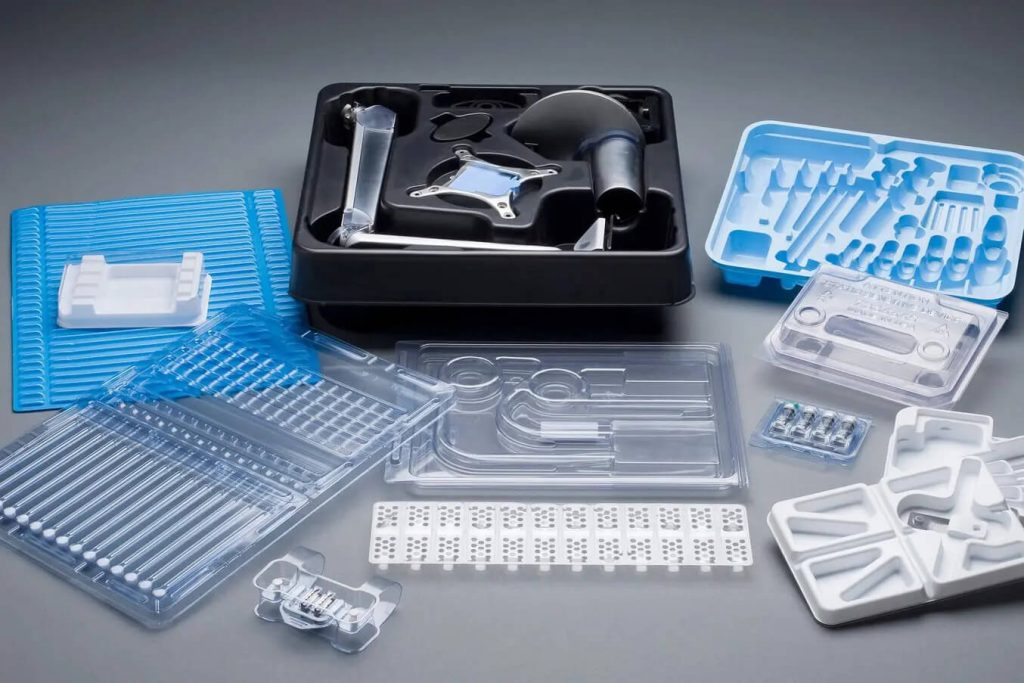
Pressure forming is an advanced thermoforming process used to create detailed plastic parts. It is similar to vacuum forming, but instead of relying only on vacuum pressure, compressed air is also applied to push the heated plastic sheet tightly against the mould surface.
This additional pressure allows pressure forming to produce more detailed shapes, sharper features, and better surface finishes.
What Is a Pressure Forming Mould?
A pressure forming mould is a specially designed tool that gives a heated plastic sheet its required shape. During the process, the plastic sheet is heated until it becomes flexible and is then positioned over the mould.
Vacuum removes air from one side while compressed air applies additional pressure from the opposite side, forcing the plastic tightly against the mould.
How Pressure Forming Works
1. Plastic Sheet Preparation
A thermoplastic sheet is clamped into the thermoforming machine.
2. Heating
The sheet is heated to the appropriate forming temperature until it becomes soft and flexible.
3. Pre-Forming
The heated sheet may be pre-stretched or positioned to improve material distribution.
4. Mould Positioning
The mould is brought into position around the heated plastic sheet.
5. Vacuum Application
Air is removed between the plastic sheet and mould.
6. Compressed Air Application
Compressed air is applied at pressure above atmospheric pressure, pushing the sheet firmly against the mould.
7. Cooling
The formed plastic is cooled while maintaining its shape.
8. Removal and Trimming
Once sufficiently cooled, the component is removed and excess material is trimmed.
Pressure Forming vs. Vacuum Forming
| Feature | Pressure Forming | Vacuum Forming |
|---|---|---|
| Forming force | Vacuum + compressed air | Mainly vacuum |
| Detail reproduction | High | Moderate to high |
| Surface finish | Generally better | Depends on mould and process |
| Fine features | Excellent | More limited |
| Tooling complexity | Generally higher | Generally simpler |
| Applications | Detailed housings, automotive parts, enclosures | Trays, packaging, covers, larger simple parts |
Types of Pressure Forming Moulds
Pressure forming can use different mould configurations, including:
1. Male Moulds
The heated plastic forms over the outside surface of the mould.
2. Female Moulds
The plastic forms inside a mould cavity.
3. Single-Cavity Moulds
Produce one part per forming cycle.
4. Multi-Cavity Moulds
Contain multiple cavities and can produce several parts during one cycle.
Materials Used for Pressure Forming Moulds
Depending on production requirements, moulds can be made from:
- Aluminum
- Epoxy tooling materials
- Polyurethane tooling materials
- Other specialized tooling materials
Aluminum is often selected for production tooling because of its strength, durability, and ability to transfer heat effectively.
Advantages of Pressure Forming
- Produces detailed plastic components
- Better reproduction of fine surface features
- Can create sharper corners and edges
- Provides improved surface definition
- Suitable for textured surfaces
- Useful for large plastic components
- Can provide more consistent results than basic vacuum forming for detailed designs
Applications
Pressure forming is commonly used for:
- Automotive interior components
- Appliance housings
- Equipment enclosures
- Medical equipment covers
- Electronic housings
- Industrial panels
- Display products
- Packaging and protective components
Important Design Considerations
When designing a pressure forming mould, consider:
- Draft angles
- Wall thickness
- Material stretching
- Vacuum holes
- Air evacuation
- Cooling channels
- Surface texture
- Corner radii
- Material shrinkage
- Trimming requirements
In Short
Pressure forming moulds are used to produce detailed thermoplastic components by combining vacuum with compressed air. The additional air pressure forces the heated plastic tightly against the mould, allowing better reproduction of fine details and surface textures than conventional vacuum forming.