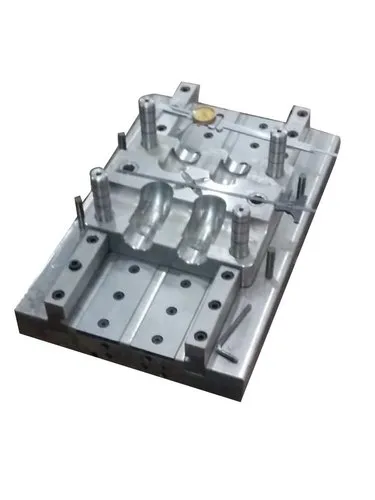
Extrusion is one of the most efficient and widely used manufacturing processes for producing continuous plastic, rubber, and metal products with a consistent cross-sectional profile. From pipes and tubing to window frames, films, sheets, and cables, extrusion enables high-volume production with excellent dimensional accuracy and material efficiency. At the heart of this process lies the extrusion die, a precision-engineered tool that shapes the material as it exits the extruder.
Understanding the extrusion process and die design is essential for manufacturers aiming to improve product quality, optimize production speed, and reduce material waste.
What Is the Extrusion Process?
Extrusion is a continuous manufacturing process in which raw material is melted or softened and forced through a specially designed die to create products with a uniform cross-section. Unlike injection moulding, where molten material fills a closed mould cavity, extrusion continuously pushes material through an open die, allowing products of virtually any length to be produced.
The process is commonly used with:
- Thermoplastics
- Rubber compounds
- Aluminium
- Copper
- Steel
- Food products
- Ceramics
Step-by-Step Extrusion Process
Step 1: Material Feeding
The process begins by feeding raw material into the extruder. Depending on the application, the material may be in the form of:
- Plastic pellets
- Powder
- Granules
- Rubber compounds
- Metal billets (for metal extrusion)
Additives such as colorants, stabilizers, fillers, and reinforcing agents can also be blended with the raw material.
Step 2: Melting and Plasticizing
Inside the extruder barrel, a rotating screw moves the material forward while heaters gradually increase the temperature.
The screw performs several important functions:
- Conveying the material
- Compressing the material
- Mixing additives uniformly
- Melting the material
- Building pressure
The result is a homogeneous molten material ready for shaping.
Step 3: Pressurization
As the screw continues rotating, pressure builds within the barrel.
This pressure forces the molten material toward the extrusion die while maintaining a steady and continuous flow.
Consistent pressure is critical for producing products with uniform dimensions and smooth surfaces.
Step 4: Material Flow Through the Die
The molten material enters the extrusion die, which determines the final shape of the product.
The die controls:
- Material distribution
- Flow balance
- Wall thickness
- Surface finish
- Dimensional accuracy
As the material exits the die, it takes on the desired cross-sectional profile.
Step 5: Cooling and Solidification
After leaving the die, the extruded product is cooled to retain its shape.
Cooling methods include:
- Water baths
- Air cooling
- Vacuum calibration systems
- Cooling rolls (for sheets and films)
Proper cooling minimizes warpage, shrinkage, and internal stresses.
Step 6: Pulling and Sizing
A haul-off or puller continuously draws the product away from the die at a controlled speed.
Sizing equipment ensures the product maintains precise dimensions during cooling.
Maintaining synchronization between extrusion speed and puller speed is essential for consistent product quality.
Step 7: Cutting or Winding
Depending on the product type, the finished extrusion is either:
- Cut into specified lengths
- Coiled onto reels
- Wound into rolls
This completes the continuous extrusion process.
What Is an Extrusion Die?
An extrusion die is a precision tool that shapes molten material into the desired profile as it exits the extruder.
The die must ensure:
- Uniform material flow
- Balanced pressure
- Consistent wall thickness
- Smooth surface finish
- Dimensional accuracy
The design of the die directly affects product quality, production efficiency, and material usage.
Conclusion
The extrusion process is a highly efficient and versatile manufacturing method for producing continuous products with consistent cross-sections. The extrusion die plays a pivotal role in determining product shape, dimensional accuracy, and surface quality. A well-designed die ensures balanced material flow, efficient cooling, and stable production, enabling manufacturers to achieve high productivity, minimal waste, and reliable product performance. By understanding the principles of extrusion and die design, businesses can improve manufacturing efficiency, reduce costs, and deliver high-quality products across a wide range of industries.