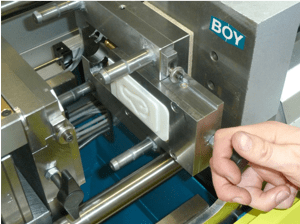
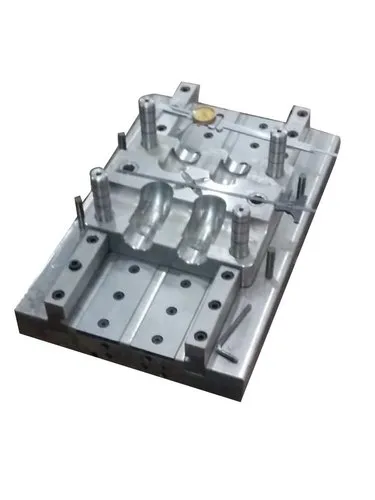
Additive Manufacturing (AM), commonly known as 3D printing, has revolutionized many aspects of manufacturing, particularly in the tooling industry. One of the most impactful applications is the production of mould inserts, which are key components in injection moulding, die casting, and other forming processes. Traditionally, mould inserts are manufactured using subtractive methods like CNC machining. However, AM offers significant advantages in design flexibility, lead time, and performance enhancement.
Advantages of Using Additive Manufacturing for Mould Inserts
1. Conformal Cooling Channels
One of the most important applications of AM in mould inserts is the creation of conformal cooling channels. These channels follow the complex contours of the mould cavity, enabling:
Uniform and faster cooling
Reduced cycle times
Improved part quality (less warping and residual stress)
Traditional machining cannot produce such geometrically complex internal features, giving AM a distinct advantage.
2. Rapid Prototyping and Iteration
AM allows for quick fabrication of prototype mould inserts, enabling:
Fast design validation
Shorter development cycles
Reduced time-to-market for new products
3. Material Efficiency
Additive processes, especially metal AM techniques like Selective Laser Melting (SLM) or Direct Metal Laser Sintering (DMLS), allow the use of material only where it is needed. This results in:
Reduced material waste
Lower cost for expensive tooling materials
4. Design Freedom
Engineers can design inserts with:
Lightweight lattice structures
Integrated features (e.g., sensors, vents)
Complex geometries not feasible with traditional methods
5. Customization and Small Batch Production
AM is ideal for producing custom inserts or small series tools for niche applications or personalized products, without the need for costly tooling changes.
Common Additive Manufacturing Techniques for Mould Inserts
Direct Metal Laser Sintering (DMLS)
Ideal for high-strength, wear-resistant metal inserts
Supports complex internal features like cooling channels
Selective Laser Melting (SLM)
Offers excellent surface finish and material density
Suitable for steel, aluminum, titanium alloys
Binder Jetting + Sintering
Cost-effective for complex parts with moderate strength requirements
May require infiltration with another metal
Hybrid Manufacturing
Combines AM with CNC machining for improved dimensional accuracy and surface finish
Challenges and Considerations
While AM offers significant benefits, there are challenges that need to be addressed:
Surface Finish and Post-Processing: AM parts often require polishing or machining to achieve the surface quality required for moulding.
Material Properties: Not all AM materials match the performance of traditionally machined tool steels.
Cost and Build Time: High-end metal AM systems are expensive, and build times can be long for large inserts.
Dimensional Accuracy: Warping and thermal distortion may occur during printing and must be compensated.
Case Studies and Applications
Automotive Industry: Rapid tooling for small series production and prototype parts.
Medical Devices: Personalized mould inserts for patient-specific products (e.g., dental aligners).
Consumer Products: Faster product iteration cycles for fast-moving consumer goods (FMCG).
Future Outlook
As AM technologies mature, the use of additive manufacturing for mould inserts is expected to become more mainstream. Innovations in materials, multi-material printing, and hybrid manufacturing will likely overcome current limitations. Additionally, the integration of sensors and digital twins in AM inserts can lead to smart moulds that monitor performance in real-time.
Conclusion
Additive Manufacturing is transforming the way mould inserts are designed and produced. With its ability to deliver complex geometries, optimized cooling, and rapid customization, AM offers a powerful solution for enhancing productivity and product quality in mould-based manufacturing processes. Despite some challenges, the ongoing advancements in AM technologies make it a promising avenue for the future of tooling.