1. Introduction
Progressive dies are a type of precision tooling used extensively in the manufacturing of metal components, particularly in high-volume production environments. In the houseware industry, where metal components such as handles, lids, utensils, and brackets must be manufactured with consistency and efficiency, progressive die stamping offers an ideal solution.
2. What Are Progressive Dies?
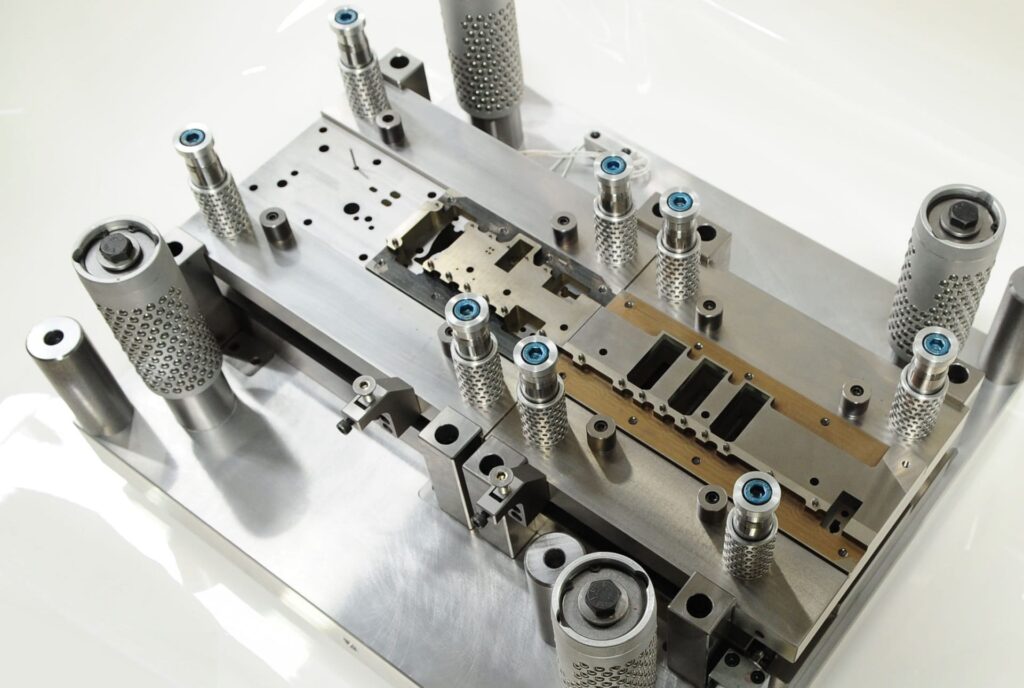
A progressive die is a multi-station tool fitted into a stamping press. Sheet metal is fed into the die, and as it progresses through the die stations, it undergoes a series of operations such as:
Piercing
Blanking
Bending
Forming
Coining
Cutting off or Parting
Each station performs one operation per press stroke, and with each stroke of the press, a finished part is ejected.
3. Importance in Houseware Manufacturing
Metal houseware components often require tight tolerances, consistent finishes, and efficient production methods. Progressive dies meet these requirements and are commonly used for manufacturing:
Stainless steel kitchen utensil parts (e.g., spoon bowls, knife blades)
Cookware handles and brackets
Metal lids with formed or embossed features
Clamps and mounting plates
Decorative and functional hardware elements on appliances
4. Advantages of Using Progressive Dies in Houseware Production
| Advantage | Description |
|---|---|
| High Production Speed | Multiple operations in one die, enabling rapid part production. |
| Precision and Consistency | Each part produced to exact specifications, ensuring quality. |
| Reduced Labor Cost | Automation reduces the need for manual handling and inspection. |
| Material Efficiency | Optimized layout and scrap reduction in coil-fed operations. |
| Lower Per-Part Cost | After initial tooling investment, the cost per unit is very low. |