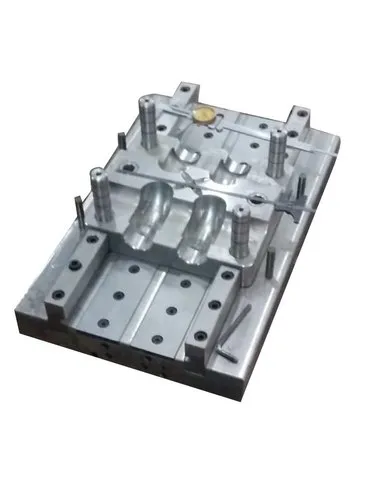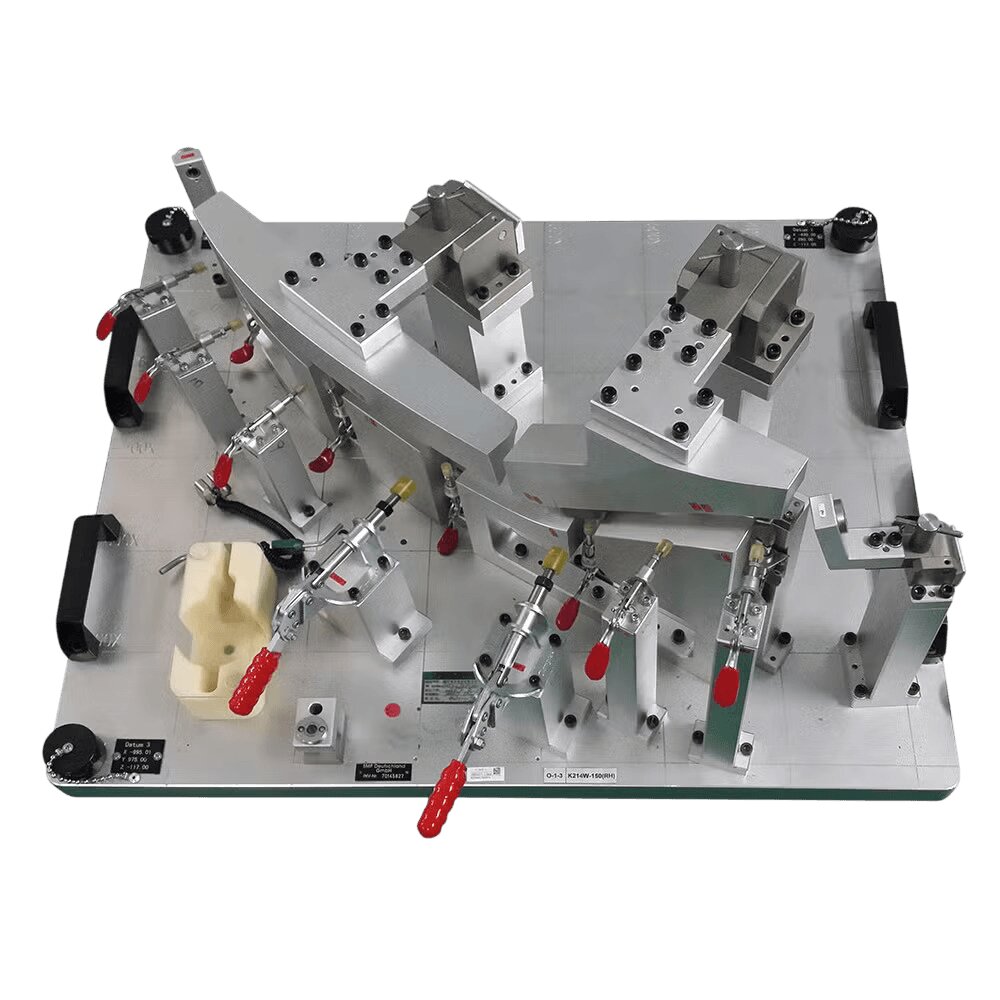
A Single-Cavity Compression Mould is a compression mould designed to produce one finished part during each moulding cycle. The mould contains one cavity, where a measured amount of material is placed and compressed between heated mould surfaces.
These moulds are commonly used for rubber, thermoset plastics, silicone, composite materials, and other compression-moulded products.
1. What Is a Single-Cavity Compression Mould?
In a single-cavity mould, only one product is formed at a time.
The basic process is:
Material Charge → Mould Closing → Heat & Pressure → Curing/Forming → Cooling → Ejection
Because there is only one cavity, the mould is generally simpler than a multi-cavity compression mould.
2. Main Components
| Component | Function |
|---|---|
| Upper mould half | Compresses and forms the material |
| Lower mould half | Supports the material and cavity |
| Cavity | Determines the product shape |
| Core | Forms internal features when required |
| Parting surface | Separates the mould halves |
| Guide pins & bushes | Maintain accurate alignment |
| Heating system | Provides controlled curing/forming temperature |
| Cooling system | Controls cooling where required |
| Vents | Allows air and gases to escape |
| Ejector system | Removes the finished part |
| Flash land | Controls excess material |
| Mould plates | Provide structural support |
3. How It Works
Step 1: Material Preparation
A measured quantity of material is prepared as a charge. The charge may be rubber, thermoset compound, silicone, composite material, or another suitable material.
Step 2: Mould Preparation
The mould is cleaned and heated to the required processing temperature. A suitable mould-release system may be applied when necessary.
Step 3: Charge Placement
The material is positioned inside the single cavity.
Correct placement is important for achieving uniform filling and minimizing defects.
Step 4: Mould Closing
The upper mould half moves downward and applies pressure to the material.
Step 5: Compression and Curing
Heat and pressure cause the material to flow into the cavity and take its shape. For thermosets and rubber, the material also undergoes a curing process.
Step 6: Cooling
The mould or product is cooled as required.
Step 7: Mould Opening and Ejection
The mould opens and the finished part is removed manually or using an ejector system.
4. Advantages
Simple mould construction
Only one cavity is required, making the tooling relatively straightforward.
Lower tooling cost
A single-cavity mould generally costs less than an equivalent multi-cavity mould.
Easy process control
The operator can closely monitor one part during each cycle.
Suitable for large parts
The available mould area can be dedicated to one relatively large component.
Good for prototypes and low-volume production
It is practical when production quantities do not justify a multi-cavity mould.
Easy design changes
Modifications to a single cavity are generally simpler than changes to a complex multi-cavity tool.
5. Limitations
- Only one part is produced per cycle.
- Production output is lower than a multi-cavity mould.
- Cost per part can be higher for large-volume production.
- Machine time may not be fully utilized for high-output applications.
- Large cavities may require substantial moulding force.
- Longer production runs can make the lower initial tooling cost less significant.
6. Applications
Single-cavity compression moulds are commonly used for:
- Rubber seals
- Gaskets
- Silicone components
- Electrical insulation parts
- Automotive components
- Industrial pads
- Bushes
- Small thermoset components
- Composite parts
- Prototype components
- Large individual moulded products
7. Important Design Considerations
When designing a single-cavity compression mould, consider:
Parting line:
Choose a suitable parting line for easy mould opening and part removal.
Draft:
Provide suitable draft where required to make demoulding easier.
Material shrinkage:
Mould dimensions should account for material shrinkage during cooling or curing.
Venting:
Proper vents help release trapped air and gases.
Flash control:
The flash land should be designed to control excess material.
Heating:
Temperature should be distributed as uniformly as possible across the cavity.
Ejection:
The part should be removable without damage or distortion.
Mould strength:
The mould must withstand repeated compression forces and operating temperatures.
8. Single-Cavity vs Multi-Cavity Compression Mould
| Feature | Single-Cavity | Multi-Cavity |
|---|---|---|
| Parts per cycle | 1 | 2 or more |
| Tooling complexity | Lower | Higher |
| Initial tooling cost | Lower | Higher |
| Production output | Lower | Higher |
| Process balancing | Simple | More complex |
| Large parts | Very suitable | Depends on mould size |
| Prototypes | Suitable | Usually less economical |
| High-volume production | Less suitable | More suitable |
9. Common Problems
Incomplete filling:
Insufficient material, pressure, temperature, or poor charge placement can prevent complete cavity filling.
Excessive flash:
Incorrect mould closure, excessive material, or improper flash-land design can create excessive flash.
Air entrapment:
Insufficient venting can trap air inside the cavity.
Uneven curing:
Temperature differences within the mould can cause inconsistent curing.
Part sticking:
Poor release conditions or unsuitable mould surface finish can make demoulding difficult.
Dimensional variation:
Changes in charge weight, temperature, pressure, or material shrinkage can affect dimensions.
10. Where Single-Cavity Moulds Are Most Useful
They are particularly useful when:
- The product is relatively large.
- Production volume is low or moderate.
- A new product is being developed.
- Frequent design changes are expected.
- Simple tooling is preferred.
- Individual process control is important.
In Short
A Single-Cavity Compression Mould produces one component per moulding cycle. Its simple construction, lower tooling investment, and easy process control make it useful for prototypes, low-volume production, large components, rubber parts, silicone products, thermosets, and composites.