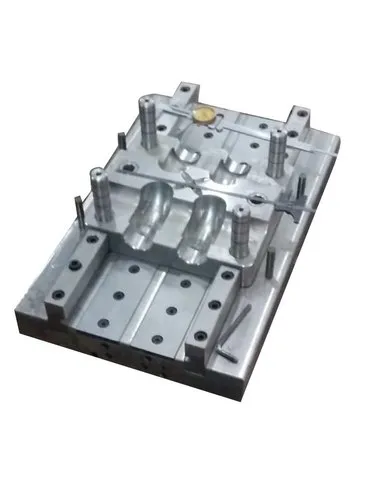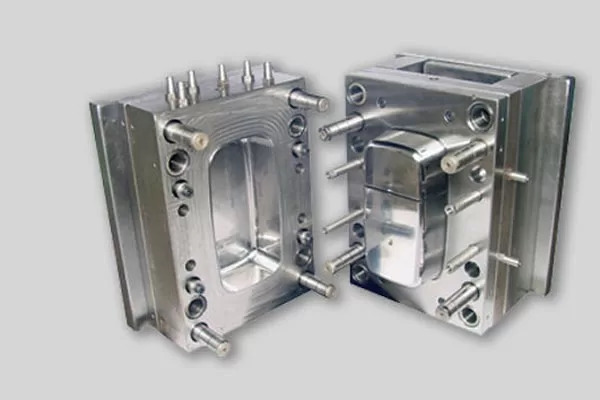
A Single-Cavity Thermoforming Mould is a mould designed to produce one thermoformed component during each forming cycle. It is commonly used for prototypes, customized products, low-volume production, and products that are too large or complex for multi-cavity tooling.
In thermoforming, a thermoplastic sheet is heated until it becomes flexible and then formed over or into the mould using vacuum, pressure, or both.
What Is a Single-Cavity Thermoforming Mould?
A single-cavity mould contains one product-forming cavity or one forming shape.
For example, if a mould is designed to produce a single plastic tray, one forming cycle produces one tray. The mould can be designed as either:
- Male/positive mould – The plastic forms over the outside of the mould.
- Female/negative mould – The plastic forms inside the mould cavity.
How It Works
The typical process is:
- Sheet Loading
A thermoplastic sheet is placed into the thermoforming machine. - Heating
The sheet is heated until it reaches its suitable forming temperature. - Positioning
The softened sheet is positioned over or above the mould. - Forming
Vacuum and/or compressed air pulls the sheet against the mould surface. - Cooling
The formed plastic is cooled while maintaining its shape. - Demoulding
The finished component is released from the mould. - Trimming
Excess plastic around the component is removed.
Main Components
| Component | Function |
|---|---|
| Mould Body | Provides the required product shape |
| Forming Surface | Contacts the heated plastic |
| Vacuum Channels | Remove trapped air |
| Vacuum Holes | Help pull the sheet against the mould |
| Vents | Allow air to escape |
| Cooling System | Controls mould temperature |
| Mounting Plate | Secures mould to the machine |
| Draft Features | Help with part removal |
Mould Materials
Single-cavity thermoforming moulds can be manufactured from:
- Aluminum – Suitable for durable production tooling and provides good heat transfer.
- Epoxy – Useful for prototypes and low-volume applications.
- Polyurethane tooling board – Easy to machine and suitable for prototype moulds.
- Composite materials – Used for specialized tooling.
- Wood – Sometimes used for basic prototype applications.
The choice depends on production volume, required durability, product size, surface finish, and temperature requirements.
Advantages of Single-Cavity Thermoforming Moulds
1. Simple Tooling
The mould is generally easier to design and manufacture than multi-cavity tooling.
2. Lower Initial Tooling Cost
A single cavity can be more economical when production quantities are limited.
3. Easy Process Control
Only one component is formed per cycle, making process troubleshooting relatively straightforward.
4. Suitable for Large Products
A single cavity can be used when the product is too large to arrange efficiently in a multi-cavity mould.
5. Suitable for Prototypes
It is useful when a product design needs to be tested before investing in production tooling.
6. Easy Design Modification
Changes to the mould can be simpler than modifying a complex multi-cavity tool.
Limitations
- Only one component is produced per forming cycle.
- Production output is lower than with a comparable multi-cavity mould.
- Cost per component can be higher for very large production quantities.
- Machine time may not be utilized as efficiently for small products.
- For high-volume production, multi-cavity tooling may provide greater output.
Single-Cavity vs. Multi-Cavity Thermoforming Moulds
| Feature | Single-Cavity | Multi-Cavity |
|---|---|---|
| Parts per Cycle | 1 | 2 or more |
| Tooling Complexity | Lower | Higher |
| Initial Tooling Cost | Generally lower | Generally higher |
| Production Output | Lower | Higher |
| Large Products | Well suited | May be difficult |
| Prototyping | Very suitable | Less common |
| Process Balancing | Simpler | More demanding |
| Maintenance | Generally easier | More complex |
| High-Volume Production | Less efficient | More suitable |
Common Applications
Single-cavity thermoforming moulds are used for:
- Large plastic trays
- Equipment covers
- Automotive panels
- Machine housings
- Medical trays
- Custom packaging
- Protective covers
- Appliance components
- Industrial enclosures
- Prototype parts
- Customized plastic products
Important Design Considerations
Draft Angle: Proper draft helps the formed component release from the mould without damage.
Corner Radius: Rounded corners help reduce excessive stretching and material thinning.
Vacuum Placement: Vacuum holes should be positioned to ensure uniform forming.
Wall Thickness: The designer should account for material stretching during forming.
Cooling: Controlled mould temperature helps improve dimensional stability and cycle time.
Surface Finish: The mould surface directly influences the appearance of the finished component.
Part Trimming: Adequate allowance should be provided for trimming the formed sheet.
When Should You Use a Single-Cavity Mould?
A single-cavity thermoforming mould is particularly useful when:
- Production volume is low or moderate.
- The product is large.
- The product is customized.
- A prototype is required.
- The design is still being developed.
- Lower initial tooling investment is important.
- Easy mould modification is desirable.
In Short
A Single-Cavity Thermoforming Mould produces one plastic component per forming cycle. It offers simpler tooling, easier process control, and good flexibility for prototypes, customized products, and large components.
For very high production volumes or smaller products where several parts can be formed simultaneously, multi-cavity thermoforming moulds can provide higher production output.